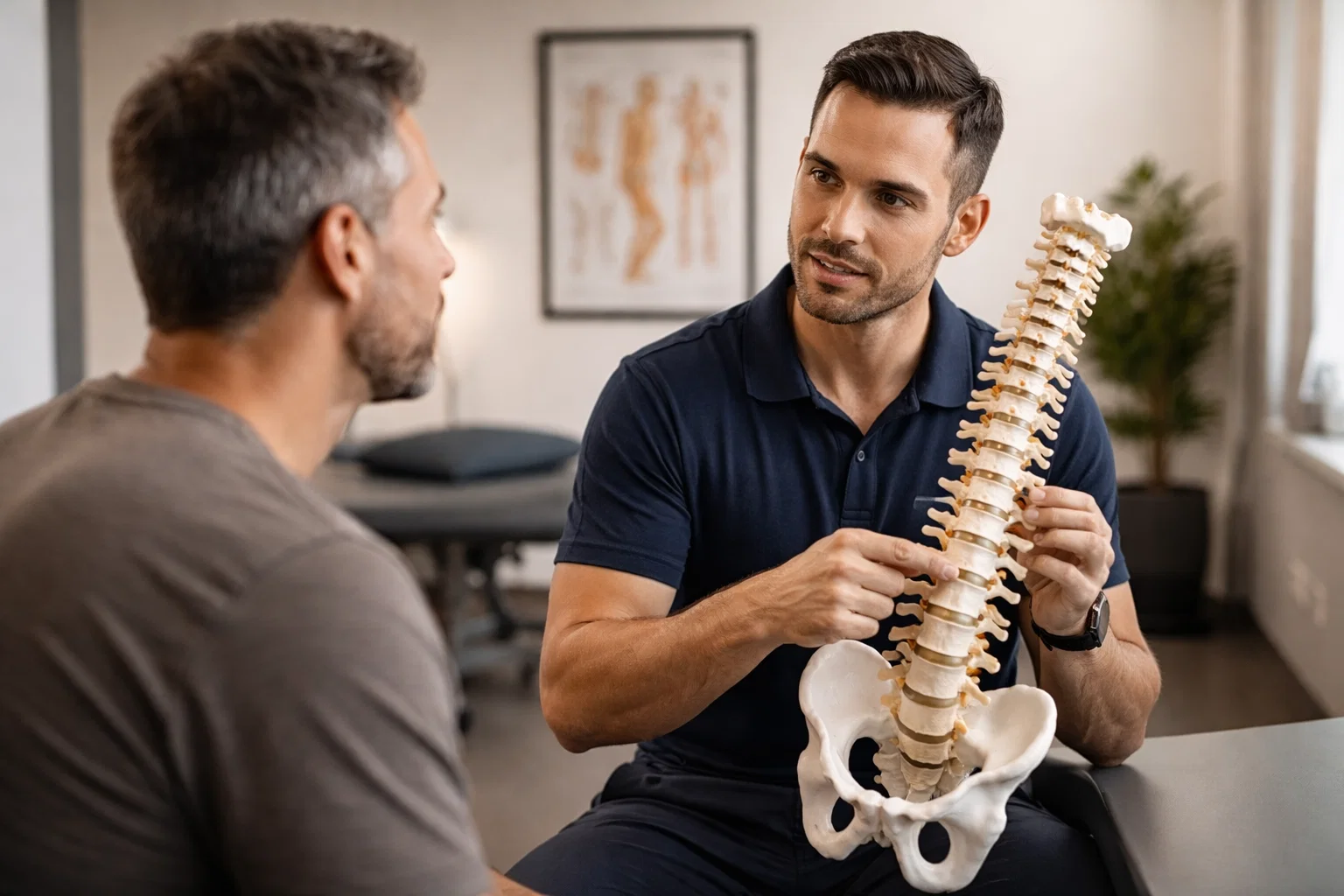
What Is Spinal Decompression and Who Is It For?
Spinal decompression names a type of treatment, not a diagnosis, so whether it could suit you depends on what is causing your symptoms. Back pain, leg pain, tingling or numbness can have several causes, and only an in-person exam that checks your spine, joints and nerves can tell them apart. Start by ruling out the emergency warning signs below, then get examined. You don’t need an X-ray or MRI before a first visit at ProCare.
This guide is for patients in Oregon. It is general information, not a diagnosis or medical advice for your situation. It explains the method in general terms and does not promise any treatment result.
What Does “Spinal Decompression” Mean?
“Spinal decompression” is a broad term for ways of taking pressure off the discs, joints and nerves of the spine. It is used for two very different things:
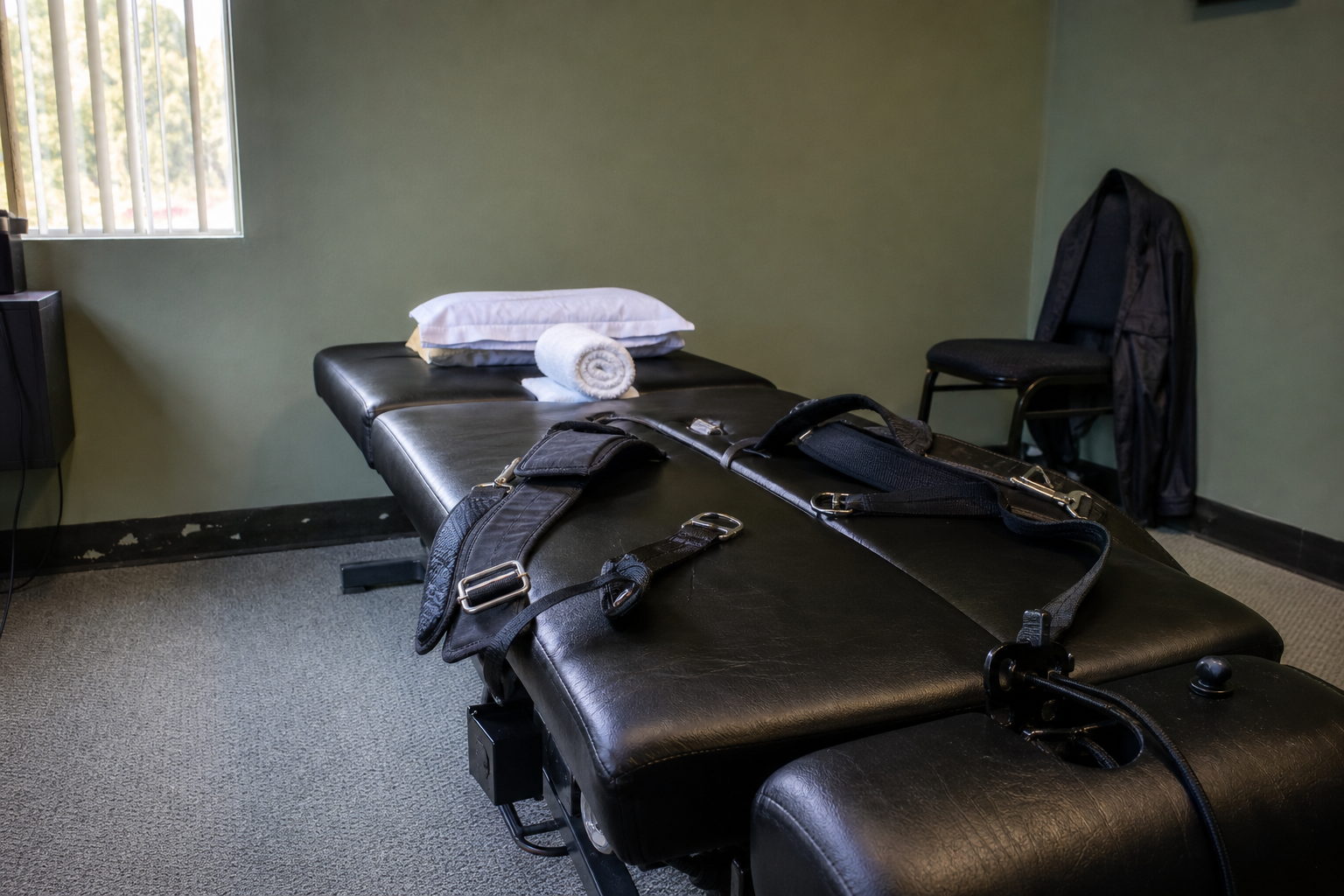
- Non-surgical (mechanical) decompression. A form of traction. You lie on a padded table, usually with a harness around the hips or a support under the head and neck, and the table or a manual device gently stretches the spine in controlled cycles of pulling and relaxing. The aim is to ease pressure on discs and nerve roots and reduce pain that travels into the arm or leg. It should not hurt; tell the provider straight away if it does.
- Surgical decompression. Operations such as a laminectomy or discectomy, in which a surgeon removes bone or disc material that is pressing on a nerve. Surgery is a separate decision made with a spine surgeon, usually when nerve symptoms are severe or getting worse, or when non-surgical care has not helped.
When a chiropractor talks about decompression, they mean the non-surgical kind. Research on it is mixed: some people with disc-related back or neck pain report relief, but studies have not clearly shown it works better than other conservative care such as standard traction, exercise and manual therapy. That is why it is usually one part of a wider plan rather than a stand-alone fix. If a provider offers you decompression, ask them to explain exactly what they will do and why it fits your exam findings, not just your symptoms.
A chiropractic adjustment is a different treatment from decompression. An adjustment is a quick, controlled movement applied to a spinal joint that isn’t moving well, usually by hand. What Is a Spinal Adjustment? explains what happens during one.
Who it may be considered for
Non-surgical decompression is most often discussed for back or neck pain linked to a bulging or herniated disc, and for pain, tingling or numbness that travels into the leg (sciatica) or arm because a nerve root is irritated. It is generally not used for a recent fracture, a spinal tumor or infection, advanced osteoporosis, during pregnancy, or after spinal fusion or with hardware in the spine. Those are reasons an exam has to come first.
ProCare’s post-accident care page lists non-surgical spinal decompression among its options for herniated and bulging discs, alongside adjustments, rehab and massage. Whether it is part of your plan is decided only after your exam.
When to Go to the ER Instead of Booking Any Spinal Treatment
If you think you have a medical emergency, call 911 or go to an emergency room. Don’t wait for a treatment appointment. Get emergency care if you have:
- Loss of bladder or bowel control, or new trouble passing urine
- Numbness in the groin, genitals, buttocks or inner thighs
- Leg or foot weakness that is getting worse
- Numbness or weakness in both legs
- Severe neck or back pain with numbness, tingling or weakness in the arms or legs
- Sudden weakness or numbness in an arm or on one side of the body
- After a blow to the head: loss of consciousness, confusion, repeated vomiting or a headache that keeps getting worse
- Trouble breathing, chest pain or abdominal pain
This list is not complete. Chiropractic care at ProCare is for non-emergency injuries and does not replace an emergency evaluation. Going to the ER first doesn’t rule out chiropractic care later. Bring your ER notes and any X-rays or MRIs to your first visit.
“Pinched Nerve” and “Sciatica” Describe Symptoms, Not a Cause
Sciatica is the name for pain, tingling or numbness that travels from the lower back or buttock down the leg. It says where symptoms are felt, not what is producing them. Those symptoms may come from a disc injury, another nerve problem in the lower back or other sources entirely. Arm or hand symptoms can start in the neck.
Because you don’t always feel a symptom where it begins, a description or an online checklist can’t tell the causes apart. A suspected disc problem is no exception: symptoms alone can’t confirm it. If what feels like a pulled muscle comes with tingling, numbness or pain that travels, don’t treat it as a simple strain.
Who Is It For? Why the Answer Starts With an Exam
No article can tell you whether a particular treatment suits you, because that depends on the cause of your symptoms. At ProCare, a first visit has four steps:
- Consultation. You talk about how the pain started, where it hurts, what makes it better or worse, and your health history.
- Physical exam. Your chiropractor checks your posture, range of motion, muscles and reflexes, along with your spine, joints and nerves.
- Imaging only if needed. ProCare does not do X-rays or MRIs in-house. If the findings point to a possible fracture, disc injury or nerve problem, you are referred to an outside provider, and your chiropractor reviews the results with you.
- Your plan. Your chiropractor explains what is causing the pain and sets out next steps.
You don’t need a doctor’s note or any imaging beforehand. The first visit takes longer than a regular one, and staff tell you how much time to plan for when you book.
What Care at ProCare Can Include
A ProCare treatment plan can include adjustments, rehab and massage, depending on what the exam and any imaging show. Adjustments are usually done by hand; gentler, low-force methods, including small hand-held instruments, can be used when a quick movement isn’t right for you. ProCare’s chiropractic adjustment and Rehabilitation & Physical Therapy pages describe these services. For related reading, see chronic back pain care, massage for lower back pain and lower back pain relief.
Many people with sciatica improve with non-surgical care, but no particular result or timeline is guaranteed. Staying gently active, as your provider advises, is generally better for back pain than long bed rest. Two things are in your control: going to appointments consistently and keeping your symptom log up to date.
Tell Your Provider First: Conditions That Can Change the Approach
Mention these before any spinal treatment starts:
- Osteoporosis or weak bones
- Blood thinners or a bleeding disorder
- Previous spine surgery
- A known spinal condition, such as diagnosed scoliosis
- Any numbness, tingling or weakness
At ProCare, these can change which technique is used or whether an adjustment is right for you. Several of these, along with a recent fracture, pregnancy or hardware in the spine, can also rule out decompression, so mention them to any provider who offers it. Bring earlier X-rays, MRIs and doctor notes too, since they give a baseline to compare with your current findings.
Questions to Ask Any Provider Who Offers Spinal Decompression
- What is causing my symptoms, based on my exam?
- What exactly will you do during a session?
- Why does this technique fit my findings?
- What are the possible risks or side effects for me, and is there any reason I should not have it?
- Is soreness expected afterward, and for how long?
- What should I do, or avoid, after a session?
- Which symptoms mean I should call you, and which mean I should go to the ER?
If imaging comes up, also ask:
- Which test is being ordered, and what is it meant to check?
- Do I need a nerve test or a referral to a medical doctor or specialist?
- Does my insurer need to approve an MRI in advance?
Keep a Symptom Log Before Your Visit
A symptom log gives your exam more to work with. It is information to bring, not a way to diagnose yourself. Note:
- When the pain, tingling or numbness started, and the accident date if there was one
- Which side is affected and how far it travels: buttock, thigh, knee, calf or foot
- What makes it better or worse: sitting, driving, bending, lifting, lying down or walking
- How it affects work, daily tasks and sleep
- Earlier spine, back, hip or leg problems
A simple sleep log
If symptoms disturb your sleep, one row per night is enough:
| Date | Position or setup | Symptom and location | How bad | What eased or worsened it | Effect on sleep |
|---|---|---|---|---|---|
| The night you’re recording | Position and any pillow placement | Pain, tingling or numbness; which side; how far down the leg | Mild, moderate, severe, or a number | Position changes, getting up, walking | Time to fall asleep, times you woke, how you felt in the morning |
Use the same rating words or numbers every time so changes are easy to spot. How to Sleep With a Pinched Nerve in Your Lower Back has more on tracking night-time symptoms.
After a Car Accident: Paying for Care and Booking at ProCare
If your back or leg symptoms followed a crash, get examined as soon as possible. Some injuries, such as whiplash, may not hurt right away, so note the date symptoms begin. An early exam also creates a clear record of your injuries.
Oregon PIP and letters of protection
Oregon Personal Injury Protection (PIP) is no-fault coverage in your own auto policy. It pays reasonable and necessary medical expenses, including chiropractic care and the first visit, regardless of who caused the crash. Coverage is at least $15,000 per person, and benefits are usually available for up to two years from the accident date. Policies differ, so check yours. ProCare checks your coverage before treatment and helps with PIP claims.
A letter of protection (LOP) is an agreement, usually arranged through your attorney, under which the clinic is paid from your settlement. ProCare accepts LOP cases. LOP terms vary and are a matter for your attorney.
How to book a first exam
ProCare has clinics in Portland, Keizer, Sherwood and Hillsboro, all open Monday to Friday, 9:00 AM to 6:00 PM. Walk-ins aren’t available. On the online booking form, leave your name and phone number and choose the injury type and your clinic; the clinic calls you back to confirm a time. If you prefer to call, the number is (503) 206-6078.
Bring a photo ID, your insurance card, your claim number if you have one, accident details if relevant, a list of your medicines and past injuries, any earlier X-rays, MRIs, doctor or ER notes, and your symptom log.
Frequently asked questions
Will Oregon PIP pay for spinal decompression?
PIP pays reasonable and necessary medical expenses, including chiropractic care, the first visit and, typically, diagnostic imaging. Whether a specific treatment such as decompression is covered depends on your policy and on whether it is reasonable and necessary for your injury, so ask your insurer and the clinic before you start. Policies differ.
Could I get an adjustment at my first ProCare visit?
The first visit centers on the consultation and exam. If you want to know whether an adjustment could happen at the first visit or only at a later one, ask the clinic when you book.
What if my back pain started after a work injury?
This guide doesn’t cover workers’ comp rules. ProCare lists workers’ comp among the insurance it accepts, so ask the clinic about your coverage.
Will keeping records guarantee my insurance claim is approved?
No. Bills, treatment notes and a symptom log help an insurer or attorney understand your injuries and care, but they don’t guarantee claim approval or any particular outcome.