Can a Car Accident Make Osteoarthritis Worse? What Oregon Patients Should Know
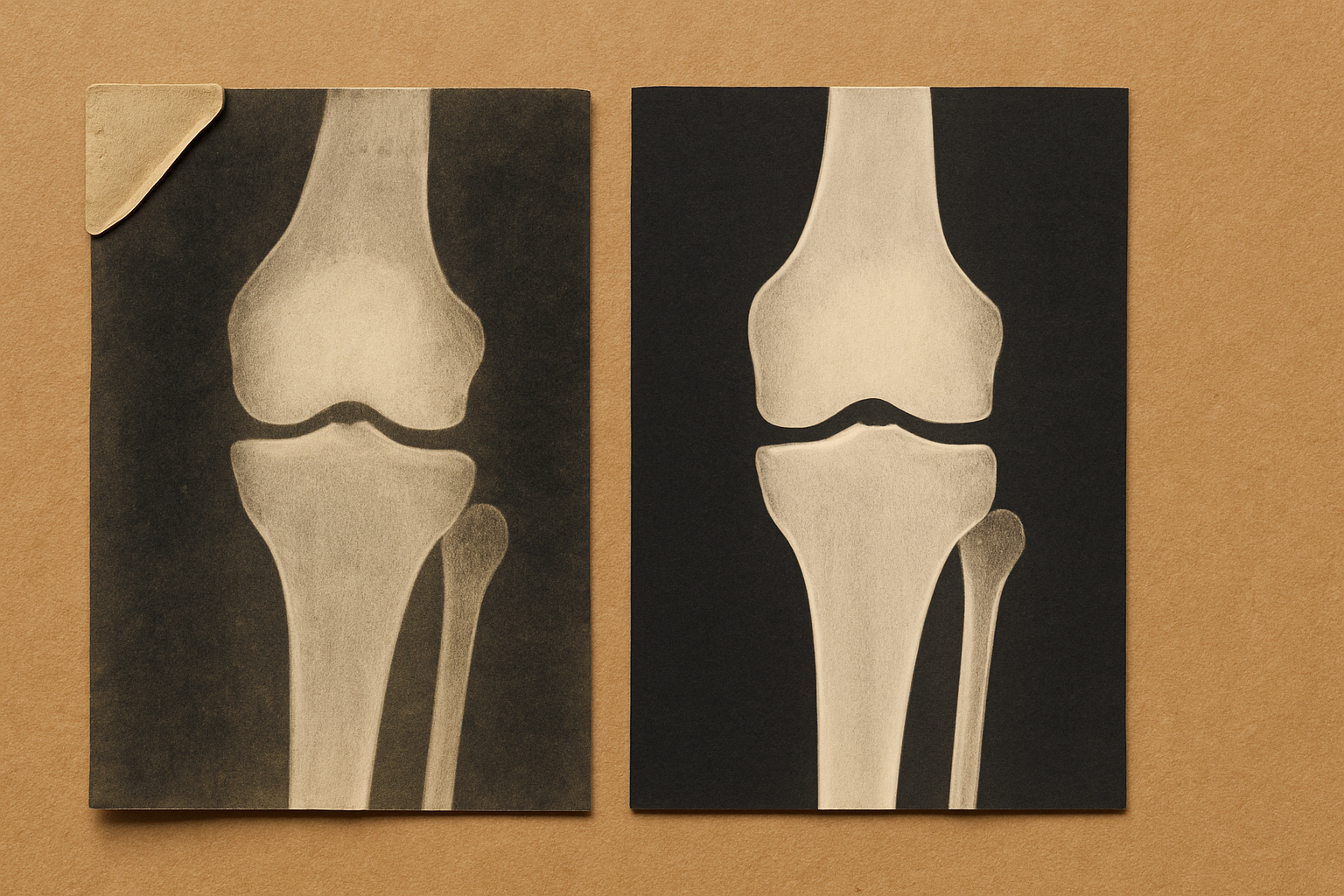
A car accident can leave someone who already has osteoarthritis in more pain, but more pain does not by itself mean the arthritis has changed. Joints affected by osteoarthritis are often stiffer and less able to absorb sudden force, so the strain of a crash can trigger a flare of pain, stiffness and swelling in an arthritic knee, hip, hand or spine. A crash can make an existing condition more painful even when the condition itself has not changed. Over the longer term, an injury to a joint is a known risk factor for osteoarthritis developing or progressing in that joint, sometimes called post-traumatic arthritis. New pain can also come from a separate injury, such as whiplash or a disc or nerve problem. Which applies to you can only be judged through an in-person exam and, if the findings call for it, imaging.
What you can do now: get emergency care for red flags, book an exam for non-emergency joint, neck or back symptoms, and bring earlier X-rays, MRIs and doctor notes about your arthritis so your current findings can be compared with your history.
This guide is for patients in Oregon. It does not diagnose symptoms, promise treatment results or give legal advice.
Arthritis Flare, New Injury or Both?
After a crash, more than one explanation is possible. The impact may have made an already arthritic area more painful, it may have caused a new injury such as whiplash or a disc problem, or both may have happened. Symptoms alone can’t sort these out, which is why the exam compares your current findings with your history.
Whether a crash has sped up joint wear in your case can’t be judged from symptoms, and changes may show only on imaging over time. Raise that question with your doctor or a specialist who can review your history and imaging. If your main concern is managing diagnosed osteoarthritis rather than pain after the crash, ask the clinic about it when you book.
When to Call 911 or Go to the ER First
If you think you have a medical emergency, call 911 or go to an emergency room instead of waiting for a chiropractic appointment. Get emergency care after a crash if you have:
- A blow to the head, loss of consciousness, confusion, repeated vomiting or a headache that keeps getting worse
- Severe neck or back pain, especially with numbness, tingling or weakness in the arms or legs
- Sudden weakness or numbness in an arm or on one side of the body
- Loss of bladder or bowel control, new trouble passing urine, or numbness in the groin, buttocks or inner thighs
- Leg weakness that is getting worse, or numbness or weakness in both legs
- Trouble breathing, chest pain or abdominal pain
- A joint that looks deformed, a bone that looks out of place, or a limb you cannot move or put weight on
- A hand that turns pale, blue or cold
- Heavy bleeding or severe swelling
This list is not complete. Chiropractic care at ProCare is for non-emergency injuries and does not replace an emergency evaluation. Going to the ER first does not rule out chiropractic care later; bring your ER notes and any imaging to your first visit. If you’re unsure where to start, ProCare’s guide Doctor or Chiropractor After a Car Accident: Who Should You See First? covers that decision.
If You Had Osteoarthritis Before the Crash
Tell your chiropractor about your arthritis at the first visit. Health history is a standard part of the consultation, and an earlier joint or spine condition belongs in an accurate picture of your injuries.
Bring any earlier X-rays, MRIs and doctor notes about the affected joints or your spine. They give your chiropractor a baseline to compare with your current exam findings. Whether the crash changed an existing condition is a question for the exam and, if needed, imaging.
If someone else caused the crash, how a pre-existing condition affects an insurance or injury claim is a question for your attorney. ProCare does not give legal advice.
Why the Pain May Not Start Where You Feel It
Where you feel a symptom isn’t always where it starts. Tingling or numbness in the arm or hand can come from a neck injury such as whiplash, and leg symptoms can come from a lower-back injury such as a disc or nerve problem. ProCare’s guide to sciatica after a car accident explains this for leg symptoms.
If you have arthritis, new pain after a crash shouldn’t automatically be blamed on it. That’s why the exam checks your posture, spine, joints and nerves, not only the sore spot. For joint-specific guidance, see ProCare’s guides to knee pain and hip pain after a car accident, and to X-rays and MRIs after a crash.
Symptoms to Write Down: A Before-and-After Log
Symptoms don’t always appear right away. Some injuries, such as whiplash, may not hurt at first, swelling can build over time, and some symptoms are noticed only after other pain settles. ProCare advises getting examined as soon as possible; an early exam also creates a clear record of your injuries from the start.
Start a log now and note:
- When pain, stiffness, numbness or tingling started, relative to the accident date
- Exactly where it hurts and which side is affected
- What makes it better or worse, such as sitting, driving, bending, walking or lifting
- How it affects work, daily tasks and sleep
- What the same joints or areas were like before the crash, including diagnosed arthritis
With arthritis, the last point is the one to take most care over: a clear picture of how things were before the crash gives your chiropractor something to compare against. Keep adding to the log between visits, and store it with your bills and treatment notes.
What Happens at Your First Visit at ProCare
You don’t need an X-ray, MRI or doctor’s note beforehand. The first visit takes longer than a regular appointment, and staff tell you how much time to plan for when you book. It has four steps:
- Consultation. You talk about how you were injured, where it hurts, what makes it better or worse, and your health history, including arthritis. This is the time to share your symptom log.
- Physical exam. Your chiropractor checks your posture, range of motion, muscles and reflexes, along with your spine, joints and nerves.
- Imaging only if needed. ProCare does not do X-rays or MRIs in-house. If the findings point to a possible fracture, disc injury or nerve problem, you are referred to an outside provider.
- Your plan. Your chiropractor reviews any results with you, explains what is causing the pain and sets out a plan.
Questions to Ask About an Imaging Referral
- Which test is being ordered, and what is it meant to check?
- Do I need a nerve test or a referral to a medical doctor or specialist?
- Does my insurer need to approve an MRI in advance?
Your Treatment Plan: What It Can Include
Your plan is built on your own exam findings and can include chiropractic adjustments, rehab and massage. Because it depends on your exam, no particular result or recovery timeline is guaranteed, and this guide doesn’t give one.
ProCare records your symptoms, findings and progress at each visit. Two things are in your control: attend appointments consistently and keep updating your symptom log. ProCare’s guide to what a rehab plan includes explains how plans are built and tracked.
Questions to Ask About Your Plan
- What is causing my pain, and how does each part of the plan address it?
- How does my arthritis factor into the plan?
- What happens during the rehab part of my visits?
- How often should I come in, and when will we review my progress?
- Which changes in my symptoms should I report right away?
Paying for Care: Oregon PIP, Injury Claims and LOPs
Oregon Personal Injury Protection (PIP) is no-fault coverage in your own auto policy, required by law. It pays reasonable and necessary medical expenses, including chiropractic care and the first visit, regardless of who caused the crash.
- Limits: at least $15,000 per person; many policies carry higher limits.
- Time limit: benefits are usually available for up to two years from the accident date.
- Imaging: diagnostic imaging (X-rays, MRI) is among the care PIP typically covers; ask your insurer whether an MRI needs approval in advance.
Policies differ, so check your own limits and time frame. ProCare staff check your coverage before treatment and help with the PIP claim. You don’t need a lawyer to start care.
Oregon PIP vs. a Personal Injury Claim
| Oregon PIP | Personal injury claim | |
|---|---|---|
| Whose insurance | Your own auto policy | The at-fault driver’s insurance |
| Fault | Pays regardless of fault | Brought against the party at fault |
| What it covers | Reasonable and necessary medical expenses, including chiropractic care | Can include pain and suffering and future medical needs |
| Speed and limits | Pays faster, but amounts are limited | Varies by case; ask your attorney |
Some people use both: PIP during active treatment, and a personal injury claim that can follow. Ask your attorney how this applies to you.
Records and Letters of Protection
With your permission, ProCare shares records and billing information with your attorney. A letter of protection (LOP) is an agreement, usually arranged through your attorney, under which the clinic is paid from your settlement. ProCare accepts LOP cases. LOP terms vary and are a legal matter for your attorney; ProCare’s guide Letter of Protection (LOP) for Chiropractic Care in Oregon covers the details. Records help an insurer or attorney understand your injuries, but they don’t guarantee claim approval or any particular outcome.
How to Book and What to Bring
Walk-ins are not available, so book ahead. On the online booking form, enter your name and phone number, select “Car accident” as the injury type and choose your clinic. The clinic calls you back to confirm a time. If you prefer to call, the number is (503) 206-6078. ProCare accepts PIP and auto insurance.
Clinic Locations and Hours
All four clinics are open Monday to Friday, 9:00 AM to 6:00 PM.
| Clinic | Address |
|---|---|
| Portland | 10915 SE Stark St, Portland, OR 97216 |
| Keizer | 3785 River Rd N, Keizer, OR 97303 |
| Sherwood | 16771 SW 12th St, Sherwood, OR 97140 |
| Hillsboro | 329 SE 3rd Ave, Hillsboro, OR 97123 |
What to Bring
- Photo ID and your insurance card
- Your claim number, if you have one
- Details of the accident
- A list of your medicines and past injuries
- Earlier X-rays, MRIs and doctor notes, especially any arthritis imaging
- Notes from an ER visit, if you had one
- Your symptom log
Frequently asked questions
Can a car accident make my arthritis hurt more?
A crash can make an existing condition more painful, even when the condition itself has not changed. Only an in-person exam, and imaging if the findings call for it, can show what is behind your pain.
Can joint or back pain start days after a car accident?
Yes. Some injuries, such as whiplash, may not hurt right away, and swelling can build over time. Write down the date your symptoms start and get examined as soon as possible.
I had osteoarthritis before the crash. Should I mention it?
Yes. Tell your chiropractor during the consultation and bring earlier X-rays, MRIs and doctor notes so your current exam can be compared with your history.
Do I need an X-ray or MRI before my first visit?
No. Imaging is an outside referral based on your exam findings, not a requirement for the first visit. ProCare does not do X-rays or MRIs in-house.
What happens if my Oregon PIP limits run out?
Once your PIP limits are exhausted, you may be able to pursue additional compensation through a personal injury claim against the at-fault driver. Discuss your options with an attorney.