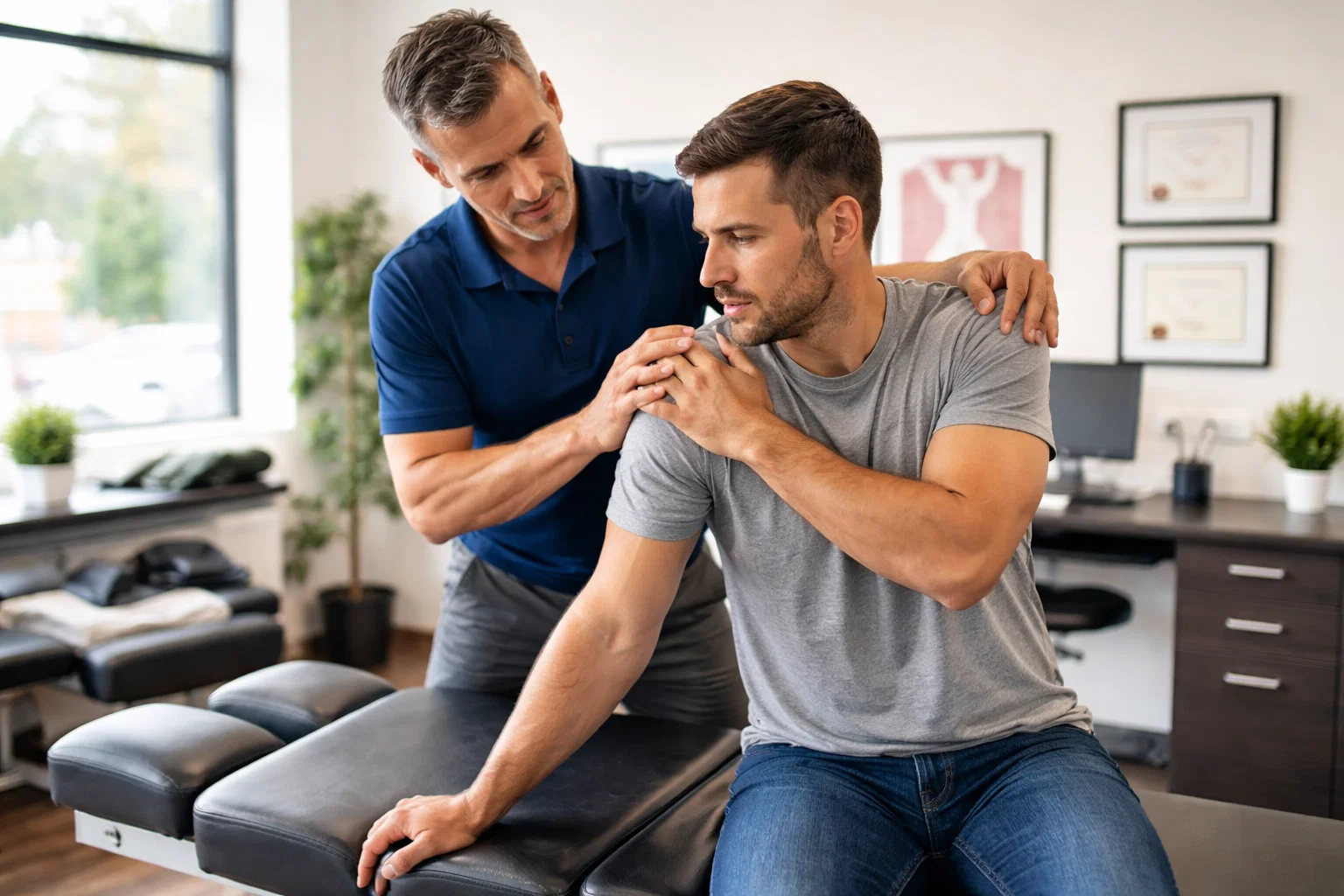
Injury Rehabilitation After a Car Accident or Work Injury: What a Rehab Plan Includes
A rehab plan at ProCare Chiropractic starts with an exam: your chiropractor builds it around your findings, and your symptoms, findings and progress are recorded at each visit. After a car accident, Oregon Personal Injury Protection (PIP) can pay for reasonable and necessary care regardless of who caused the crash.
ProCare has clinics in Portland, Keizer, Sherwood and Hillsboro. This guide covers when to go to the ER first, what the first visit involves, what to track, how care is paid for and how to book. It is general information about non-emergency injuries, not a diagnosis, medical advice for your situation or legal advice. Because every plan depends on your own exam, the guide gives no recovery timelines and promises no results.
What Does a Rehab Plan After an Injury Include?
At ProCare, a rehab plan is the treatment plan your chiropractor gives you after your first exam, once they have explained what is causing your pain. It depends on what your exam shows, so it is specific to you.
What the plan is built from
- An exam first. A consultation and a physical exam come before any treatment decision.
- Treatment based on findings. Depending on the exam, the plan can include chiropractic adjustments, rehab and massage.
- Imaging only when needed. X-rays and MRIs are not part of every plan. They are an outside referral, used only when the exam calls for them.
- Records at every visit. Your symptoms, findings and progress are documented each time you come in.
Two things are in your control: attend your appointments consistently and keep a symptom log between visits. ProCare’s Car Accident Chiropractor and Work Injury Chiropractor pages describe its services in more detail.
Questions to ask about your own plan
What happens in rehab sessions, how often you come in and how progress is reviewed all depend on your exam, so ask your chiropractor directly:
- What is causing my pain, and how does each part of the plan address it?
- What happens during the rehab part of my visits?
- How often should I come in, and when will we review my progress?
- Which changes in my symptoms should I report right away?
When Should You Go to the ER Before Starting Rehab?
If you think you have a medical emergency, call 911 or go to an emergency room. Do not wait for a clinic appointment. Get emergency care after an accident if you have any of these signs:
- Loss of bladder or bowel control, or new trouble passing urine
- Numbness in the groin, genitals, buttocks or inner thighs
- Leg or foot weakness that is getting worse, or numbness or weakness in both legs
- Severe neck pain with numbness, tingling or weakness in the arms or legs
- Sudden weakness or numbness in an arm or on one side of the body
- A blow to the head, loss of consciousness, confusion, repeated vomiting or a headache that keeps getting worse
- Trouble breathing, chest pain or abdominal pain
- A joint that looks deformed, or a limb you cannot move or put weight on
- A hand that turns pale, blue or cold
- Heavy bleeding or severe swelling
This list is not complete. Chiropractic care at ProCare is for non-emergency injuries and does not replace an emergency evaluation. Going to the ER first does not rule out rehab later: bring your ER notes and any X-rays or MRIs to your first visit. ProCare’s guide Doctor or Chiropractor After a Car Accident: Who Should You See First? covers this decision in more depth.
What Happens at Your First Visit?
You do not need an X-ray, MRI or doctor’s note beforehand. The first visit takes longer than a regular appointment, and staff tell you how much time to plan for when you book. It has four steps:
- Consultation. You talk about how you were injured, where it hurts, what makes it better or worse, and your health history.
- Physical exam. Your chiropractor checks your posture, range of motion, muscles and reflexes, along with your spine, joints and nerves.
- Imaging only if needed. ProCare does not take X-rays or MRIs in-house. If the findings point to a possible fracture, disc injury or nerve problem, you are referred to an outside provider, and your chiropractor reviews the results with you before your plan is made.
- Your treatment plan. Your chiropractor explains what is causing the pain and sets out the plan.
Why the exam looks beyond the spot that hurts
Where you feel a symptom is not always where it starts. Tingling or numbness in the arm or hand can come from a neck injury such as whiplash, and leg symptoms can come from an injury to the lower back. That is why the exam checks your spine and nerves, not only the painful area. Two related guides go into more detail: elbow pain after a car accident and sciatica after a car accident.
Questions to ask about an imaging referral
- Which test is being ordered, and what is it meant to check?
- Do I need a nerve conduction study or a referral to a medical doctor or specialist?
- Does my insurer need to approve an MRI in advance?
Tracking Progress: Symptom Log, Records and Consistent Visits
ProCare recommends starting care as soon as possible after an accident. Some injuries, such as whiplash, may not hurt right away, and swelling can build over time. An early exam also creates a clear record of your injuries from the start.
Symptom log template
Start a log now and keep adding to it between visits. Write down:
- When the pain, tingling or numbness started, compared with the date of the accident or injury
- Which side or limb is affected, and how far the symptoms travel
- What makes it better or worse, such as sitting, driving, gripping, lifting, bending or certain positions
- How it affects your work, daily tasks and sleep
- Any problems you had in the same area before the injury
Share the log at your consultation. If you had earlier problems in the same area, tell your chiropractor and bring any records you have.
How records are kept and shared
ProCare records your symptoms, findings and progress at each visit. With your permission, the clinic shares records and billing information with your attorney, and it works with your insurer and attorney on billing and records. Keep your bills, treatment notes and symptom log together. These records help an insurer or attorney understand your injuries and the care you received, but they do not guarantee claim approval or any particular outcome. This is not legal advice.
How Is Rehab Paid For After a Car Accident in Oregon?
Oregon PIP is no-fault coverage in your own auto policy, required by law. It pays reasonable and necessary medical expenses, including chiropractic care and the first visit, regardless of who caused the crash.
- Limits: at least $15,000 per person; many policies carry higher limits.
- Time limit: benefits are usually available for up to two years from the accident date.
- Imaging: diagnostic imaging (X-rays, MRI) is among the care PIP typically covers, but policies differ.
Check your own policy to confirm your limits and time frame. ProCare staff check your coverage before treatment and help with the PIP claim.
Oregon PIP vs. a personal injury claim
| Oregon PIP | Personal injury claim | |
|---|---|---|
| Whose insurance | Your own auto policy | The at-fault driver’s insurance |
| Fault | Pays regardless of fault | Brought against the party at fault |
| What it covers | Reasonable and necessary medical expenses, including chiropractic care | Can include pain and suffering and future medical needs |
| Speed and limits | Pays faster, but amounts are limited | Varies by case; ask your attorney |
Many patients use both: PIP pays during active treatment, and a personal injury claim can follow. Ask your attorney how this applies to your case.
Letters of protection and questions for your attorney
A letter of protection (LOP) is an agreement, usually arranged through your attorney, under which the clinic is paid from your settlement. ProCare accepts LOP cases. LOP terms vary and are a legal matter for your attorney, so take these questions to them:
- What does the LOP cover?
- What happens to the bill if the case does not settle, or settles for less than the bills?
- How will PIP payments and any LOP balance be coordinated?
- Do the X-ray or MRI providers I may be referred to need their own arrangement?
For more, read Letter of Protection (LOP) for Chiropractic Care in Oregon.
What About Work Injuries and Other Non-Car Injuries?
ProCare’s Insurance We Accept page lists PIP, Workers’ Comp and major insurance plans. Besides car, truck and motorcycle accidents, ProCare treats pedestrian, bicycle and rideshare accidents, slip and fall injuries, and other injuries where another party is at fault.
The process described above, from consultation and exam to an imaging referral only if needed, a plan built on your findings and records at each visit, is the same whatever caused the injury, and the same emergency signs apply. This guide does not cover Oregon workers’ compensation rules, claim steps or deadlines. If you were hurt on the job, contact the clinic before booking to confirm how your coverage applies.
How to Book at a ProCare Clinic in Oregon
Walk-ins are not available, so book ahead. All four clinics are open Monday to Friday, 9:00 AM to 6:00 PM.
| Clinic | Address |
|---|---|
| Portland | 10915 SE Stark St, Portland, OR 97216 |
| Keizer | 3785 River Rd N, Keizer, OR 97303 |
| Sherwood | 16771 SW 12th St, Sherwood, OR 97140 |
| Hillsboro | 329 SE 3rd Ave, Hillsboro, OR 97123 |
Booking steps
- Open the online booking form and enter your name and phone number.
- Select ‘Car accident’ as the injury type. For a work injury, call first to confirm which option to choose.
- Choose your clinic.
- The clinic calls you back to confirm a time.
If you prefer to call, the number is (503) 206-6078. ProCare accepts PIP and auto insurance.
What to bring
- Photo ID and your insurance card
- Your claim number, if you have one
- Details of the accident or incident
- A list of your medicines and past injuries
- Any earlier X-rays, MRIs or doctor notes, including notes from an ER visit
- Your symptom log
LOP paperwork is not on ProCare’s first-visit checklist. If an attorney is handling your case, ask them what the clinic will need.
Frequently asked questions
Do I need an X-ray or MRI before my first rehab visit?
No. ProCare refers you out for an X-ray or MRI only if the exam points to a possible fracture, disc injury or nerve problem, and your chiropractor reviews the results with you.
Does Oregon PIP cover the first visit after a car accident?
Yes. PIP covers reasonable and necessary medical care after a car accident regardless of fault, including the first chiropractic visit. Check your own policy for your limits and time frame.
Do I need a lawyer to start rehab after a car accident?
No. If you do not have an attorney, ProCare staff explain how PIP and auto insurance work. If you hire one, ProCare can work with them directly.
What happens if my PIP limits run out?
You may be able to pursue additional compensation through a personal injury claim against the at-fault driver. Discuss your options with an attorney.
Can symptoms start days after an accident?
Yes. Some injuries, such as whiplash, may not hurt right away. Write down the date symptoms started and get examined.