Groin Pain After a Car Accident: Possible Causes and When to Get Help
Groin pain after a car accident needs a safety check first. Call 911 or go to the ER if you have numbness in the groin, genitals, buttocks or inner thighs, loss of bladder or bowel control, new trouble passing urine, abdominal pain, or a leg you cannot move or put weight on. If none of these apply, get examined soon. A crash can send force into the hip region, for example through a leg braced hard against the floor or pedals, or when the body is thrown against the door or console. Some crash injuries look minor at first, and only an in-person exam can find where the pain starts.
This guide is general information for readers in Oregon, not a diagnosis, medical advice for your situation or legal advice, and it does not promise treatment results. It lists possible causes in general terms only; which one, if any, applies to you can be found only through an in-person exam.
Groin Numbness vs. Groin Pain: When to Call 911 or Go to the ER
Numbness in the groin area is an emergency sign, not a symptom to manage at home. Groin pain with none of the signs below means booking an exam soon.
Call 911 or go to the ER if you have:
- Numbness in the groin, genitals, buttocks or inner thighs
- Loss of bladder or bowel control, or new trouble passing urine
- Numbness or weakness in both legs, or leg or foot weakness that is getting worse
- Abdominal pain, chest pain or trouble breathing
- A limb you cannot move or put weight on, a joint that looks deformed, a bone that looks out of place, or a foot that turns cold, pale or numb
- Swelling that comes on quickly after a direct hit, severe swelling, or heavy bleeding
- Sudden weakness or numbness in an arm or on one side of the body
- A blow to the head, loss of consciousness, confusion, repeated vomiting or a headache that keeps getting worse
- Severe neck pain with numbness, tingling or weakness in the arms or legs
This list is not complete. If a symptom worries you and you think it may be an emergency, get emergency care rather than waiting to find out at a chiropractic visit. Chiropractic care at ProCare is for non-emergency injuries and does not replace an emergency evaluation.
Going to the ER first does not rule out chiropractic care later. Bring your ER notes and any X-rays or MRIs to your first visit. ProCare’s guide Doctor or Chiropractor After a Car Accident helps with that decision.
Possible Causes of Groin Pain After a Car Accident
In a collision, the body is thrown against whatever is nearby, so the door, console or dashboard can cause bruising where it hits. A leg braced hard against the floor or pedals can send force into the hip. Muscles can be strained and ligaments sprained.
Possible sources of groin pain after a crash include:
- A strain of the inner-thigh (adductor) or hip flexor muscles, for example from a leg braced hard against the pedals
- Bruising where the body hit the door, console or seat belt
- An injury to the hip joint itself, such as a labral tear, which can show up as pain in the groin
- Pain referred from the lower back, where an irritated nerve can be felt in the hip, groin or thigh
- A fracture of the pelvis or hip, or an injury to the abdomen, which need emergency care rather than a chiropractic visit
See also ProCare’s guides to hip pain after a car accident and muscle strain vs. sprain.
Some injuries start out mild. A labral tear in the hip, for example, can cause only mild pain at first, and bruises, strains and sprains can feel alike early on. Which of these, if any, applies to you is something only an exam, and imaging if needed, can decide. ProCare’s guide to X-rays and MRIs after a car accident explains when imaging is used.
Where It Hurts Isn’t Always Where the Problem Starts
Pain, tingling or numbness can travel from the lower back or buttock down the leg. After a crash, these symptoms may come from a disc injury or another nerve problem, and they can be felt at the hip, buttock or knee. ProCare’s guides describe this for those areas, not for the groin; whether anything similar applies to your pain is a question for the exam.
There is no simple rule for telling these apart at home, and home care aimed only at the sore spot may miss the cause. That is why a post-crash exam checks the spine and nerves, not just the spot that hurts. Tell your chiropractor if your pain comes with back pain, or with tingling or numbness above or below the painful area. ProCare’s guide to sciatica after a car accident covers back-to-leg symptoms in more detail.
Why Can Groin Pain Show Up Days After the Crash?
Symptoms do not always appear right away, and there is no set timeline. Swelling can build over time, some pain is noticed only after other pain settles, and injuries such as a labral tear or a ligament sprain may cause only mild pain at first.
Being able to walk does not mean you are fine. If pain, tingling or numbness begins in the days after a crash, write down the date it started, keep checking yourself against the red-flag list, and go to the ER if a sign appears or gets worse. Otherwise, get examined as soon as possible; an early exam also creates a clear record of your injuries from the start.
What Can You Safely Do at Home While You Wait?
Home care cannot diagnose or fix a crash injury, but a few low-risk steps can make the first days more comfortable:
- Avoid heavy lifting, sports and any movement that sharply increases pain, but do not stay in bed all day. Short, easy walks and normal daily movement within comfort help keep you from stiffening up.
- For fresh swelling, apply a cold pack wrapped in a thin towel for short periods. Never put ice directly on the skin.
- Once fresh swelling has settled, gentle warmth may feel better for stiff muscles. Skip heat on an area that is still swollen, hot or red.
- Use cold or heat with extra care if you have numb skin, diabetes or poor circulation.
- Support the sore area with pillows, for example between the knees when lying on your side or under the knees when lying on your back. Take breaks from long periods of sitting or driving.
- Do not start stretching or exercise routines for the injured area until you have been examined.
- Ask a doctor or pharmacist before taking any over-the-counter pain medicine, especially if you take other medicines, are pregnant, or have stomach, kidney, liver or heart problems.
Stop any step that makes pain, numbness or tingling worse. More detail: how to relieve pain after a car accident.
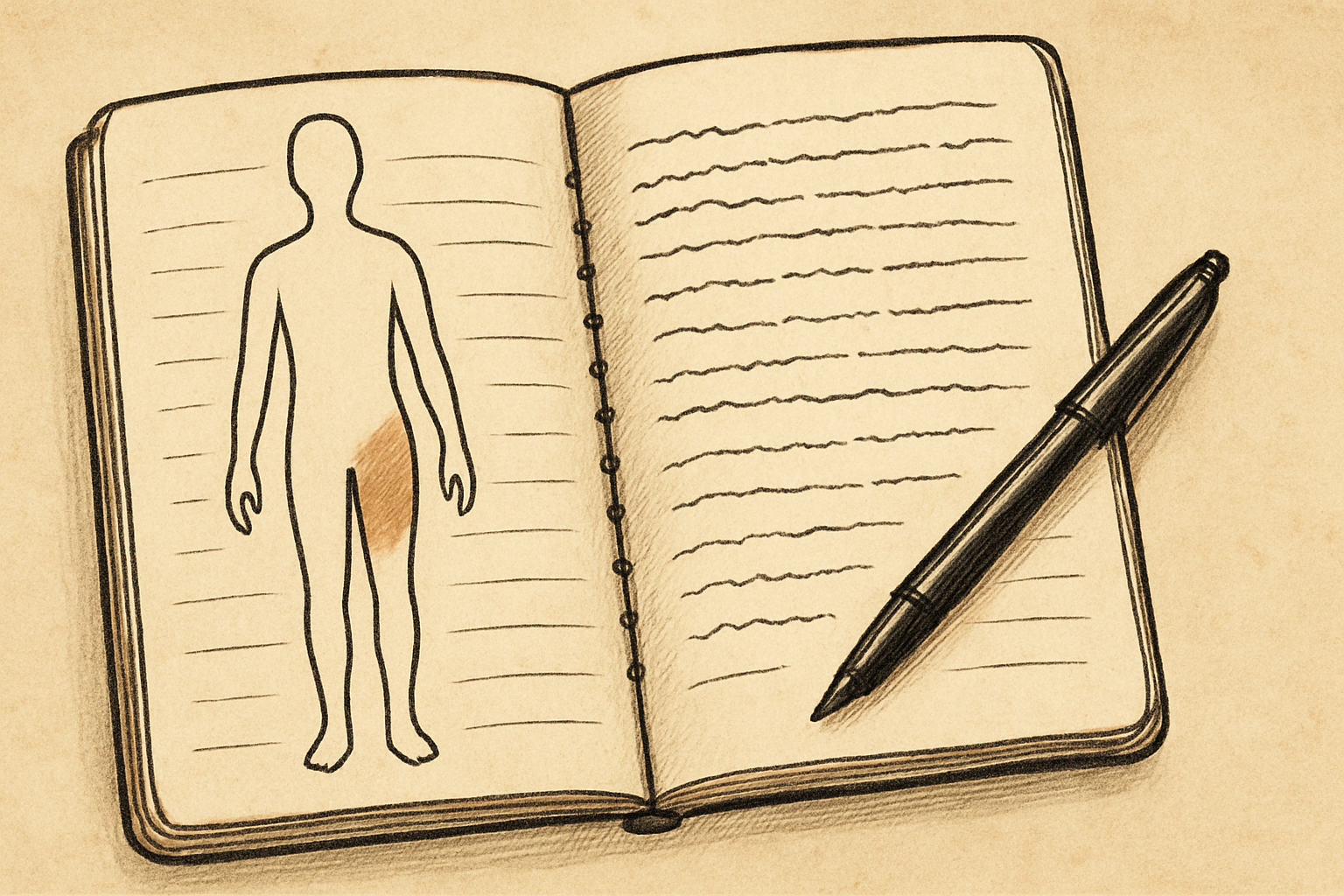
Copy-Ready Groin Pain Symptom Log
What makes pain better or worse is one of the first things discussed at a ProCare consultation, so a short log makes the visit more useful. Copy this list and fill it in:
- When the pain, swelling, tingling or numbness started, compared with the accident date
- Which side is affected, and exactly where it hurts
- Whether symptoms spread to the lower back, buttock, thigh, knee, calf or foot, and how far down they go
- What makes it better or worse: sitting, driving, bending, walking, stairs, lying down or certain positions
- How it affects work, daily tasks and sleep
- Any problems in the same area before the crash, plus earlier X-rays, MRIs or doctor notes
Numbness in the groin, genitals or inner thighs, or any change in bladder or bowel control, is not a log entry. It is a reason to go to the ER now.
Keep adding to the log between visits and store it with your bills and treatment notes. Records help an insurer or attorney understand your injuries and treatment, but they do not guarantee claim approval or any particular outcome.
What Happens at Your First ProCare Visit?
For non-emergency pain, you can book a chiropractic exam directly, without an X-ray, MRI or doctor’s note first. The first visit takes longer than a regular one, and staff tell you how much time to plan for when you book. It has four steps:
- Consultation. You talk about how you were injured, where it hurts, what makes it better or worse, and your health history. Share your symptom log here.
- Physical exam. Your chiropractor checks your posture, range of motion, muscles and reflexes, along with your spine, joints and nerves.
- Imaging only if needed. See below.
- Treatment plan. Your chiropractor explains the findings and gives you a plan, which can include adjustments, rehab and massage, depending on what the exam shows.
No particular result or recovery timeline is guaranteed. ProCare records your symptoms, findings and progress at each visit; on your side, keep your appointments and keep updating your log.
When an X-Ray or MRI Comes In
Imaging is not automatic. ProCare does not do X-rays or MRIs in-house. It refers you to an outside provider when the exam points to a possible fracture, disc injury or nerve problem, and your chiropractor reviews the results with you before the plan is made. If you are referred, ask:
- Which test is being ordered, and what is it meant to check?
- Do I need a nerve test or a referral to a medical doctor or specialist?
- Does my insurer need to approve an MRI in advance?
How Is Care Paid For? Oregon PIP, Personal Injury Claims and LOPs
Oregon Personal Injury Protection (PIP) is no-fault coverage in your own auto policy, required by law. It pays reasonable and necessary medical expenses, including chiropractic care and the first visit, regardless of who caused the crash. According to ProCare’s guides, minimum coverage is $15,000 per person, benefits are usually available for up to two years from the accident date, and diagnostic imaging is among the care PIP typically covers. Policies differ, so check your own limits and time frame. ProCare staff check your coverage before treatment and help with the PIP claim.
| Oregon PIP | Personal injury claim | |
|---|---|---|
| Whose insurance | Your own auto policy | The at-fault driver’s insurance |
| Fault | Pays regardless of fault | Brought against the party at fault |
| What it covers | Reasonable and necessary medical expenses, including chiropractic care | Can include pain and suffering and future medical needs |
| Speed and limits | Pays faster, but amounts are limited | Varies by case; ask your attorney |
Some people use both; how they fit together in your case is a question for your attorney. You do not need a lawyer to start care. If you do not have one, staff explain how PIP and auto insurance work. If you do, ProCare works with your attorney and, with your permission, shares records and billing information.
A letter of protection (LOP) is an agreement, usually arranged through your attorney, under which the clinic is paid from your settlement. ProCare accepts LOP cases; LOP terms vary and are a matter for your attorney. This is not legal advice.
How to Book at a ProCare Clinic in Oregon
ProCare has four clinics in Oregon: Portland, Keizer, Sherwood and Hillsboro, all open Monday to Friday, 9:00 AM to 6:00 PM. Walk-ins are not available, so book ahead:
- Open the online booking form and leave your name and phone number.
- Select “Car accident” as the injury type.
- Choose your clinic. The clinic calls you back to confirm a time.
Bring a photo ID and insurance card, your claim number if you have one, details of the accident, a list of your medicines and past injuries, your symptom log, and any earlier X-rays, MRIs or doctor notes. If your injury is not an emergency and you would like to talk to the team first, call (503) 206-6078.
Frequently asked questions
Can a car accident cause groin pain?
A crash can send force into the hip region through a braced leg or a hit from the door, console or dashboard. Only an in-person exam can tell where your pain comes from.
Is groin numbness after a car accident an emergency?
Yes. Numbness in the groin, genitals, buttocks or inner thighs is an ER sign. Call 911 or go to the ER rather than waiting for a chiropractic appointment.
Can groin pain start days after a crash?
It can. Symptoms do not always appear right away and there is no set timeline. Note the date it started and get examined, or go to the ER if a red-flag sign appears.
Do I need an X-ray before my first ProCare visit?
No. You can book a non-emergency exam directly. ProCare refers you out for imaging only if the exam points to a possible fracture, disc injury or nerve problem.
Does Oregon PIP cover chiropractic care for crash injuries?
Oregon PIP pays reasonable and necessary medical expenses, including chiropractic care, regardless of fault, within your policy limits. Check your own policy for limits and time frame.