Y-Strap Chiropractic Technique in Keizer, Oregon: Benefits, Spinal Decompression, and Safety Considerations
The Y-Strap chiropractic technique has gained significant public attention in recent years, particularly through online videos showing dramatic spinal decompression adjustments. While these demonstrations can appear intense, the technique is based on clinical principles of axial traction and spinal decompression, which are designed to temporarily reduce pressure within the spine.
Patients in Keizer, Oregon frequently ask whether Y-Strap adjustments are safe, effective, and appropriate for conditions such as neck pain, back pain, herniated discs, and spinal misalignment.
At ProCare Chiropractic in Keizer, patient safety and evidence-based treatment are always the priority. Understanding how Y-Strap decompression works—and determining whether a patient is an appropriate candidate—is essential before considering this type of technique.
What Is the Y-Strap Chiropractic Technique?
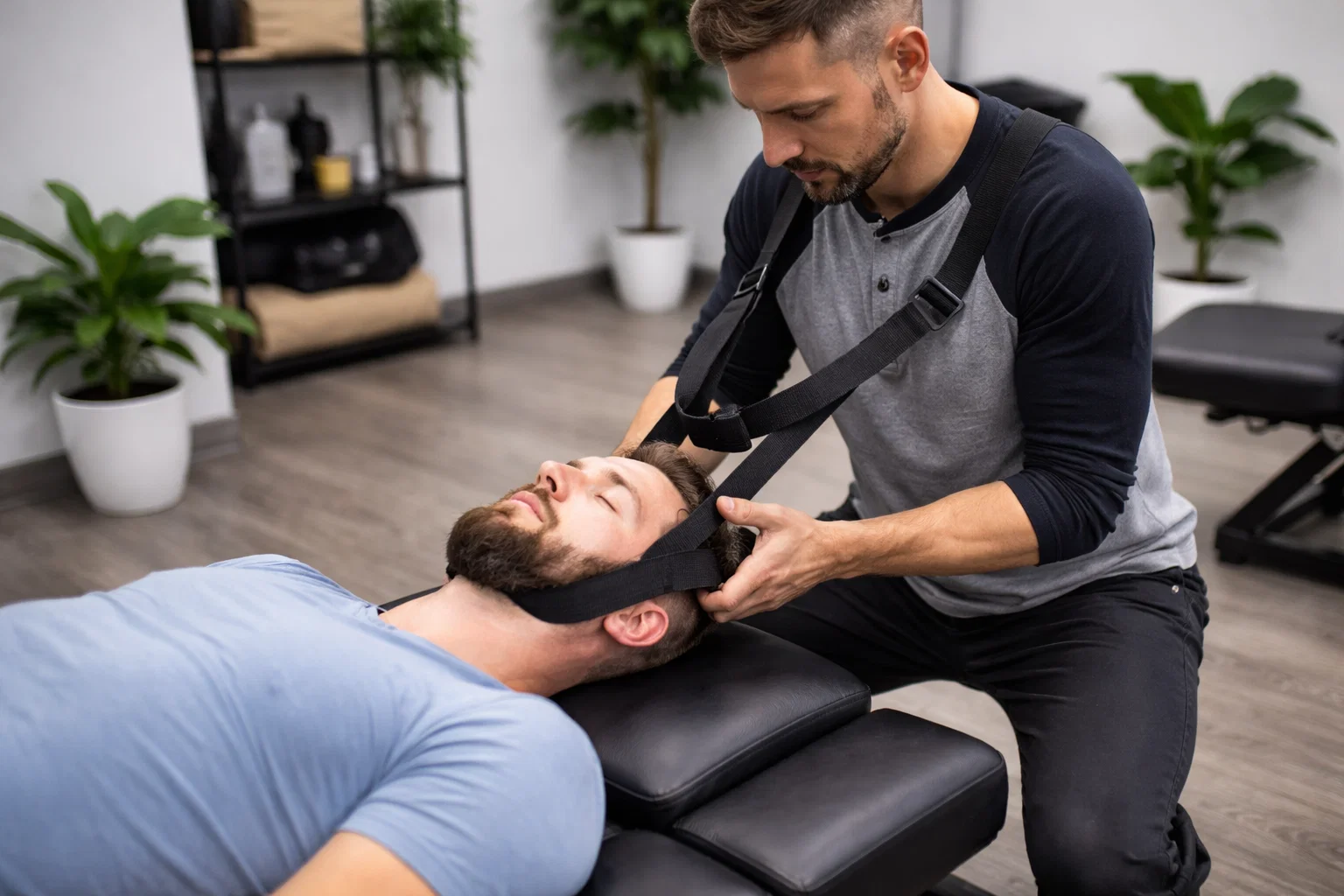
The Y-Strap is a traction-based chiropractic technique derived from structural correction and postural rehabilitation methods.
During the procedure:
- The patient lies face-up on a chiropractic table
- A specialized strap is positioned around the head and upper neck
- Controlled axial traction is applied along the vertical axis of the spine
This traction creates a decompressive force intended to reduce mechanical pressure within the spine.
The goals of Y-Strap decompression may include:
- Spinal decompression
- Reduced pressure on intervertebral discs
- Improved joint mobility
- Relief of nerve compression
- Reduction of muscular tension
During the adjustment, patients may hear a popping sound. This is known as joint cavitation, which occurs when gases within synovial fluid rapidly release due to pressure changes inside the joint.
The sound does not represent bones breaking or structural damage.
How Y-Strap Decompression Affects the Spine
The Y-Strap technique primarily applies axial traction to the cervical spine and upper thoracic spine.
This traction can temporarily reduce pressure inside spinal discs and slightly increase joint spacing between vertebrae.
Spinal decompression may help patients experiencing:
- Cervical spine stiffness
- Upper thoracic restriction
- Postural compression
- Chronic neck tension
- Mild disc bulging
- Forward head posture
Reducing mechanical compression may help relieve irritation affecting spinal nerves and improve overall spinal mobility.
However, traction techniques should only be performed after a comprehensive clinical evaluation to ensure the treatment is appropriate and safe.
Potential Benefits of Spinal Decompression in Keizer

When clinically indicated, Y-Strap decompression may provide several benefits.
These may include:
- Reduced neck pain
- Improved cervical mobility
- Decreased muscle tightness
- Increased spinal flexibility
- Improved posture
- Temporary relief from compression-related discomfort
Patients in Keizer who experience postural stress from prolonged computer work or mild disc irritation may benefit when decompression is included within a structured chiropractic treatment program.
However, decompression is rarely used as a standalone treatment. It is typically combined with other therapies to improve long-term outcomes.
Safety Considerations and Potential Risks
Although chiropractic care is widely considered safe when performed by licensed professionals, not every patient is an appropriate candidate for Y-Strap traction.
Potential risks may include:
- Excessive strain on cervical ligaments
- Aggravation of disc injuries
- Irritation of spinal instability
- Temporary muscle soreness
In rare cases, individuals with underlying vascular conditions may be at risk for complications related to cervical trauma.
One extremely rare but serious condition is vertebral artery dissection, which can increase stroke risk. Because of this possibility, careful screening is essential before performing cervical traction techniques.
At ProCare Chiropractic in Keizer, every patient undergoes a comprehensive examination that may include:
- Detailed spinal evaluation
- Neurological assessment
- Orthopedic testing
- Medical history review
- Identification of contraindications
Many patients benefit from gentler techniques, instrument-assisted adjustments, or controlled mechanical decompression rather than high-force traction methods.
Y-Strap vs. Mechanical Spinal Decompression Therapy
It is important to understand the difference between manual traction techniques and controlled mechanical spinal decompression therapy.
Manual Y-Strap traction involves a single decompression movement performed by the chiropractor.
Mechanical spinal decompression systems, however, use specialized equipment to apply gradual, precisely measured traction over multiple sessions.
Mechanical decompression is often preferred for conditions such as:
- Herniated discs
- Chronic lumbar spine compression
- Sciatica
- Degenerative disc disease
The most appropriate treatment approach depends on several clinical factors, including:
- Severity of injury
- Disc involvement
- History of auto accidents
- Degenerative spinal changes
- Patient tolerance and response to treatment
Chiropractic care should never be guided by online demonstrations or viral videos. Instead, treatment decisions must be based on clinical diagnosis and patient-specific needs.
Chiropractic Care After Auto Accidents in Keizer
Patients who have experienced whiplash or cervical spine trauma following a car accident require careful evaluation before any traction-based treatment is considered.
In many auto accident cases, the early stages of treatment focus on stabilization and gentle rehabilitation.
Auto accident chiropractic care may include:
- Gentle spinal adjustments
- Soft tissue therapy
- Corrective stabilization exercises
- Postural rehabilitation
- Proper documentation for PIP insurance claims
More aggressive traction techniques are generally avoided during the early phases of injury recovery.
Individualized Chiropractic Care in Keizer
At ProCare Chiropractic, treatment is always individualized and guided by evidence-based clinical assessment.
Effective spinal care requires:
- Accurate diagnosis
- Identification of biomechanical dysfunction
- Evaluation of disc health
- Assessment of nerve involvement
- Structured rehabilitation planning
For many patients with herniated discs, chronic neck pain, auto accident injuries, or degenerative spinal conditions, conservative decompression therapy combined with corrective exercise produces the most reliable long-term outcomes.
Schedule a Chiropractic Consultation in Keizer, Oregon
If you are considering spinal decompression treatment or experiencing symptoms such as neck pain, disc discomfort, or spinal compression, a professional evaluation is the first step.
ProCare Chiropractic provides non-surgical spinal decompression therapy, whiplash treatment, disc injury care, auto accident chiropractic services, and evidence-based spinal rehabilitation.
ProCare Chiropractic – Keizer
Address: 3785 River Rd N. Keizer, OR 97303Book: Online BookingPhone: (971) 414-3440
Contact our clinic today to schedule a comprehensive chiropractic consultation and receive a personalized treatment plan focused on safe, effective, and long-term spinal health.