
Sciatica vs. Piriformis Syndrome: How to Tell Which One Is Causing Your Leg Pain
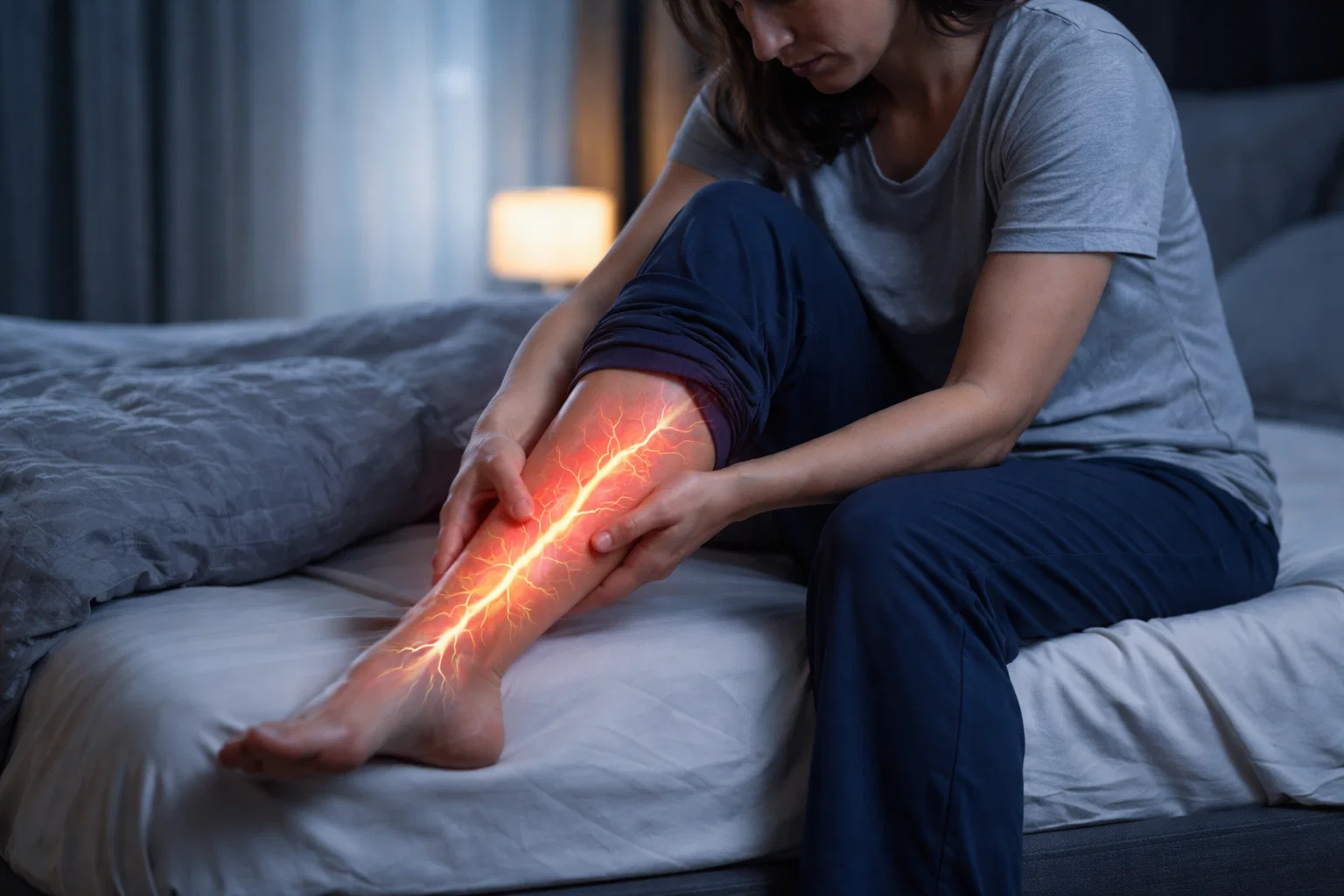
Every day, millions of people around the world experience shooting pain, numbness, or tingling that radiates down their leg. Office workers who sit for long hours, drivers, athletes — especially runners and cyclists — and even those with sedentary lifestyles can all face this issue. You might notice a dull ache in your buttock that spreads down your leg, or a feeling that your leg is “falling asleep” or “shooting” with pain when you walk.
Here’s the tricky part: leg pain isn’t always sciatica, as many people assume. The most common reason this condition gets confused with sciatica is piriformis syndrome. Many people try to treat back pain without understanding that the source of the problem may be hidden deep in the gluteal muscle. Ignoring these sensations or treating them incorrectly can turn temporary discomfort into a chronic condition that affects your quality of life, limits mobility, and makes everyday tasks difficult.
If you’re looking for effective relief, understanding the difference between these two conditions is the first step toward proper treatment. Modern medicine offers both conservative methods (therapeutic exercise, physiotherapy) and, in some cases, minimally invasive interventions — but the key to success is accurate diagnosis.
What Is Sciatica?
Sciatica is not a standalone disease but a symptom complex caused by irritation or compression of the sciatic nerve roots in the lumbar spine. The sciatic nerve is the largest nerve in the human body. It forms from nerve roots that exit the spinal cord in the lower back, pass through the buttock, and travel down the back of each leg to the foot.
When something presses on these nerve roots — such as a herniated disc, spinal stenosis, or degenerative disc disease — it triggers inflammation and pain that follows the path of the nerve. This is what people typically refer to as “sciatica.”
Key Characteristics of Sciatica:
-
Pain that originates in the lower back and radiates down the back of the thigh and calf
-
Pain that follows a specific dermatome (nerve pathway) — often below the knee
-
Neurological symptoms: numbness, tingling, or weakness in the leg or foot
-
Symptoms that worsen with sitting, bending forward, or coughing/sneezing (due to increased intraspinal pressure)
-
May be accompanied by lower back pain and stiffness
What Is Piriformis Syndrome?
Piriformis syndrome occurs when the piriformis muscle — a small, deep muscle in the buttock that helps rotate the hip — becomes tight, spasms, or swells. This muscle sits directly over the sciatic nerve. When it becomes irritated, it compresses or entraps the sciatic nerve, mimicking the symptoms of sciatica.
The irony? In about 15-20% of the population, the sciatic nerve actually runs through the piriformis muscle rather than underneath it, making these individuals more susceptible to this condition.
Key Characteristics of Piriformis Syndrome:
-
Pain that originates in the buttock and radiates down the back of the thigh (often not below the knee)
-
Pain that worsens with prolonged sitting, especially on hard surfaces
-
Pain that intensifies with activities that engage the piriformis — climbing stairs, running, or rotating the hip outward
-
No lower back pain (usually)
-
Tenderness when pressing on the piriformis muscle in the buttock
-
Symptoms that improve with lying on the affected side or stretching the muscle
The 5 Key Differences Between Sciatica and Piriformis Syndrome
Many people don’t realize they’re dealing with the wrong condition until they’ve tried treatments that don’t work. Here are five critical differences to watch for:
Difference 1: Location of Pain
| Sciatica | Piriformis Syndrome |
|---|---|
| Pain typically originates in the lower back | Pain originates in the deep buttock |
| Radiates down the back of the leg, often below the knee | Radiates down the back of the thigh, rarely below the knee |
| May involve the foot and toes | Usually stops at the knee or upper calf |
Difference 2: Neurological Signs
-
Sciatica: Often presents with numbness, tingling, or muscle weakness in specific areas of the leg and foot. Reflexes (like the ankle jerk) may be diminished.
-
Piriformis Syndrome: Neurological symptoms are less common. When present, they’re typically limited to the buttock and back of the thigh, without clear dermatomal patterns.
Difference 3: Response to Posture and Movement
-
Sciatica: Symptoms worsen with bending forward, sitting with legs straight, coughing, or sneezing — activities that increase pressure on spinal nerves.
-
Piriformis Syndrome: Symptoms worsen with prolonged sitting (especially on hard surfaces), climbing stairs, running, or crossing legs. Pain improves when lying on the back with knees bent.
Difference 4: Lower Back Involvement
-
Sciatica: Almost always accompanied by lower back pain or stiffness, as the issue originates in the lumbar spine.
-
Piriformis Syndrome: Typically no lower back pain — the problem is purely in the buttock muscle.
Difference 5: Physical Exam Findings
-
Sciatica: Tests like the Straight Leg Raise (SLR) — where you lift the leg while lying flat — provoke pain in the lower back and leg. This indicates nerve root irritation in the spine.
-
Piriformis Syndrome: Tests like the FAIR test (Flexion, Adduction, Internal Rotation) — where you cross the affected leg over the opposite knee and pull it toward the chest — provoke pain in the buttock, confirming piriformis involvement.
The Hidden Costs of Misdiagnosis
Let’s be clear: treating the wrong condition is never a good idea. When piriformis syndrome is mistaken for sciatica — or vice versa — several problems can arise:
-
You may waste time and money on treatments that don’t address the real cause
-
Muscle imbalances and trigger points can become harder to correct
-
You may develop compensatory movement patterns that lead to other issues (hip, knee, or lower back pain)
-
Your quality of life suffers unnecessarily
-
You could end up with unnecessary imaging, injections, or even surgery
From a functional perspective, the consequences extend beyond the leg. When you’re walking with pain, you alter your gait. The gluteus medius on the opposite side overworks, the iliopsoas tightens, and the lower back compensates. Over time, this kinetic chain dysfunction can affect your entire body — from your feet to your neck.
How to Tell Which One You Have: A Simple Self-Assessment
While a professional evaluation is essential, here are a few ways to get a clearer picture:
The “Seated Test”
-
Sit on a firm chair for 5-10 minutes.
-
If your pain increases significantly in the buttock but your lower back feels fine → suspect piriformis syndrome.
-
If your pain radiates down the leg with no specific buttock tenderness → suspect sciatica.
The “Straight Leg Raise” (SLR) Test
-
Lie on your back with legs straight.
-
Slowly lift the affected leg while keeping it straight.
-
If you feel pain in the lower back before reaching 60-70° → sciatica.
-
If you feel pain in the buttock but not the lower back → piriformis syndrome.
The “FAIR” Test
-
Lie on your back, cross the affected leg over the opposite knee, and pull the knee toward your opposite shoulder.
-
If this reproduces buttock pain → piriformis syndrome.
-
If it doesn’t provoke significant pain but SLR does → sciatica.
Important: These self-tests are not definitive. Only a qualified healthcare professional can confirm a diagnosis. If you’re in severe pain, have bowel/bladder changes, or experience progressive weakness, seek immediate medical attention — these can be signs of cauda equina syndrome, a medical emergency.
Why Getting the Right Diagnosis Matters for Treatment
When you’re dealing with leg pain, you have options. But not all treatment approaches are created equal. Here’s why accurate diagnosis makes all the difference:
For Sciatica (Spinal Origin)
-
Treatment focuses on the spine: Spinal adjustments, traction, decompression therapy, and core stabilization exercises
-
Anti-inflammatory measures: Ice/heat therapy, NSAIDs, or epidural steroid injections
-
Activity modification: Avoiding heavy lifting, prolonged sitting, and forward bending
-
Surgical referral in severe cases (if conservative care fails for 6-12 weeks)
For Piriformis Syndrome (Muscular Origin)
-
Treatment focuses on the muscle: Deep tissue massage, trigger point therapy, dry needling, and stretching
-
Myofascial release techniques targeting the piriformis and surrounding hip muscles
-
Strengthening of the gluteal and core muscles to prevent recurrence
-
Ergonomic adjustments: Using a cushion for sitting, avoiding hard chairs, adjusting car seats
-
Stretching routines specific to the piriformis (e.g., the “Figure-4” stretch)
Key Corrective Exercises (For Both Conditions)
Research shows that performing these exercises consistently can significantly improve symptoms — but only if they match your specific condition. Here are exercises for each:
For Sciatica (Spinal Decompression and Core Stability)
Knee-to-Chest Stretch:
Lie on your back, pull one knee to your chest, and hold for 30 seconds. Repeat 3 times on each side. This gently decompresses the lumbar spine.
Pelvic Tilts:
Lie on your back with knees bent and feet flat. Gently flatten your lower back against the floor by tilting your pelvis upward. Hold for 5 seconds, relax, and repeat 10 times. This strengthens the deep abdominal muscles that support your spine.
Cat-Cow Stretch:
On your hands and knees, alternate between arching your back up (cat) and dropping it down (cow). This improves spinal mobility and reduces nerve root irritation.
Nerve Gliding (Flossing):
Lie on your back with knees bent. Straighten one leg and gently point/toe flex while nodding your head forward and back. This mobilizes the sciatic nerve without stretching it.
For Piriformis Syndrome (Muscle Release and Lengthening)
Figure-4 Stretch:
Lie on your back with knees bent. Cross the affected ankle over the opposite knee. Gently pull the opposite knee toward your chest until you feel a stretch in your buttock. Hold for 30 seconds. Repeat 3 times.
Pigeon Pose:
From a hands-and-knees position, bring one knee forward toward your opposite wrist and extend the other leg straight back. Lower your hips toward the floor and hold for 30-60 seconds. This deeply stretches the piriformis and hip rotators.
Foam Rolling the Piriformis:
Sit on a foam roller placed under your buttock on the affected side. Cross the opposite ankle over the affected knee. Roll slowly back and forth, targeting the trigger points. Spend 1-2 minutes on each side.
Hip Abductor Strengthening:
Lie on your side with the affected leg on top. Lift the top leg slowly, keeping it straight, and lower it down. Repeat 15 times for 3 sets. This strengthens the gluteus medius, which helps offload the piriformis.
Professional Treatment Options

While these exercises are powerful, they work best with in-clinic care. Here’s what professional treatment can offer:
For Sciatica:
-
Chiropractic spinal adjustments to restore proper alignment of lumbar vertebrae
-
Physical therapy with a focus on core stabilization and posture
-
Decompression therapy to reduce pressure on herniated discs
-
Electrotherapy (TENS, ultrasound) for pain relief and tissue healing
For Piriformis Syndrome:
-
Deep tissue massage and myofascial release targeting the piriformis muscle
-
Dry needling or acupuncture to release trigger points
-
Physical therapy with a focus on hip strengthening and gait re-education
-
Extracorporeal shockwave therapy for chronic trigger points
Studies show that combining targeted exercises with manual therapy yields significantly better outcomes than either approach alone. Most patients begin to feel symptom relief within 1-3 sessions of the correct treatment, though lasting structural changes may take 4-8 weeks of consistent care.
Ergonomic and Lifestyle Adjustments
Your daily habits play a huge role in both conditions:
For Sciatica:
-
Sit with support: Use a lumbar roll to maintain the natural curve of your lower back
-
Avoid soft sofas: They collapse your spine’s natural alignment
-
Stand up frequently: Take breaks every 30-45 minutes to walk and stretch
-
Sleep smart: Lie on your side with a pillow between your knees, or on your back with a pillow under your knees
For Piriformis Syndrome:
-
Use a cushion: When sitting, use a gel or donut cushion to reduce pressure on the piriformis
-
Avoid hard chairs: Choose seats with adequate padding
-
Don’t sit with a wallet in your back pocket: This directly compresses the piriformis
-
Adjust your car seat: Tilt your seat slightly forward to reduce hip flexion during driving
-
Sleep with a pillow between your knees: This keeps the hip in a neutral position
Frequently Asked Questions
Q: What’s the main difference between sciatica and piriformis syndrome?
A: Sciatica originates in the lower spine (nerve root compression), while piriformis syndrome originates in the buttock muscle (muscle entrapment of the nerve). Sciatica often involves lower back pain and symptoms below the knee; piriformis syndrome typically involves buttock pain that stops at or above the knee.
Q: Can I have both conditions at the same time?
A: Yes. It’s actually quite common. Lumbar spine issues can cause muscle guarding and spasms in the piriformis, creating a “double crush” phenomenon. That’s why professional evaluation is so important.
Q: How do I know which one I have without seeing a doctor?
A: You can try the self-tests described above, but they’re not definitive. Only a healthcare professional — such as a chiropractor, physiatrist, or orthopedist — can make an accurate diagnosis through a detailed physical exam and, if needed, imaging (MRI, CT, or nerve conduction studies).
Q: How long does it take to recover?
A: For piriformis syndrome, significant improvement is often seen within 2-4 weeks of targeted stretching and manual therapy. For sciatica caused by a herniated disc, recovery typically takes 4-8 weeks with conservative care. Surgery, if needed, has a longer recovery timeline.
Q: Can these conditions be prevented?
A: Absolutely. Regular stretching, strengthening of core and gluteal muscles, proper posture, and ergonomic adjustments are your best defense. For athletes, proper warm-up and cool-down routines are essential.
Q: When should I see a doctor immediately?
A: Seek emergency care if you experience:
-
Sudden loss of bladder or bowel control
-
Progressive weakness in your leg or foot (foot drop)
-
Severe, unrelenting pain that doesn’t improve with rest
-
Numbness in the groin area (saddle anesthesia)
These can indicate cauda equina syndrome — a medical emergency requiring urgent surgery.
Take the First Step Toward a Pain-Free Life
Leg pain isn’t just an inconvenience — it’s a signal from your body that something needs attention. Whether you’re dealing with sciatica from a herniated disc or piriformis syndrome from a tight muscle, the right diagnosis is the foundation of effective treatment.
Here’s what you can do today:
-
Pay attention to your symptoms — where does your pain start? Where does it go?
-
Try the self-assessment tests — they’ll give you clues about which condition you might have
-
Make ergonomic adjustments — whether it’s your chair, your mattress, or your car seat, small changes can make a big difference
-
Start the appropriate exercises — but don’t push through sharp pain. Gentle, consistent effort wins the race
-
Schedule a professional evaluation — chiropractic care, physical therapy, or a medical consultation can give you a clear diagnosis and a personalized treatment plan
Remember: Early intervention offers the best outcomes. The sooner you address the root cause of your leg pain, the faster you’ll return to the activities you love — whether it’s walking your dog, playing with your kids, or just sitting comfortably through a long meeting.
Your spine and your muscles work together as a team. When one part isn’t functioning properly, the entire system compensates. Don’t let misdiagnosis keep you in pain. Take the first step today — your future self will thank you.
Disclaimer: This article is for informational purposes only and does not constitute medical advice. Always consult a qualified healthcare professional for an accurate diagnosis and treatment plan tailored to your specific condition.