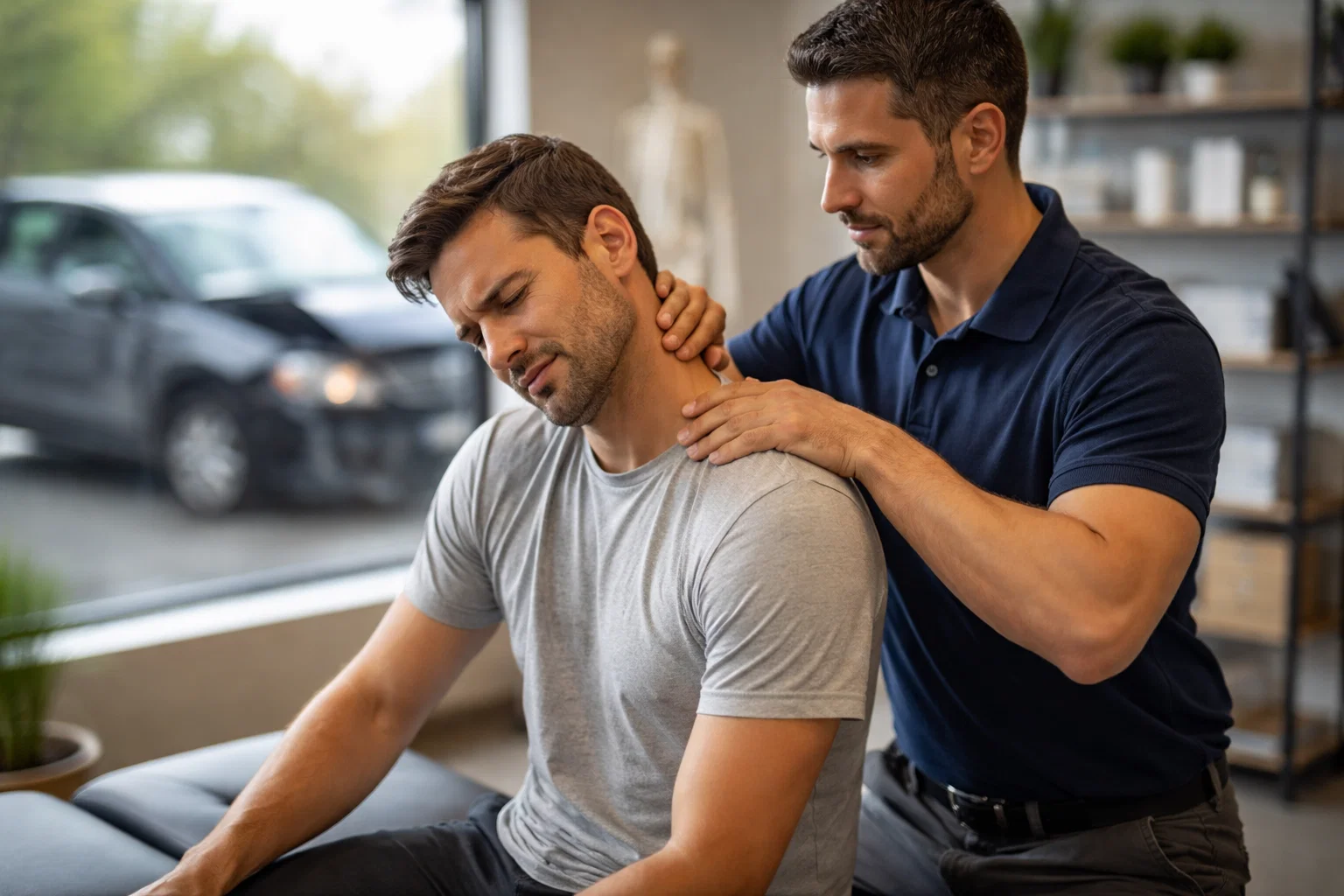
What to Do Immediately After a Car Accident: Step-by-Step Guide to Protect Your Health, Insurance Claim, and Spine

A car accident can happen in a split second, but the decisions you make in the minutes, hours, and days afterward can affect your health, finances, and quality of life for years. Whether the collision was a minor fender-bender or a serious crash, knowing exactly what to do after a car accident is critical.
Many people focus only on vehicle damage and insurance paperwork, overlooking one of the most important aspects: their physical health, especially injuries to the neck, spine, and nervous system. Some of the most serious car accident injuries don’t cause immediate pain and may take days or even weeks to appear.
This in-depth guide explains what you should do immediately after a car accident, why each step matters, and how early medical and chiropractic care can prevent long-term complications.
Why Immediate Action After a Car Accident Is So Important
Car accidents place extreme forces on the body. Even at low speeds, sudden deceleration can cause the spine and soft tissues to move beyond their normal range of motion.
Failing to take the right steps can lead to:
- Undiagnosed injuries
- Chronic neck or back pain
- Long-term joint stiffness
- Nerve damage
- Weakened insurance or injury claims
Taking action early protects both your body and your legal rights.
Step 1: Check Yourself for Injuries Immediately After the Accident
The first thing you should do after a car accident is assess your own condition.
What to Look For
- Head pain or dizziness
- Neck stiffness or limited movement
- Back pain
- Numbness or tingling in arms or legs
- Difficulty breathing
- Confusion or disorientation
If you suspect any serious injury, call 911 immediately. If you are seriously injured, do not try to move unless you are in immediate danger.
Step 2: Check Your Passengers for Injuries
If you can move safely, check on your passengers.
- Ask if they feel pain
- Look for visible injuries
- If someone is seriously injured, tell them not to move
- Call 911 right away
Passengers often experience whiplash, spinal injuries, or concussions, even if they say they “feel okay” at first.
Step 3: Move to a Safe Location (If Possible)
If the accident occurred in traffic and it’s safe to do so:
- Move yourself and others to the side of the road
- Turn on hazard lights
- If your vehicle can be driven safely, move it out of traffic
Never put yourself at risk of being hit by another vehicle.
Step 4: Call 911 and Report the Accident
Even if injuries appear minor, always report the accident.
Why This Matters
- Police reports are often required for insurance claims
- The report documents the time, location, and circumstances
- It creates an official record linking the accident to your injuries
In many states, failing to report an accident is illegal.
Step 5: Wait for Police and Emergency Services

When police arrive:
- Answer questions honestly
- Do not admit fault
- Stick to the facts
Ask for:
- Officer names and badge numbers
- Instructions on how to obtain the accident report
If police cannot come to the scene, you must file a report at the nearest police station.
Step 6: Exchange Information With the Other Driver
According to insurance guidelines, you should exchange:
- Full name
- Address and phone number
- Email address
- Insurance company and policy number
- Driver’s license number
- License plate number
- Vehicle make, model, and color
Do not argue or discuss blame at the scene.
Step 7: Document the Accident Thoroughly
Documentation protects you.
What to Record
- Photos and videos of all vehicles
- Damage from multiple angles
- Road conditions and traffic signs
- Injuries (if visible)
- Names and contact info of witnesses
The more documentation you have, the stronger your insurance or injury claim will be.
Step 8: Notify Your Insurance Company as Soon as Possible
Contact your insurance company promptly.
They may:
- Start your claim
- Arrange towing
- Advise you on next steps
Stick to facts and avoid speculation.
Step 9: See a Medical Doctor After a Car Accident (Even If You Feel Fine)
Many car accident injuries are delayed.
Common Delayed Symptoms
- Neck pain
- Back pain
- Headaches
- Fatigue
- Tingling or numbness
- Difficulty concentrating
A medical evaluation helps rule out:
- Internal injuries
- Concussions
- Fractures
Early diagnosis prevents complications.
Step 10: See a Chiropractor Immediately After a Car Accident
Seeing a chiropractor after a car accident is one of the most important — and most overlooked — steps.
Chiropractors specialize in musculoskeletal and spinal injuries, which are the most common injuries in car crashes.
Why Chiropractic Care Matters After an Accident
- Detects hidden spinal misalignments
- Treats whiplash and soft tissue injuries
- Reduces inflammation
- Improves range of motion
- Prevents scar tissue buildup
- Helps avoid chronic pain
You do not need a referral to see a chiropractor.
Common Injuries Chiropractors Treat After Car Accidents
Whiplash
Rapid forward-backward movement of the neck causing ligament and muscle damage.
Spinal Misalignment
Even low-impact accidents can shift vertebrae out of alignment.
Herniated or Bulging Discs
Discs can press on nerves, causing radiating pain.
Soft Tissue Injuries
Muscles and ligaments are often injured but not visible on X-rays.
How Chiropractic Care Supports Insurance Claims
Consistent chiropractic care provides:
- Detailed documentation
- Clear injury timelines
- Objective findings
- Proof of ongoing treatment
This can significantly strengthen personal injury or auto insurance claims.
What Happens During a Post-Accident Chiropractic Evaluation
A chiropractor may perform:
- Spinal and posture assessment
- Range-of-motion testing
- Neurological exams
- Soft tissue evaluation
Based on findings, they’ll create a custom treatment plan.
How Soon Should You See a Chiropractor After a Car Accident?
As soon as possible — ideally within 24–72 hours.
Early care:
- Reduces inflammation
- Prevents chronic pain
- Improves recovery outcomes
Waiting too long can allow injuries to worsen.
Car Accident Chiropractic Care in Portland, Oregon
If you’ve been involved in a car accident and want expert spinal care, professional chiropractic treatment can make a major difference in your recovery.
At ProCare Chiropractic Center, patients receive comprehensive auto-accident chiropractic care designed to:
- Identify hidden injuries
- Relieve pain naturally
- Restore spinal alignment
- Support full recovery
Services Include
- Auto accident evaluations
- Chiropractic adjustments
- Soft tissue therapy
- Rehabilitation exercises
- Documentation for insurance claims
Don’t Ignore Symptoms After a Car Accident
Ignoring pain or “waiting it out” is one of the biggest mistakes people make after a car accident.
Untreated injuries can lead to:
- Chronic neck or back pain
- Reduced mobility
- Nerve damage
- Arthritis
- Long-term disability
Schedule Your Chiropractic Evaluation Today
A car accident doesn’t end when you leave the scene — its effects can last much longer if injuries go untreated.
Address: 10915 SE Stark St. Suite 200, Portland, OR 97216
Book: Online Booking
Phone: (503) 899-0707