
Workplace Injury Treatment in Keizer, Oregon: From Injury to Safe Return to Work
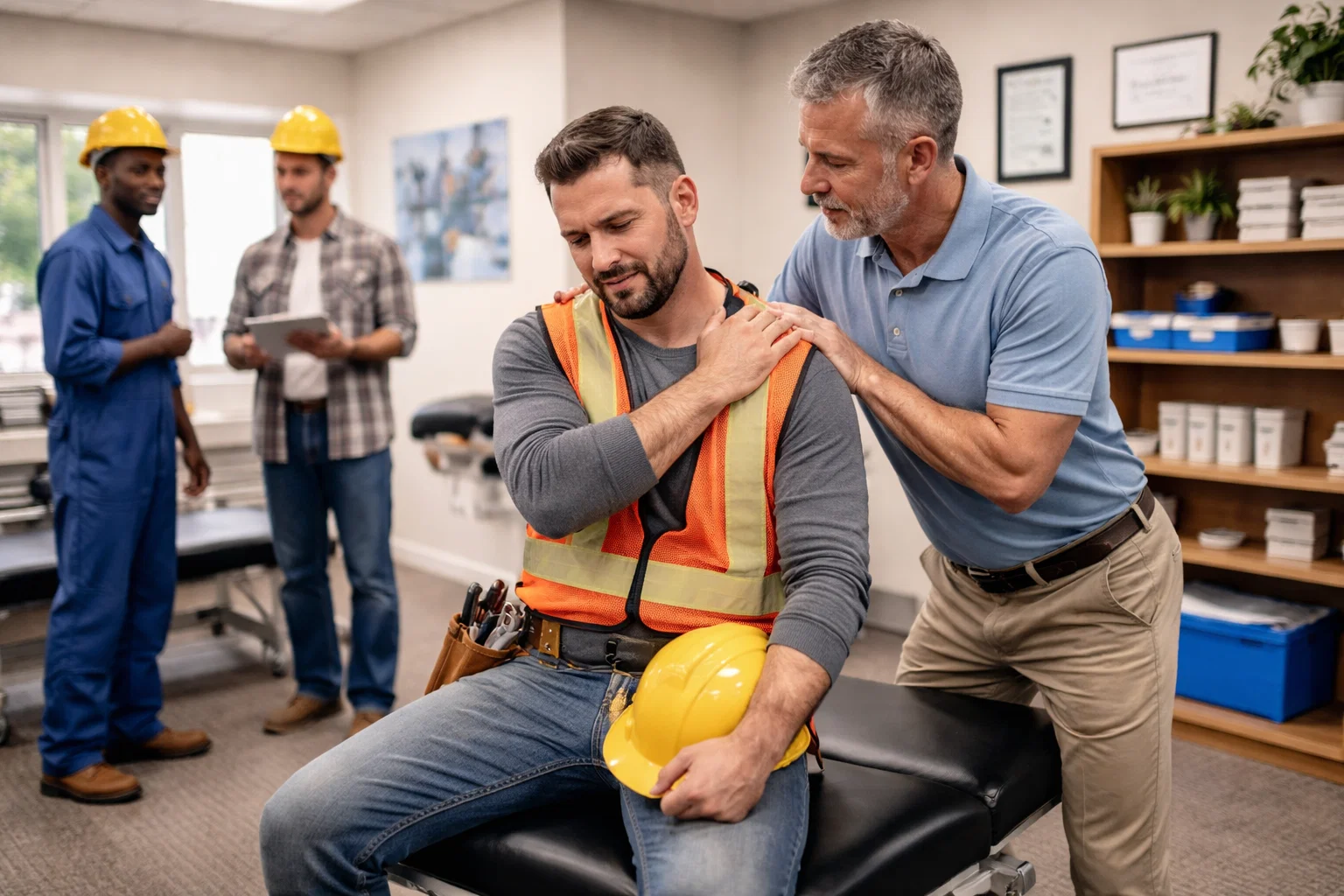
Workplace injuries are more than medical problems—they also involve documentation, insurance claims, and functional recovery planning. In Keizer, Oregon, and across Marion County, many workplace injury treatment delay because they are unsure how to report the injury, whether it qualifies for workers’ compensation, or what type of medical care is appropriate.
Delaying care often leads to:
- Worsening soft tissue damage
- Chronic back or neck pain
- Reduced mobility and function
- Longer time away from work
- Complicated workers’ compensation claims
Following a structured treatment pathway improves both medical recovery and claim stability.
At ProCare Chiropractic – Keizer, workplace injury care focuses on measurable functional improvement, clear medical documentation, and a safe return-to-work strategy.
What Qualifies as a Workplace Injury in Oregon?
A workplace injury includes any injury or medical condition that occurs while performing job-related duties. These injuries can occur suddenly or develop gradually over time.
Examples include:
- Slip-and-fall accidents at work
- Lifting injuries or overexertion
- Sudden twisting or awkward movement
- Machinery or equipment strain
- Repetitive motion injuries
- Prolonged desk-related neck or back pain
- Gradual-onset repetitive strain conditions
Gradual injuries are often misunderstood. For example, chronic neck pain from poor workstation ergonomics or repetitive wrist strain may still qualify as a work-related injury when clearly linked to job duties.
Workplace injuries frequently affect the:
- Cervical spine (neck)
- Lumbar spine (lower back)
- Shoulders
- Wrists and forearms
- Knees
- Hips
Functional limitations—such as difficulty lifting, sitting, sleeping, or driving—play an important role in treatment planning.
Immediate Steps After a Workplace Injury
1. Report the Injury Immediately
If you are injured at work in Keizer, you should notify your employer as soon as possible and complete the required workers’ compensation documentation (Form 801 in Oregon).
Prompt reporting helps protect your eligibility for workers’ compensation benefits.
Delaying the report can complicate your claim and create questions about how the injury occurred.
2. Seek Medical Evaluation
Most workplace musculoskeletal injuries do not require emergency care, but they should still be evaluated quickly.
Early evaluation allows healthcare providers to:
- Identify sprains or strains in ligaments and muscles
- Detect restricted joint movement
- Evaluate possible disc involvement
- Assess nerve irritation
- Establish objective baseline findings
Prompt medical documentation helps support both recovery and workers’ compensation claim approval.
Common Workplace InjuryTreatment in Keizer
At our clinic, many workplace injury cases involve mechanical stress on the spine and joints.
Common conditions include:
- Lower back strains from lifting or manual labor
- Neck strain from prolonged computer use
- Shoulder impingement from repetitive overhead work
- Wrist and forearm strain from repetitive tasks
- Mid-back stiffness from prolonged sitting
- Sciatica-like symptoms from prolonged driving or warehouse work
Many of these injuries respond well to conservative chiropractic care and rehabilitation.
Why Chiropractic Care Is Effective for Workplace Injuries

Most occupational injuries involve biomechanical dysfunction of joints and muscles. Chiropractic treatment focuses on restoring normal movement and reducing mechanical stress on injured tissues.
Treatment plans may include:
- Gentle chiropractic spinal adjustments
- Joint mobilization techniques
- Soft tissue therapy for muscle tension
- Trigger point therapy
- Functional rehabilitation exercises
- Job-specific conditioning
- Ergonomic correction strategies
The goal of treatment is not just pain relief—it is restoring functional capacity so employees can safely perform their job duties.
The Importance of Documentation for Workers’ Compensation
Workers’ compensation claims rely heavily on detailed medical records.
Documentation typically includes:
- Mechanism of injury
- Date and time of occurrence
- Body regions affected
- Objective examination findings
- Functional limitations
- Measurable progress during treatment
- Treatment goals and care plan
- Return-to-work recommendations
Clear documentation helps prevent claim disputes and ensures treatment meets medical necessity standards.
Return-to-Work Planning
Recovery from workplace injuries rarely happens overnight. Many workers benefit from a graduated return-to-work plan.
Temporary work modifications may include:
- Reduced lifting restrictions
- Limited bending or twisting
- Ergonomic workstation adjustments
- Shortened work shifts
- Temporary reassignment to lighter duties
Rehabilitation exercises are often tailored to job demands. For example, a warehouse worker may require different conditioning than someone working in an office environment.
A structured return-to-work strategy reduces the risk of reinjury and supports long-term recovery.
Risks of Delaying Workplace Injury Treatment
Ignoring workplace injuries or delaying treatment can lead to more serious complications, including:
- Chronic lower back pain
- Persistent neck stiffness
- Reduced lifting capacity
- Frequent headaches
- Joint instability
- Long-term disability claims
- Accelerated spinal degeneration
Early evaluation helps prevent compensation patterns that prolong recovery.
Preventing Future Workplace Injuries
Long-term recovery also includes preventive strategies to reduce the likelihood of repeat injuries.
Preventive measures may include:
- Ergonomic workstation adjustments
- Education on proper lifting techniques
- Core and spinal stabilizer strengthening
- Scheduled mobility breaks during work shifts
- Early evaluation when symptoms first appear
Preventive care helps reduce both reinjury risk and future workers’ compensation claims.
Schedule Workplace Injury Treatment in Keizer
If you were injured at work in Keizer, Oregon, early evaluation and structured treatment can shorten recovery time and support a safe return to work.
At ProCare Chiropractic – Keizer, we provide comprehensive workplace injury care focused on restoring mobility, documenting injuries properly, and guiding patients through the workers’ compensation process.
ProCare Chiropractic – Keizer
Address: 3785 River Rd N. Keizer, OR 97303Book: Online BookingPhone: (971) 414-3440
Call today to schedule your workplace injury evaluation and begin a function-based treatment plan designed to help you recover safely and return to work with confidence.