Common Injuries Children Sustain in Auto Accidents in Portland, OR
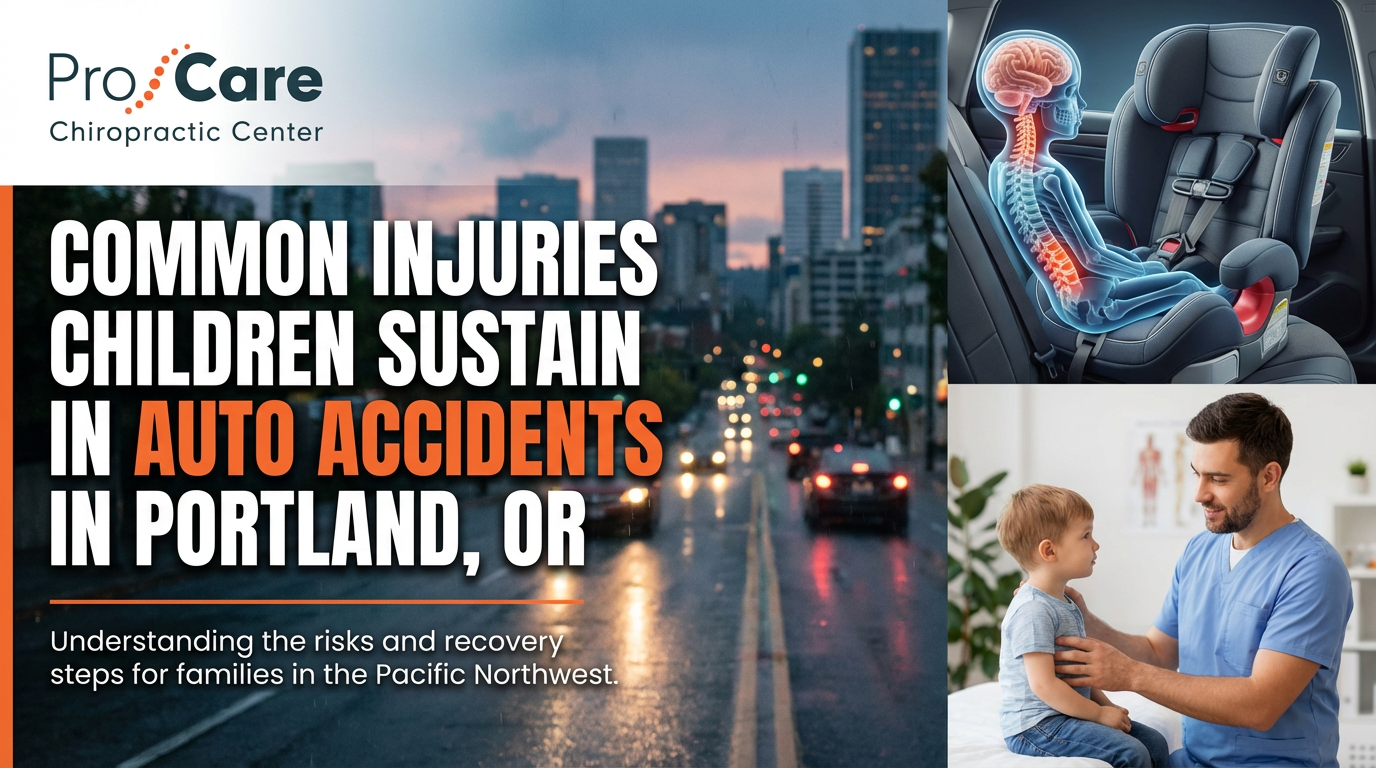
Every day, families across Portland, Oregon rely on their vehicles to get to school, daycare, sports practice, and work. While most trips end safely, motor vehicle accidents remain one of the leading causes of serious injury among children in the United States, and seeing a chiropractor after auto accident trauma can support proper evaluation and recovery when injuries occur.
As parents, we do everything possible to protect our children. We install car seats, use booster seats, and fasten seat belts carefully. Yet even with safety precautions in place, children can still sustain injuries during a crash—especially spinal and soft tissue injuries that are not immediately visible.
ProCare Chiropractic Clinic in Portland, OR provides gentle evaluations for pediatric spinal and soft tissue injuries. Protect your child’s health after a crash.
Understanding the most common pediatric auto accident injuries and how early evaluation can help is critical to protecting your child’s long-term health.
Why Children Are More Vulnerable in Car Accidents
Children are not simply “small adults.” Their bodies are still developing:
- Bones are softer and more flexible
- Ligaments are looser
- Neck muscles are less developed
- Heads are proportionally larger relative to body size
Because of these factors, children are particularly susceptible to head, neck, and spinal injuries during even low-speed collisions.
Additionally, children may not always clearly communicate pain or discomfort after an accident, which makes early professional evaluation especially important.
Common Auto Accident Injuries in Children
1. Head Injuries
For children under age 8, head injuries are among the most common crash-related injuries.
These include:
- Concussions
- Skull fractures
- Lacerations
- Contusions
- Traumatic brain injuries (TBIs)
Symptoms may not appear immediately. Warning signs include:
- Headaches
- Dizziness
- Vomiting
- Behavioral changes
- Sleep disturbances
- Sensitivity to light
Even mild concussions should be evaluated by a medical professional.
2. Whiplash and Neck Injuries
Whiplash is not limited to adults. In fact, children can experience cervical spine injuries even in minor fender-benders.
Because a child’s neck muscles are less developed, the rapid forward-and-backward motion during a collision can strain:
- Ligaments
- Muscles
- Intervertebral discs
- Facet joints
Symptoms may include:
- Neck stiffness
- Reduced range of motion
- Irritability
- Headaches
- Shoulder pain
Whiplash symptoms sometimes appear 24–72 hours after an accident.
3. Thoracic (Chest) Injuries
Seat belts and child restraint systems save lives—but the force of impact can still cause chest injuries.
Infants and young children may experience:
- Bruising from harness straps
- Rib fractures
- Internal soft tissue trauma
While these injuries are often minor, persistent chest pain or breathing changes should always be evaluated immediately.
4. Spinal Injuries
Spinal injuries in children can range from mild misalignments to more serious structural damage.
Signs of possible spinal involvement include:
- Back pain
- Uneven posture
- Difficulty sitting upright
- Complaints of leg pain or tingling
- Changes in coordination
Early spinal assessment is essential to prevent long-term mobility issues.
5. Bone Fractures
Children frequently sustain fractures in:
- Arms
- Wrists
- Collarbone
- Legs
These often occur when a child braces during impact or from secondary collisions inside the vehicle.
6. Lower Extremity Injuries
Children’s knees, shins, and feet may absorb force if they are positioned against the seat or floorboard.
Common complaints include:
- Knee pain
- Shin bruising
- Foot sprains
- Soft tissue strain
7. Psychological Trauma
Not all injuries are physical.
Children may develop emotional or psychological effects after a car accident, including:
- Anxiety
- Nightmares
- Fear of riding in vehicles
- Behavioral regression
- Difficulty concentrating
Parents should monitor for signs of emotional distress and seek professional support if symptoms persist.
Delayed Symptoms: Why Your Child Might Seem “Fine” at First
Adrenaline released during a crash can temporarily mask pain.
Additionally:
- Soft tissue swelling develops gradually
- Inflammation may peak 24–72 hours later
- Children may struggle to describe discomfort
A child who appears fine at the scene of the accident may develop symptoms days later.
This is why medical evaluation after any significant car accident in Portland is strongly recommended—even if your child seems uninjured.
The Importance of Early Evaluation After a Car Accident
Early evaluation helps:
- Detect hidden spinal misalignments
- Identify soft tissue injuries
- Document injuries for insurance claims
- Prevent chronic pain
- Reduce risk of long-term developmental issues
Untreated spinal injuries in children can affect posture, mobility, and musculoskeletal development.
How Chiropractic Care Can Help Children After a Car Accident
Pediatric chiropractic care focuses on gentle, age-appropriate techniques.
At ProCare Chiropractic Clinic in Portland, our approach includes:
- Careful spinal assessment
- Gentle adjustments
- Soft tissue therapy
- Postural guidance
- Mobility exercises
- Monitoring during recovery
Chiropractic care can help:
- Reduce inflammation
- Restore range of motion
- Improve spinal alignment
- Minimize long-term complications
- Support healthy growth and development
Our treatments are always tailored specifically to the child’s age and condition.
Preventing Child Auto Accident Injuries
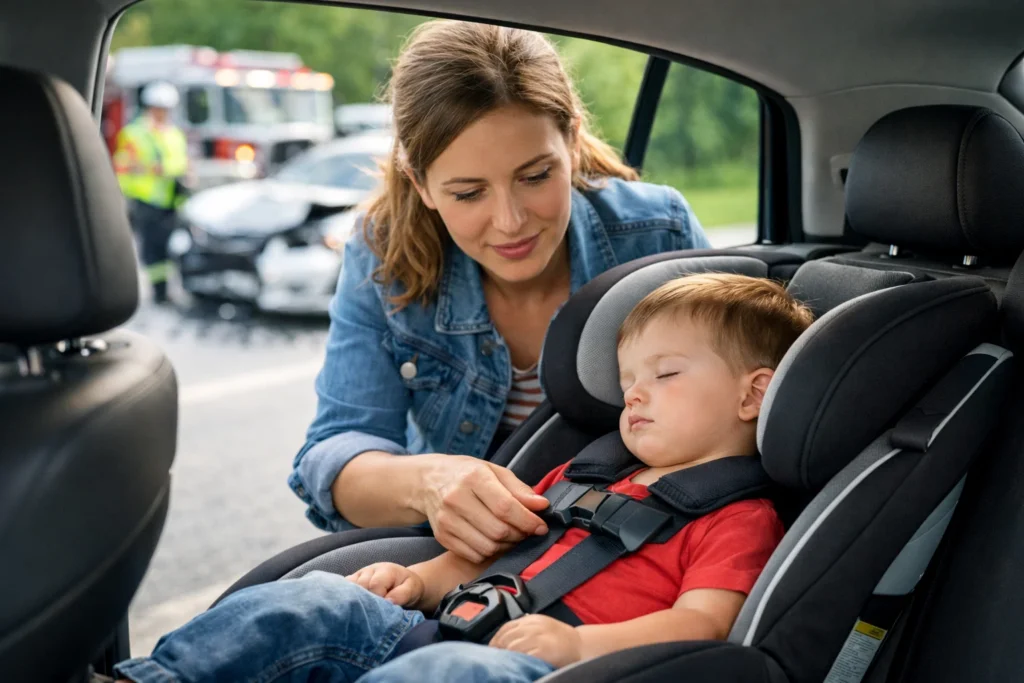
While no precaution eliminates all risk, parents can reduce injury likelihood by:
- Using age-appropriate car seats
- Ensuring correct installation
- Keeping children in booster seats as long as recommended
- Avoiding distracted driving
- Driving vehicles equipped with modern safety features
- Never driving while fatigued
Remaining alert behind the wheel is the single most important step in protecting your child.
Pediatric Auto Accident Chiropractic Care in Portland, OR
If your child has been involved in a car accident in Portland—even a minor one—don’t wait for symptoms to worsen.
ProCare Chiropractic Clinic
Address: 10915 SE Stark St. Suite 200, Portland, OR 97216Book: Online BookingPhone: (503) 899-0707
We provide compassionate, comprehensive chiropractic care for children recovering from auto accident injuries.
Protect Your Child’s Long-Term Health
Even injuries that appear minor can have lasting effects if left untreated. Early diagnosis and gentle, targeted care can make a significant difference in your child’s recovery and future well-being.
If your child was involved in a car accident in Portland, schedule a professional evaluation to ensure their spine, muscles, and nervous system are functioning properly.
Your child’s safety doesn’t end when the crash is over—recovery begins with the right care.