
Thyroid Hump or Buffalo Hump on the Back of the Neck in Keizer, Oregon

A hump on the back of the neck—often called a buffalo hump on the neck or dorsocervical fat pad—can be concerning for many individuals. Some patients in Keizer, Oregon, believe the condition is caused by thyroid dysfunction, while others assume it results only from poor posture. In reality, a visible hump at the base of the neck may develop due to hormonal imbalance, fat redistribution, structural spinal changes, or a combination of these factors.
At ProCare Chiropractic in Keizer, we evaluate patients who present with postural abnormalities, cervical spine dysfunction, thoracic kyphosis, and upper back deformities to determine whether the condition is structural, metabolic, or both. Accurate diagnosis is essential before beginning any corrective treatment.
What Is a Buffalo Hump?
A buffalo hump refers to a localized accumulation of fat between the shoulders at the base of the neck. It is different from a structural spinal hump caused by excessive thoracic curvature.
Although both conditions may look similar externally, the underlying causes are very different.
- Buffalo hump: primarily caused by fat redistribution
- Structural hump: caused by spinal misalignment and postural dysfunction
Distinguishing between these conditions is important because treatment approaches vary depending on the underlying cause.
Common Causes of a Buffalo Hump on the Neck
Several medical and structural factors may contribute to the development of a hump at the base of the neck.
Hormonal Imbalances
One potential medical cause of a buffalo hump is Cushing’s syndrome, a condition involving elevated cortisol levels.
Excess cortisol may occur due to:
- Long-term corticosteroid medication use (such as prednisone)
- Adrenal gland disorders
- Pituitary gland abnormalities
Patients with Cushing’s syndrome may also experience symptoms such as:
- Unexplained weight gain
- Muscle weakness
- Fatigue
- Mood changes
- Thinning skin
Although thyroid disorders affect metabolism, they are not usually the primary cause of a dorsocervical fat pad. Proper endocrine testing is required to identify hormonal causes.
Medication-Related Fat Redistribution
Long-term use of corticosteroid medications is one of the most common contributors to buffalo hump development.
Steroid medications used to treat autoimmune or inflammatory conditions can alter normal fat distribution patterns within the body.
Obesity and Fat Accumulation
Weight gain may lead to increased fat deposition in the upper back and neck region.
When obesity contributes to a buffalo hump, treatment typically focuses on:
- Nutritional counseling
- Weight management strategies
- Structured exercise programs
Reducing overall body fat may help decrease the prominence of the hump.
Lipoma
A lipoma is a benign fatty tumor that develops beneath the skin.
A large lipoma located at the base of the neck can sometimes resemble a buffalo hump. Lipomas are typically:
- Soft
- Localized
- Well-defined
If a lipoma becomes large or uncomfortable, surgical removal may be recommended.
Lipodystrophy
Lipodystrophy refers to abnormal fat distribution in the body. This condition may occur due to metabolic disorders or as a side effect of certain medications.
Structural vs. Fat-Related Neck Humps
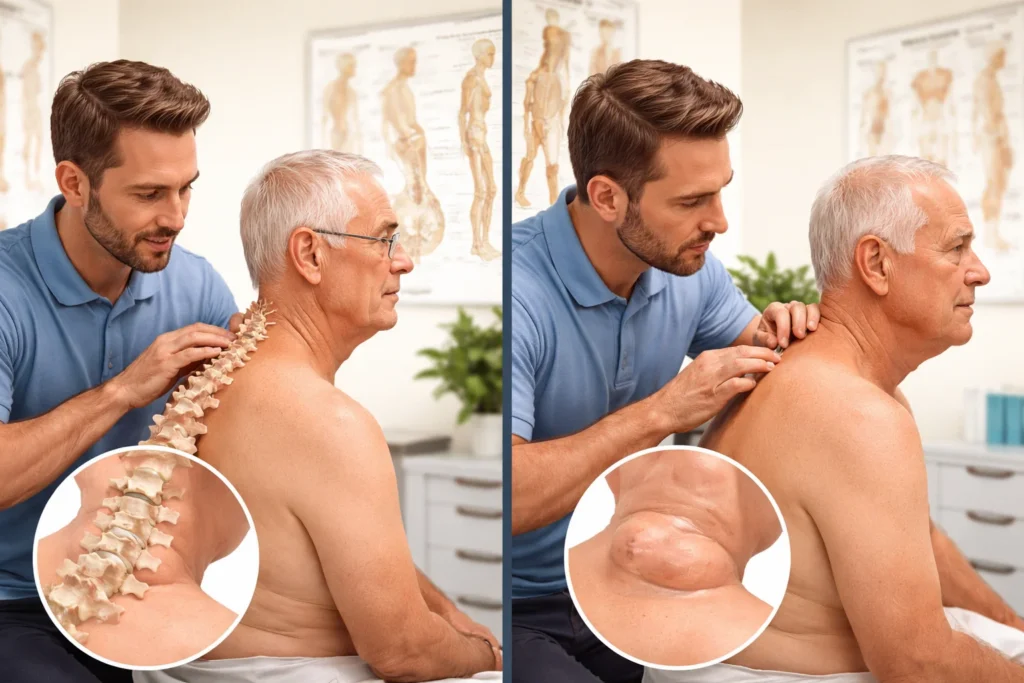
It is extremely important to differentiate between:
- A fat-based buffalo hump
- A structural postural hump(thoracic kyphosis)
A structural neck hump is often associated with spinal alignment problems, including:
- Poor posture
- Prolonged desk work
- Forward head posture
- Degenerative spinal changes
- Osteoporosis-related compression fractures
In Keizer and throughout Marion County, sedentary work environments and extended computer use commonly contribute to forward head posture and abnormal curvature of the thoracic spine.
Structural humps are often accompanied by symptoms such as:
- Chronic neck pain
- Upper back stiffness
- Frequent headaches
- Reduced spinal mobility
- Shoulder tension
A chiropractic evaluation focuses on identifying spinal misalignment, postural imbalance, and joint dysfunction that may contribute to these structural changes.
Symptoms Associated with a Neck Hump
Symptoms may vary depending on the underlying cause of the hump.
Some individuals experience only cosmetic concerns, while others may report:
- Persistent upper back pain
- Neck stiffness
- Muscle weakness
- Fatigue
- Hormonal irregularities
- Limited cervical or thoracic mobility
A comprehensive evaluation may include spinal assessment, posture analysis, and referral for laboratory testing if metabolic or hormonal causes are suspected.
Treatment Options in Keizer, Oregon
Treatment for a hump on the back of the neck depends entirely on identifying the underlying cause.
Hormonal Causes
If a hormonal condition such as Cushing’s syndrome is suspected, treatment typically involves coordination with a primary care physician or endocrinologist.
This may involve adjusting medications or addressing hormonal imbalance.
Obesity-Related Fat Accumulation
When weight gain contributes to the condition, treatment may include:
- Nutritional counseling
- Exercise programs
- Lifestyle modifications
These approaches can help reduce fat accumulation in the upper back and neck region.
Lipoma
If a lipoma is identified, a surgical consultation may be recommended for removal if the mass becomes symptomatic.
Postural or Structural Neck Hump
When the condition is caused by thoracic kyphosis or forward head posture, chiropractic care may be recommended.
Chiropractic treatment may include:
- Spinal adjustments
- Postural correction therapy
- Thoracic extension exercises
- Soft tissue rehabilitation
- Ergonomic guidance
- Corrective strengthening programs
These treatments aim to restore spinal mechanics, improve posture, and reduce associated neck and upper back pain.
When to Seek Professional Evaluation
You should consider scheduling a professional evaluation if you notice:
- A growing hump at the base of the neck
- Persistent upper back or neck pain
- Unexplained fatigue
- Muscle weakness
- Changes in posture
- Reduced range of motion
Determining whether the condition is hormonal, metabolic, or structural is critical for developing the most effective treatment plan.
Schedule a Postural and Spinal Evaluation in Keizer, Oregon
If you are concerned about a buffalo hump, thyroid hump, forward head posture, or persistent upper back pain, early evaluation can help prevent progression and long-term spinal complications.
ProCare Chiropractic provides non-surgical spinal correction, posture rehabilitation, cervical spine treatment, and evidence-based chiropractic care for patients in Keizer and Marion County.
ProCare Chiropractic – Keizer
Address: 3785 River Rd N. Keizer, OR 97303Book: Online BookingPhone: (971) 414-3440
Call today to schedule your comprehensive spinal and postural evaluation and begin a structured treatment plan designed to restore alignment, improve posture, and protect your long-term spinal health.