
Whiplash After a Car Accident: Why Symptoms Can Take Weeks to Appear (And What PIP Covers)

Whiplash After a Car Accident: Why Symptoms Can Take Weeks to Appear (And What PIP Covers)
You’ve been in a car accident. Maybe it was a minor fender bender, a rear-end collision at a stoplight, or a more significant crash. At the scene, you felt shaken but okay. You exchanged information, declined medical attention, and went home thinking you’d dodged a bullet.
A few days later, your neck starts to ache. Your shoulders feel stiff, and you have a headache that won’t go away. What happened? You likely experienced whiplash, an injury that, in many cases, is a master of disguise.
The Hidden Injury: Why Whiplash Symptoms Are Delayed
Whiplash is an injury to the neck caused by a sudden, forceful back-and-forth movement of the head, similar to the cracking of a whip. This often happens during rear-end car collisions, but can also occur from sports injuries, falls, or other traumas.
One of the most dangerous aspects of whiplash is that it doesn’t always hurt right away. This is largely due to adrenaline, a hormone your body releases during and immediately after a stressful event like an accident. Adrenaline can mask pain, making you feel fine in the moment. As the adrenaline wears off and your body begins to settle, the true extent of the injury starts to surface.
The symptoms themselves can be a result of several physiological processes that take time to develop:
-
Inflammation and Swelling: When the soft tissues—muscles, ligaments, and tendons—in your neck are stretched or torn, the body’s natural inflammatory response kicks in. This process takes time to build up, and the resulting swelling and stiffness can take hours or even days to become noticeable.
-
Muscle Tightness and Spasms: In response to the sudden strain, your neck muscles may go into a protective spasm. This tightening is a way to stabilize the injured area, but it’s also a primary source of pain and reduced mobility, often becoming more intense over the first 24-48 hours.
Because of this delay, many people don’t connect their symptoms to the accident, or they assume their pain is minor and will resolve on its own. In reality, ignoring these early warning signs can allow a treatable injury to become a chronic condition.
Recognizing the Signs: Common Whiplash Symptoms
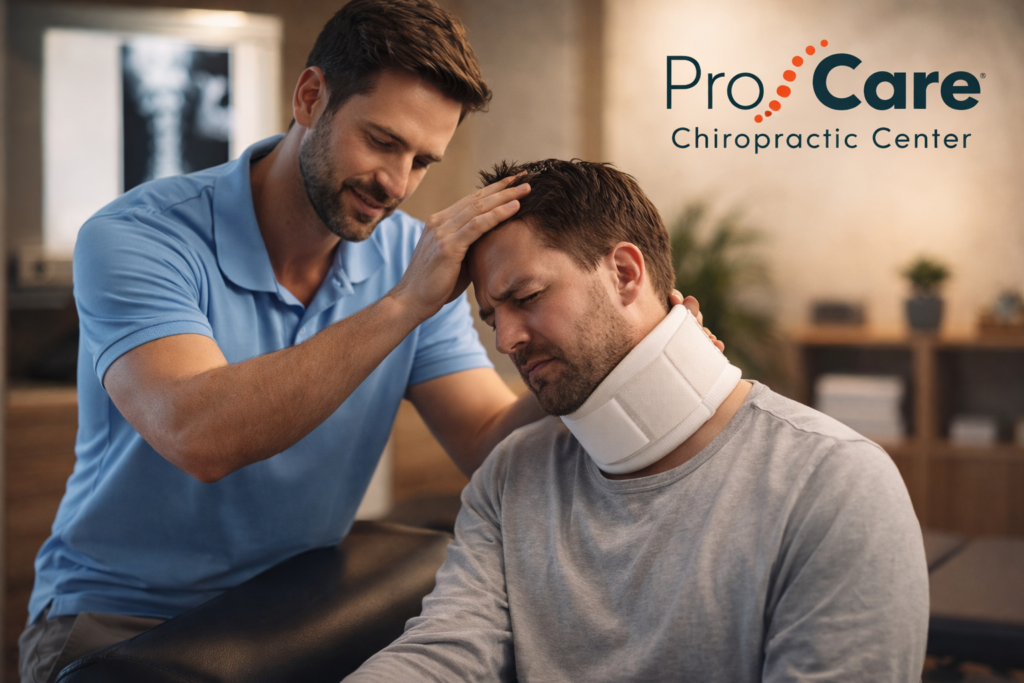
Whiplash symptoms can range from mild to severe and can show up immediately or several days later. It is crucial to monitor how you feel in the days following an accident.
Common symptoms include:
-
Neck pain and stiffness: Often the most prominent symptom, making it difficult to turn your head.
-
Headaches: Frequently starting at the base of the skull.
-
Shoulder, upper back, or arm pain: The strain can radiate from the neck into these areas.
-
Muscle spasms: Involuntary contractions that can be painful.
-
Dizziness or lightheadedness:
-
Fatigue:
-
Tingling or numbness: Sensations of “pins and needles” that may radiate down the arms.
Red Flags:
While many cases are mild, whiplash can cause serious complications. You should seek immediate medical attention if you experience:
-
Severe neck pain
-
Pain that travels into your shoulder, arm, or hand
-
Numbness, tingling, or weakness
-
Trouble walking or balancing
-
Vision changes
-
Confusion or severe headache
These could be signs of nerve involvement or a more serious injury.
The Mechanics of Whiplash: It’s More Than Just “A Sore Neck”
The sudden, violent motion of whiplash does more than just strain muscles. It can affect multiple structures in the cervical spine, including ligaments, discs, and joints. This is why early, controlled movement and professional care are so important.
“Resting it off” after a back injury is often counterproductive. Gentle movement guided by a skilled chiropractor is more effective for supporting recovery.
Protecting Your Recovery: Understanding Oregon PIP Coverage

If you’ve been in a car accident in Oregon, you likely have a vital resource available to you that you may not even be aware of: Personal Injury Protection (PIP).
What is PIP?
Oregon is a “no-fault” state for medical coverage after auto accidents. This means every auto insurance policy in Oregon is required to include PIP coverage. Your own PIP coverage pays for your medical treatment regardless of who caused the accident. This is designed to get you the care you need immediately, without having to wait for a fault determination or legal battle.
Key PIP Details
-
Minimum Coverage: Oregon law requires a minimum of $15,000 in PIP medical benefits per person.
-
Time Limit: This coverage is typically available for up to two years from the date of the accident.
-
No Deductible: Most Oregon PIP policies have no deductible, meaning your benefits cover 100% of “reasonable and necessary” treatment expenses right from the start, up to your policy limit.
-
No-Fault: It applies regardless of who is at fault for the accident.
Does PIP Cover Chiropractic Care?
Yes. Chiropractic care is a recognized and commonly covered treatment for accident-related injuries under Oregon PIP. This includes treatment for:
-
Whiplash
-
Neck and back pain
-
Soft tissue injuries
-
Headaches
In most cases, patients pay little to nothing out of pocket for their chiropractic care when using their PIP benefits. Your chiropractor’s office will typically bill your PIP insurance directly.
Why Early Treatment is Crucial
Seeking a chiropractic evaluation as soon as possible after an accident is vital for two key reasons:
-
Your Health: Early intervention can detect hidden injuries, reduce inflammation, and prevent minor problems from becoming chronic pain. Timely care supports a faster and more complete recovery.
-
Your Insurance Claim: A prompt evaluation establishes a clear, documented medical record linking your injuries directly to the accident. This documentation is essential for a smooth PIP claim. Delaying treatment can create a gap in your medical record, making it easier for an insurer to question the cause of your injury.
Don’t Wait. Take Control of Your Recovery
If you’ve been in a car accident, even if you feel fine, the smartest move is to get checked by a professional who understands these types of injuries. Whiplash is a deceptive injury, and Oregon’s PIP coverage is there to ensure you can get the care you need to recover fully without the stress of upfront costs. Your health is worth more than a quick fix.