Treating a Rotator Cuff Injury After a Car Accident
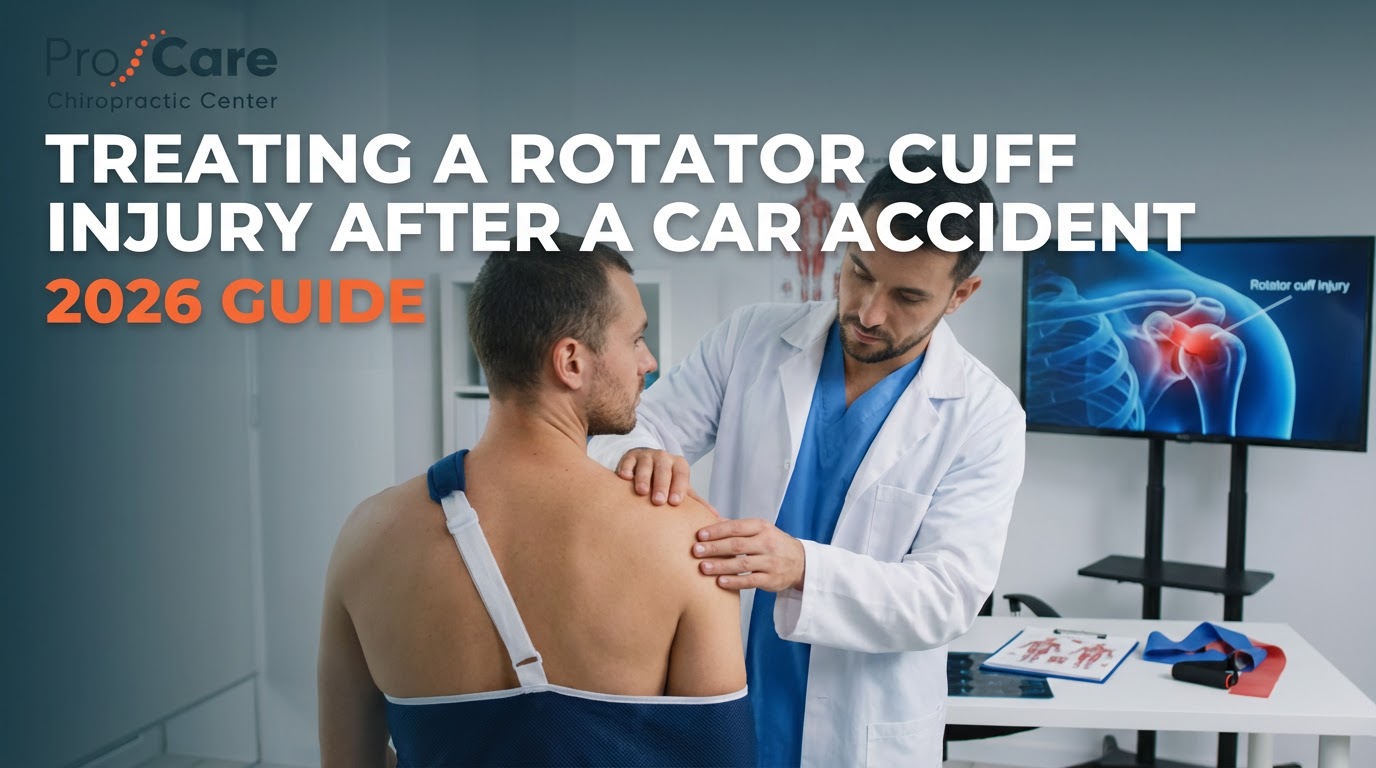
Your rotator cuff isn’t a single muscle — it’s a group of muscles and tendons that stabilize your shoulder joint. These tissues keep the humerus (upper arm bone) and scapula (shoulder blade) properly connected while allowing a wide range of motion.
After a car accident, the sudden force of impact can strain, partially tear, or fully tear the rotator cuff. Without proper treatment, this injury can cause persistent pain, weakness, and long-term mobility problems.
Here’s what you need to know about recognizing and treating a rotator cuff injury after a car accident in 2026.
Common Symptoms of a Rotator Cuff Injury After a Car Accident
Pain is usually the first and most noticeable symptom. However, several other signs may develop, including:
- Shoulder weakness
- Limited range of motion
- Difficulty lifting your arm
- Trouble reaching overhead or behind your back
- Pain when brushing hair or getting dressed
- Pain that radiates down the arm
- Upper back and neck discomfort
- Swelling
- Popping or clicking sounds in the shoulder
- Difficulty sleeping when lying on the injured side
If the tendon is torn rather than strained, pain may feel sharp and sudden. Muscle weakness can make it difficult to lift even light objects.
Because adrenaline can mask pain immediately after an accident, symptoms may not fully appear for hours or days. Early medical evaluation is essential.
Rotator Cuff Injury vs. Shoulder Dislocation
It can be difficult to distinguish between a rotator cuff injury and a shoulder dislocation after a car accident because symptoms overlap.
Both may cause:
- Severe pain
- Limited mobility
- Visible joint deformity (in dislocations)
- Weakness
Shoulder dislocations are actually the most common joint dislocation seen in vehicle collisions. Other possible dislocation sites include:
- Hips
- Elbows
- Knees
- Ankles
- Jaw
- Fingers
- Vertebrae
Dislocations can damage surrounding tendons, ligaments, nerves, and blood vessels, sometimes leading to rotator cuff injury as well.
A professional evaluation is necessary to determine the exact nature of your shoulder injury.
Treatment Options for Rotator Cuff Injuries
Treatment depends on the severity of the injury.
1. Rest and Conservative Care
For mild strains or minor tears, the body may heal naturally with proper care.
Conservative treatment may include:
- Rest
- Ice therapy
- Anti-inflammatory measures
- Temporary use of a sling
- Avoiding overhead activity
Preventing further strain during the healing phase is critical.
2. Physical Rehabilitation
If symptoms persist, structured rehabilitation is typically the next step.
A personalized rehabilitation plan may include:
- Strengthening exercises
- Mobility training
- Range-of-motion restoration
- Stability exercises
- Gradual return to activity
Rehabilitation helps restore strength and mobility while minimizing the risk of re-injury.
Even after healing, weakness and stiffness are common without guided rehab.
3. Chiropractic Care for Shoulder Injuries
Chiropractic care can play an important role in comprehensive recovery.
Car accidents rarely injure just one structure. Shoulder injuries are often linked to:
- Neck misalignment
- Upper back strain
- Spinal joint dysfunction
- Nerve irritation
Chiropractic treatment may include:
- Gentle joint adjustments
- Soft tissue therapy
- Therapeutic stretching
- Targeted massage
- Mobility restoration
- Electrical muscle stimulation (EMS)
Benefits of Chiropractic Care:

Restore Alignment
Even if a shoulder joint is reset after dislocation, surrounding joints may remain misaligned. Gentle adjustments help restore proper mechanics and reduce compensatory strain.
Improve Blood Flow
Healthy circulation brings oxygen and nutrients to injured tissue. Therapeutic techniques stimulate blood flow and accelerate healing.
Reduce Inflammation
Controlled movement and soft tissue therapy help decrease excessive inflammation that can delay recovery.
Address Related Spinal Issues
If neck or upper back misalignment is contributing to shoulder pain, chiropractic care addresses the root cause — not just symptoms.
4. Steroid Injections
If pain remains severe despite conservative treatment, corticosteroid injections may reduce inflammation temporarily.
However, injections do not repair torn tendons and are typically considered a short-term solution.
5. Surgery (When Necessary)
Surgery is usually a last resort and may be recommended if:
- A full tendon tear is present
- Severe weakness persists
- Conservative care fails
- Significant structural damage exists
Surgical repair is more common with complete rotator cuff tears.
Recovery from surgery can take several months and requires extensive rehabilitation.
Other Car Accident Injuries That Limit Shoulder Mobility
Shoulder pain is often accompanied by additional soft tissue injuries that impact mobility.
1. Whiplash
The rapid back-and-forth motion during impact can strain neck muscles and ligaments. Untreated whiplash may cause chronic neck pain and restricted movement.
2. Sprains
Ligaments connecting bones can stretch or tear during impact. Severe sprains can limit joint stability and function.
3. Strains
Strains affect muscles and tendons and may cause:
- Muscle spasms
- Bruising
- Swelling
- Tenderness
- Reduced mobility
Untreated soft tissue injuries can develop scar tissue, stiffness, and chronic dysfunction.
Why Early Treatment Matters
Delaying care can lead to:
- Chronic shoulder pain
- Permanent weakness
- Scar tissue buildup
- Decreased range of motion
- Compensatory injuries in the neck and back
Early diagnosis allows for a targeted treatment plan before long-term damage develops.
What to Do Next
If you’ve been involved in a car accident and are experiencing:
- Shoulder pain
- Weakness
- Limited mobility
- Clicking or popping
- Radiating arm pain
You should seek evaluation as soon as possible.
A comprehensive approach that includes medical evaluation, rehabilitation, and chiropractic care can:
- Reduce inflammation
- Restore mobility
- Improve circulation
- Strengthen surrounding muscles
- Prevent chronic complications
Even a minor collision can result in serious shoulder damage. The human body is not built to withstand the sudden forces of an automobile accident.
The sooner treatment begins, the better your chances of full recovery.
If you suspect a rotator cuff injury after a car accident, scheduling a professional evaluation is the first step toward healing and restoring normal function.
Address: 10915 SE Stark St. Suite 200, Portland, OR 97216Book: Online BookingPhone: (503) 899-0707