
Whiplash and Spinal Injuries After a Car Accident in Portland, OR: What You Need to Know
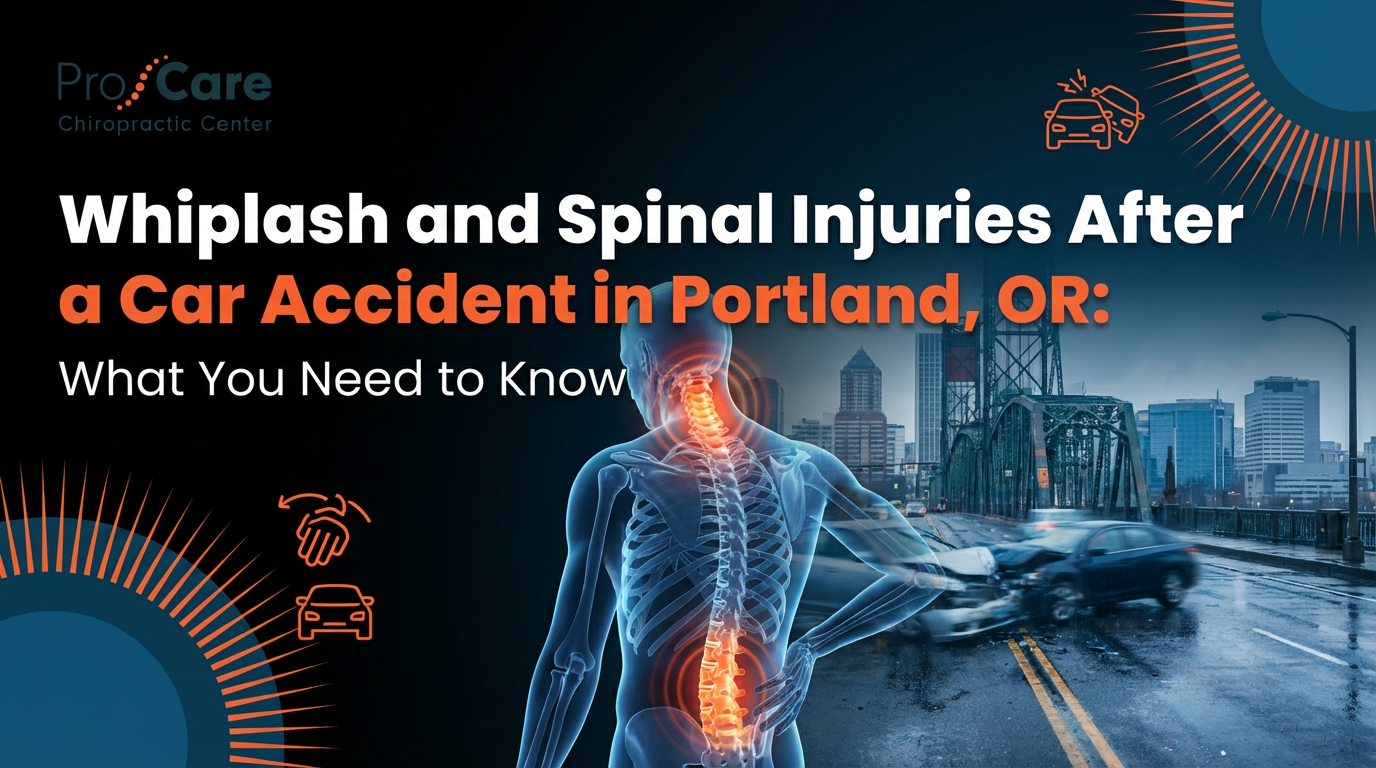
Whiplash. The word alone suggests force and pain and for good reason. Whiplash and Spinal Injuries are among the most common consequences of a car accident in Portland, Oregon, often leading to underlying damage that may not appear immediately. While some people experience only mild soreness at first, others develop serious spinal injuries that worsen over time.
ProCare Chiropractic Clinic in Portland, OR specializes in whiplash recovery to prevent chronic pain and long-term injuries. Don’t ignore hidden spinal damage.
Understanding how whiplash affects the spine is essential if you’ve recently been involved in an auto accident. Early diagnosis and proper chiropractic treatment can significantly reduce long-term complications and chronic pain.
What Is Whiplash?
Whiplash is a neck injury caused by a rapid back-and-forth motion of the head, similar to the cracking of a whip. This acceleration-deceleration force most commonly occurs during:
- Rear-end collisions
- Side-impact crashes
- Motorcycle accidents
- Sudden braking incidents
The violent motion can strain or tear muscles and ligaments, shift vertebrae out of alignment, and damage intervertebral discs.
Even low-speed collisions can generate enough force to injure the cervical spine.
The Anatomy of the Spine Explained
To understand spinal injuries caused by whiplash, it helps to review how the spine functions.
The spine is made up of:
- Vertebrae (bones stacked in a column)
- Intervertebral discs (gel-like cushions between bones)
- Ligaments and muscles
- Facet joints
- Spinal cord and nerve roots
The spine extends from the base of the skull to the tailbone. Its design allows flexibility while protecting the spinal cord, which transmits signals between the brain and body.
When any component of this system is injured, pain and dysfunction can occur.
The Cervical Spine: Why the Neck Is So Vulnerable
The cervical spine consists of seven vertebrae in the neck. It:
- Supports the weight of the head
- Allows rotational and bending movement
- Protects critical nerves and the spinal cord
Because the neck is highly mobile and not heavily stabilized by surrounding structures, it is particularly vulnerable during car accidents.
When the head is thrown backward and then forward with force, the cervical spine absorbs the shock. This can lead to:
- Ligament sprains
- Muscle tears
- Facet joint injury
- Disc herniation
- Nerve compression
Why Neck Pain Develops After Whiplash

It can be difficult to pinpoint the exact source of neck pain after a car accident. Pain may come from:
1. Muscle and Ligament Strain
Inflammation develops as the body attempts to repair damaged tissues.
2. Facet Joint Irritation
Facet joints connect vertebrae and allow movement. Whiplash can inflame or misalign these joints.
3. Herniated or Torn Discs
The discs between vertebrae may bulge or tear, putting pressure on nearby nerves.
4. Nerve Compression
Misaligned vertebrae or disc injuries may irritate nerve roots, causing radiating pain into the shoulders or arms.
While mild cases may improve within weeks, untreated structural damage can lead to chronic neck pain lasting months or years.
Symptoms of Spinal Injury After Whiplash
Symptoms may appear immediately—or take days to develop due to adrenaline masking pain.
Common symptoms include:
- Neck stiffness
- Reduced range of motion
- Shoulder pain
- Arm tingling or numbness
- Headaches at the base of the skull
- Low back pain
- Difficulty concentrating
- Disturbed sleep
- Dizziness
If you experience any of these after a car accident in Portland, seeking prompt chiropractic evaluation is critical.
Chronic Complications of Untreated Whiplash
When spinal injuries are left untreated, they can lead to:
- Chronic neck pain
- Persistent migraines
- Degenerative disc disease
- Long-term nerve dysfunction
- Postural imbalances
- Ongoing inflammation
Studies show that a significant percentage of whiplash patients develop chronic symptoms if they do not receive early intervention.
How Chiropractic Care Treats Whiplash-Related Spinal Injuries
Chiropractic care focuses on restoring proper spinal alignment and supporting natural healing.
Treatment may include:
Spinal Adjustments
Gentle manipulations help reposition misaligned vertebrae and reduce nerve pressure.
Soft Tissue Therapy
Targeted techniques reduce muscle tension and break down scar tissue.
Range-of-Motion Exercises
Controlled movements restore flexibility and strengthen supportive muscles.
Postural Correction Guidance
Improving posture reduces stress on injured areas and prevents re-injury.
Lifestyle Recommendations
Ergonomic advice and strengthening routines help promote long-term recovery.
Unlike medications that mask symptoms, chiropractic care addresses the underlying mechanical dysfunction.
The Importance of Early Treatment After a Car Accident
The sooner whiplash injuries are treated, the better the outcome.
Early chiropractic evaluation can:
- Identify hidden injuries
- Prevent scar tissue buildup
- Reduce inflammation
- Shorten recovery time
- Lower risk of chronic pain
Delaying care may allow misalignments and disc injuries to worsen.
Whiplash Treatment in Portland, Oregon
If you have been involved in a car accident in Portland, OR, it is essential to have your spine evaluated—even if symptoms seem mild.
At ProCare Chiropractic Clinic, we specialize in treating whiplash and spinal injuries caused by auto accidents. Our comprehensive approach includes:
- Detailed musculoskeletal evaluation
- Personalized treatment plans
- Gentle, targeted adjustments
- Ongoing monitoring of recovery progress
ProCare Chiropractic Clinic
Address: 10915 SE Stark St. Suite 200, Portland, OR 97216Book: Online BookingPhone: (503) 899-0707
Take Neck Pain Seriously After an Accident
Whiplash may start as minor stiffness—but it can evolve into long-term spinal damage if ignored.
If you’re experiencing neck pain, headaches, or mobility issues after a car accident in Portland, do not wait for symptoms to worsen. Early chiropractic care can restore alignment, relieve pain, and protect your long-term spinal health.
Schedule your evaluation today and take the first step toward full recovery.