3 Most Common Types of Pain After a Rear-End Collision in Portland, Oregon
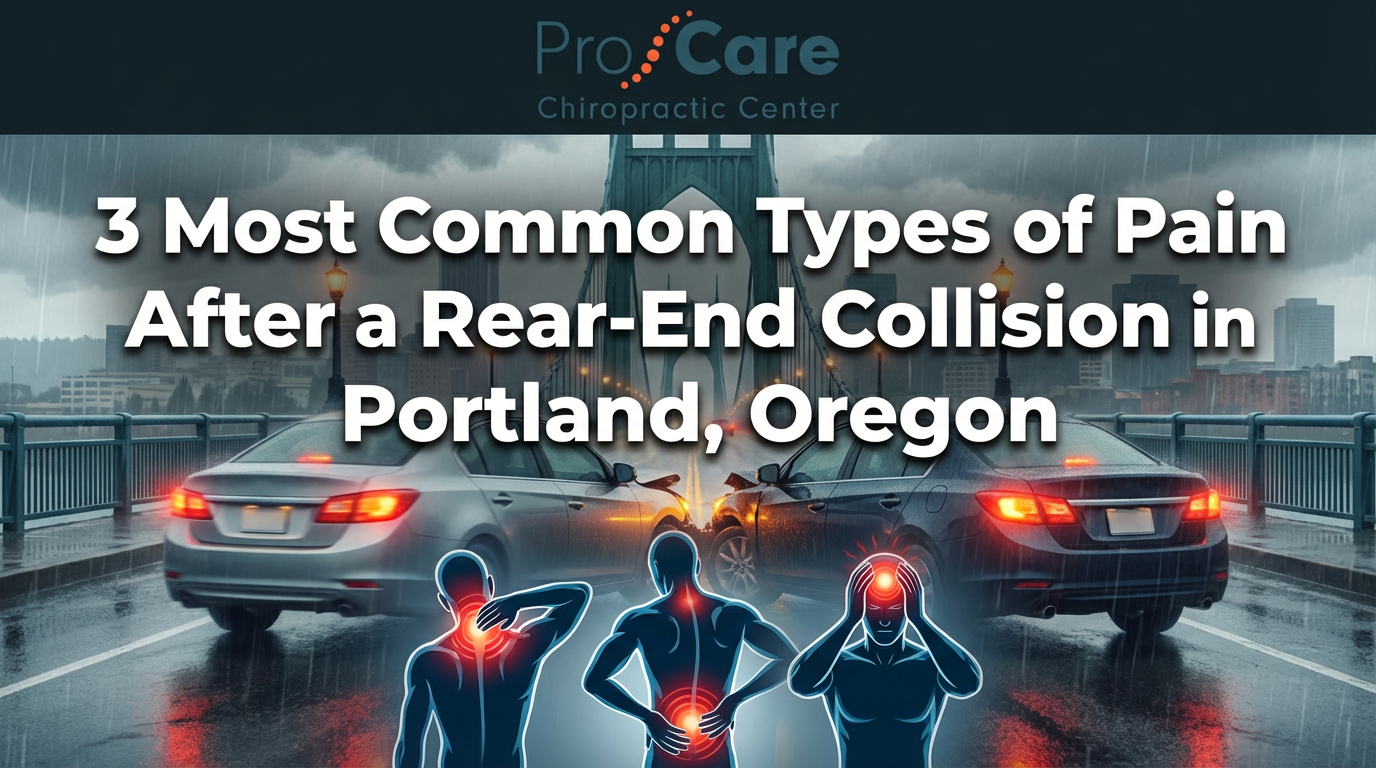
Rear-end collisions are among the most common types of car accidents in Oregon — especially in high-traffic areas like Portland. Even when the damage to your vehicle appears minor, the force transmitted through your body can cause significant musculoskeletal injury.
Many people initially believe they “got lucky” after being rear-ended. However, symptoms often develop hours or days later as inflammation increases and soft tissue damage becomes more noticeable.
At ProCare Chiropractic Clinic in Portland, OR, we specialize in treating post-accident injuries, including car accident migraines and post-traumatic headaches. Early evaluation and treatment can make a significant difference in your recovery.
Below are the three most common injuries and pain conditions seen after rear-end accidents — and how chiropractic care can help.
1. Headaches and Migraines After a Rear-End Accident
Headaches are one of the most frequently reported symptoms following a rear-end collision.
When your vehicle is struck from behind, your head is rapidly forced backward and then forward. This motion places sudden stress on the cervical spine (neck), surrounding muscles, ligaments, and nerves.
Why Rear-End Collisions Cause Headaches
Rear-end crashes commonly lead to:
- Cervical spine misalignment
- Muscle strain in the neck and upper back
- Inflammation of soft tissues
- Nerve irritation
- Reduced blood flow
These issues can trigger:
- Tension headaches
- Cervicogenic headaches
- Migraine flare-ups
- Pressure behind the eyes
- Dull aching pain at the base of the skull
Some patients experience daily headaches after a collision, while others notice increasing frequency over time.
How Chiropractic Care Helps
A chiropractor can:
- Correct cervical spine misalignment
- Reduce nerve compression
- Improve joint mobility
- Decrease muscle tension
- Restore proper posture
Gentle spinal adjustments combined with soft tissue therapy can gradually reduce both the intensity and frequency of accident-related headaches.
Early treatment is especially important, as untreated cervical dysfunction can lead to chronic migraine patterns.
2. Herniated Disc After a Rear-End Collision
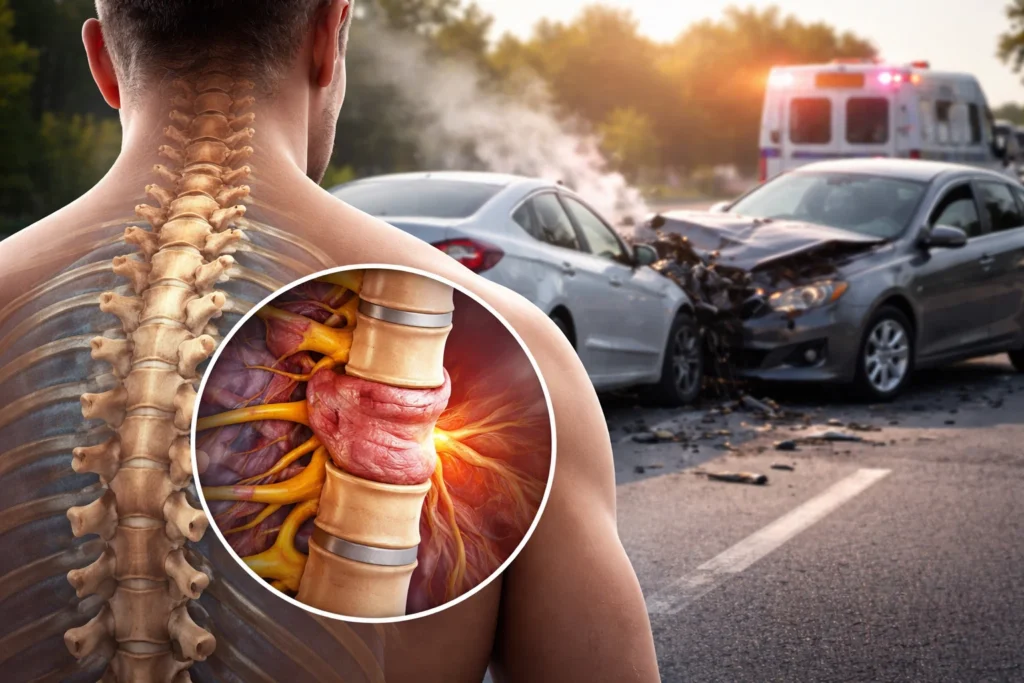
Between each vertebra in your spine sits a disc that acts as a shock absorber. During a rear-end impact, the spine can compress rapidly, causing discs to bulge or herniate.
A herniated disc occurs when the inner portion of the disc pushes through its outer layer, potentially pressing on nearby nerves.
Symptoms of a Herniated Disc
- Sharp or burning back pain
- Radiating pain into arms or legs
- Numbness or tingling
- Muscle weakness
- Reduced range of motion
- Pain that worsens with sitting
Even low-speed rear-end collisions can generate enough force to damage spinal discs.
Chiropractic Treatment for Herniated Discs
Most herniated discs do not require surgery. Conservative treatment often includes:
- Spinal decompression therapy
- Targeted chiropractic adjustments
- Therapeutic exercises
- Postural correction
- Inflammation management
Spinal decompression gently stretches the spine, reducing pressure on the affected disc and allowing nutrients to flow back into the injured area.
With consistent care, many patients regain mobility and experience significant pain relief.
3. Whiplash – The Most Common Rear-End Collision Injury
Whiplash is the signature injury of rear-end crashes and can occur at speeds as low as 5 mph.
It results from the rapid back-and-forth motion of the head and neck during impact. This motion strains:
- Ligaments
- Muscles
- Facet joints
- Spinal discs
- Nerve roots
Symptoms of Whiplash
- Neck stiffness
- Pain when turning the head
- Shoulder pain
- Upper back pain
- Dizziness
- Ringing in the ears
- Headaches
- Fatigue
Some people experience symptoms immediately. Others develop them days or weeks later.
Why Whiplash Should Never Be Ignored
Without treatment, whiplash can lead to:
- Chronic neck pain
- Reduced mobility
- Degenerative disc changes
- Long-term headaches
- Nerve dysfunction
Chiropractic care for whiplash focuses on gradual, gentle realignment of the cervical spine. Treatment may include:
- Controlled spinal manipulation
- Soft tissue therapy
- Corrective exercises
- Postural retraining
The goal is to restore stability, reduce inflammation, and prevent chronic pain from developing.
Why Early Treatment Of Pain After Rear-End Collision Matters
Even if your pain seems manageable, untreated injuries can worsen over time. Delayed treatment increases the risk of:
- Scar tissue formation
- Chronic inflammation
- Permanent mobility restrictions
- Nerve damage
- Long-term compensation patterns
Additionally, in Oregon, seeking prompt care strengthens your Personal Injury Protection (PIP) insurance documentation.
Rear-End Collision Chiropractic Care in Portland, Oregon
If you were rear-ended in Portland or the surrounding area, getting evaluated quickly protects both your health and your insurance claim.
ProCare Chiropractic Clinic
Address: 10915 SE Stark St. Suite 200, Portland, OR 97216Book: Online BookingPhone: (503) 899-0707
We specialize in:
- Rear-end collision injuries
- Whiplash treatment
- Herniated disc care
- Headache and migraine relief
- Auto accident injury documentation
- Oregon PIP insurance cases
Our team provides personalized treatment plans designed to reduce pain, restore alignment, and help you return to normal activities safely.
Don’t Wait for Pain to Worsen
Rear-end collisions may seem minor at first, but the physical impact on your spine can be significant. Whether you’re experiencing mild discomfort or severe pain, early chiropractic care dramatically improves recovery outcomes.
If you’ve been involved in a rear-end accident in Portland, schedule an evaluation today and take the first step toward restoring your spinal health.