What Is a Neuromuscular Massage and How Can It Help Relieve Pain?
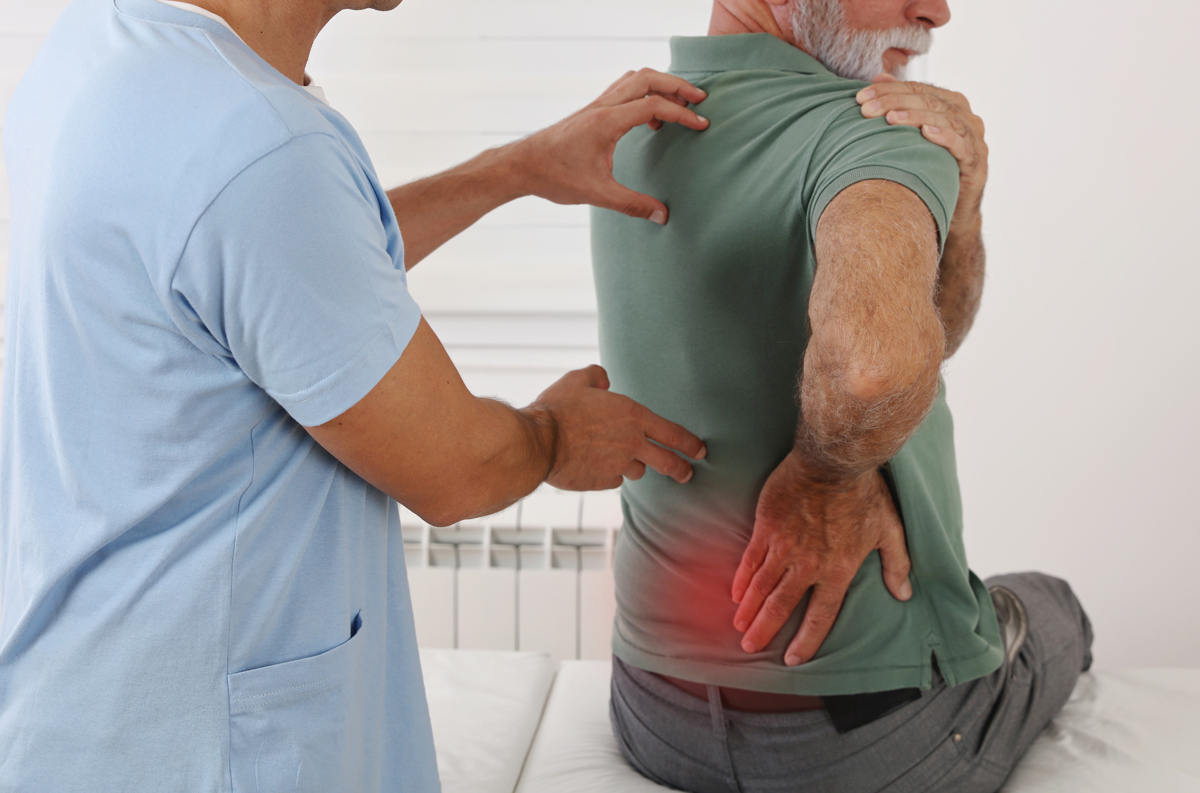
Chronic muscle pain, stiffness, and limited mobility are problems many people live with far longer than they should. When traditional massage or rest does not resolve the issue, neuromuscular massage therapy may be the next step toward real relief.
Neuromuscular massage is a specialized, clinically focused form of therapeutic massage that targets the underlying neurological and muscular causes of pain, not just surface-level tension. It is commonly used in chiropractic and rehabilitative care to treat persistent musculoskeletal conditions.
Below, we explain what neuromuscular massage is, how it works, what conditions it treats, and what you can expect from treatment.
What Is Neuromuscular Massage Therapy?
Neuromuscular massage therapy is a targeted manual therapy technique designed to relieve pain caused by trigger points, nerve compression, muscle imbalance, and poor circulation within soft tissues.
Trigger points are hyper-irritable areas within muscles that:
- Restrict blood flow
- Limit oxygen and nutrient delivery
- Cause localized or referred pain
- Disrupt normal muscle function
These points can cause pain not only at the site itself but also in entirely different parts of the body, a phenomenon known as referred pain.
Neuromuscular massage focuses on:
- Identifying dysfunctional muscle patterns
- Applying precise pressure to trigger points
- Restoring communication between nerves and muscles
- Improving circulation and tissue health
This approach treats the source of pain, not just the symptom.
How Neuromuscular Massage Works
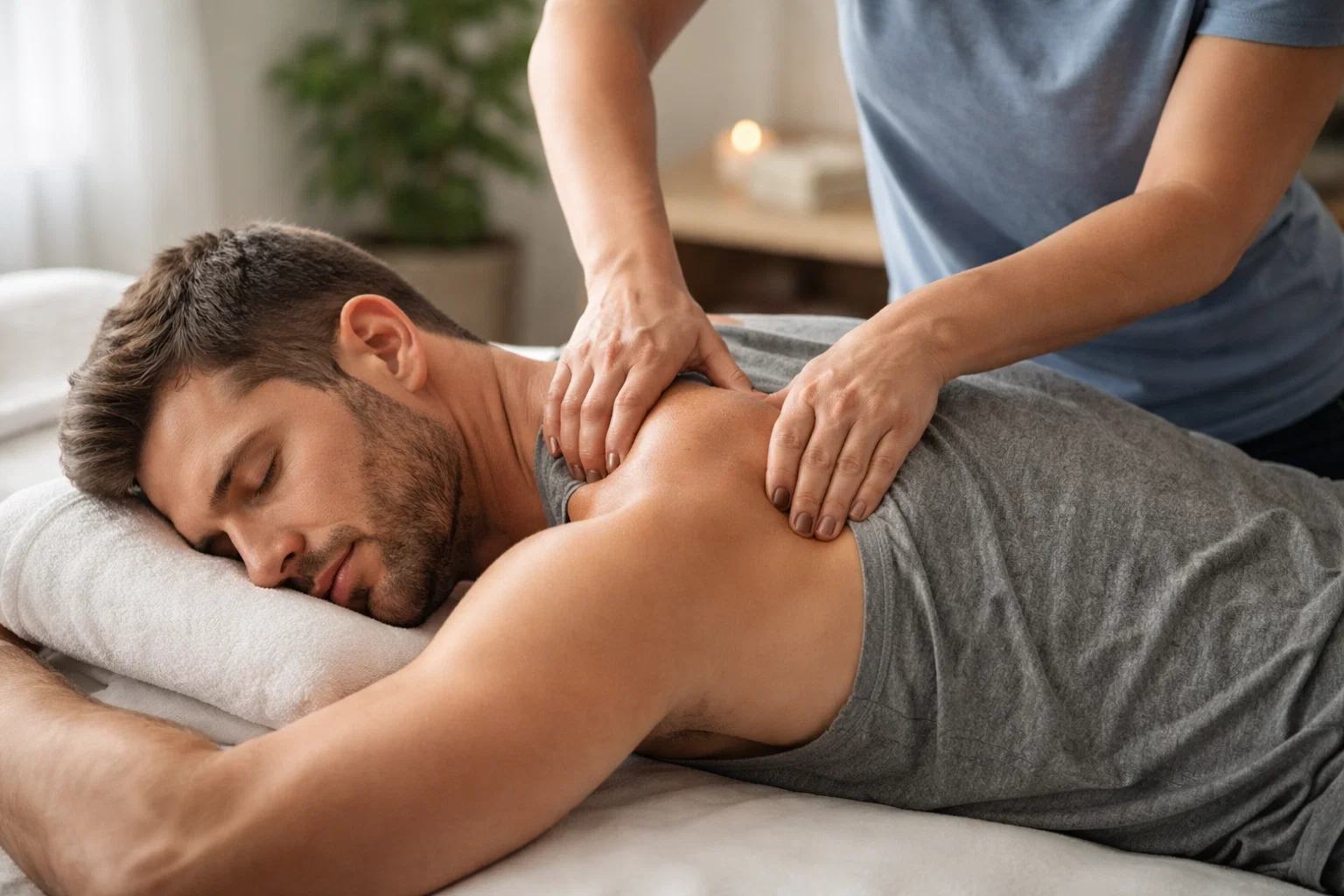
During neuromuscular massage therapy, the chiropractor or licensed therapist applies controlled, sustained pressure to affected areas using hands, fingers, knuckles, or elbows.
The technique works by:
- Releasing contracted muscle fibers
- Reducing nerve irritation
- Restoring proper blood flow
- Normalizing muscle tone
Pressure is typically held for 10–30 seconds and adjusted based on tissue response. This allows the muscle to relax and reset instead of remaining locked in a painful contraction.
Unlike relaxation massage, neuromuscular massage is methodical and clinical. Each session builds upon the last until the dysfunction is resolved.
Neuromuscular Massage vs. Deep Tissue Massage
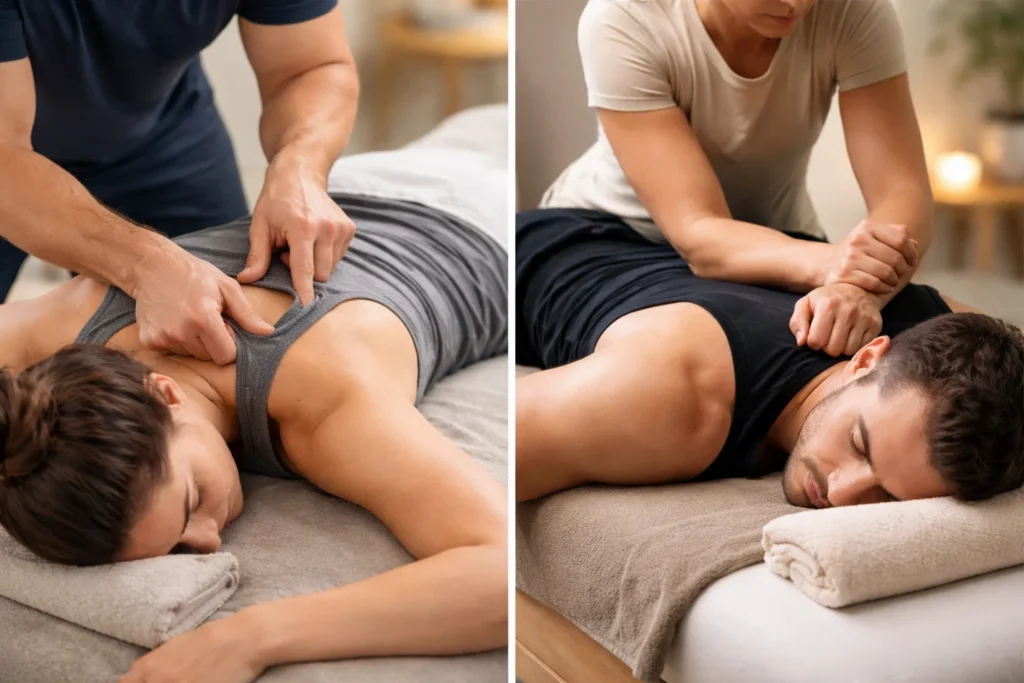
Although they can feel similar, neuromuscular massage and deep tissue massage serve different purposes.
Deep Tissue Massage
- Focuses on general muscle tension
- Addresses stiffness in deeper muscle layers
- Often used for stress relief or minor strain
- Can be performed periodically
Neuromuscular Massage
- Targets nerve–muscle dysfunction
- Treats specific trigger points
- Addresses chronic or injury-related pain
- Requires structured, ongoing care
Neuromuscular massage is considered a therapeutic treatment, not a spa service.
Conditions Neuromuscular Massage Can Treat
Neuromuscular massage therapy is commonly used for:
- Chronic neck and back pain
- Sciatica
- TMJ (jaw pain and dysfunction)
- Shoulder, hip, and knee pain
- Plantar fasciitis
- Carpal tunnel syndrome
- Tendonitis
- Iliotibial (IT) band syndrome
- Headaches and migraines
- Muscle spasms and cramps
- Postural imbalance
It is frequently incorporated into auto accident recovery, sports injury rehabilitation, and repetitive strain injury treatment.
Benefits of Neuromuscular Massage Therapy
Patients often experience multiple benefits, including:
- Significant pain reduction
- Improved flexibility and mobility
- Increased blood circulation
- Better nerve function
- Reduced muscle tension
- Improved posture
- Lower stress levels
- Faster recovery from injury
Because neuromuscular massage restores normal muscle function, results are often long-lasting when combined with corrective care.
What to Expect During Treatment
Initial Evaluation
Before treatment begins, a full assessment is performed to:
- Identify trigger points
- Evaluate posture and movement
- Determine contributing factors
During the Session
- Pressure may feel intense but controlled
- Discomfort is common, not harmful
- Communication during treatment is encouraged
After Treatment
- Mild soreness may occur for 24 hours
- Increased mobility is often noticeable
- Hydration is important to support tissue recovery
Neuromuscular massage is not a one-time solution. Consistent sessions are required to correct the underlying dysfunction.
Is Neuromuscular Massage Safe?
When performed by a trained professional, neuromuscular massage is safe and effective. It should never be attempted without proper training.
This therapy may not be appropriate for:
- Open wounds
- Active infections
- Certain vascular conditions
- Recent fractures (without medical clearance)
A professional evaluation ensures treatment is appropriate for your condition.
Neuromuscular Massage in Portland, Oregon
At ProCare Chiropractic Center, neuromuscular massage therapy is integrated into comprehensive chiropractic and rehabilitative care.
We focus on:
- Identifying the true source of pain
- Treating musculoskeletal and neurological causes
- Helping patients regain mobility and function
Schedule a Neuromuscular Massage Consultation
You do not have to live with chronic muscle pain, stiffness, or limited movement. Neuromuscular massage therapy may be the solution when other treatments have failed.
Address:10915 SE Stark St. Suite 200, Portland, OR 97216
Book: Online Booking
Phone: (503) 899-0707
Schedule your consultation today and find out if neuromuscular massage therapy is right for you.