Grade 2 and Grade 3 Whiplash Treatment in Hillsboro, Oregon: Advanced Chiropractic Recovery After Auto Accidents

Whiplash is one of the most common injuries following motor vehicle accidents in Hillsboro and throughout Washington County, Oregon. While mild cases may resolve with conservative care, Grade 2 and Grade 3 whiplash injuries involve deeper structural damage, soft tissue trauma, and in some cases neurological involvement.
These advanced whiplash injuries require more than rest and pain medication. They demand a structured rehabilitation strategy focused on spinal alignment, soft tissue repair, inflammation control, and neuromuscular restoration.
At ProCare Chiropractic – Hillsboro, we provide comprehensive, non-invasive treatment for moderate to severe whiplash injuries, including cases covered under Oregon PIP (Personal Injury Protection) insurance. Our approach is designed to restore mobility, reduce nerve irritation, and prevent long-term complications.
Understanding Grade 2 and Grade 3 Whiplash Injuries
Whiplash is classified using the Quebec Task Force grading system.
Grade 2 Whiplash
Neck pain accompanied by musculoskeletal signs such as:
- Reduced range of motion
- Muscle spasms
- Tenderness
- Ligament strain or soft tissue injury
Grade 3 Whiplash
Neck pain with neurological signs including:
- Numbness or tingling in the arms
- Muscle weakness
- Altered reflexes
- Possible nerve root irritation or compression
Grade 2 and Grade 3 injuries are more complex because they may involve:
- Cervical ligament microtears
- Muscle fiber damage
- Inflammation and joint dysfunction
- Cervical disc irritation
- Nerve involvement
In many cases, imaging may not immediately show the full extent of soft tissue injury, yet patients experience significant pain, stiffness, and neurological symptoms.
Why Whiplash Is Often More Serious Than It Appears
Whiplash results from rapid acceleration-deceleration forces, most commonly during rear-end collisions. The head is forced backward and then forward in a fraction of a second, placing intense stress on:
- Cervical vertebrae
- Intervertebral discs
- Facet joints
- Ligaments
- Paraspinal muscles
- Nerve roots
Even low-speed collisions in Hillsboro traffic can produce enough force to damage soft tissues.
Without structured treatment, patients may develop:
- Chronic neck pain
- Recurring headaches
- Reduced cervical mobility
- Postural instability
- Persistent nerve irritation
- Long-term disability
Early chiropractic intervention significantly reduces the risk of chronic pain patterns.
The Chiropractic Approach to Moderate and Severe Whiplash
Chiropractic care focuses on restoring proper biomechanics rather than masking symptoms. For Grade 2 and Grade 3 whiplash, treatment aims to:
- Restore spinal alignment
- Reduce inflammation
- Improve cervical mobility
- Rehabilitate injured soft tissues
- Normalize nerve communication
- Prevent excessive scar tissue formation
Treatment is individualized based on examination findings and neurological status.
Cervical Spinal Adjustments and Realignment
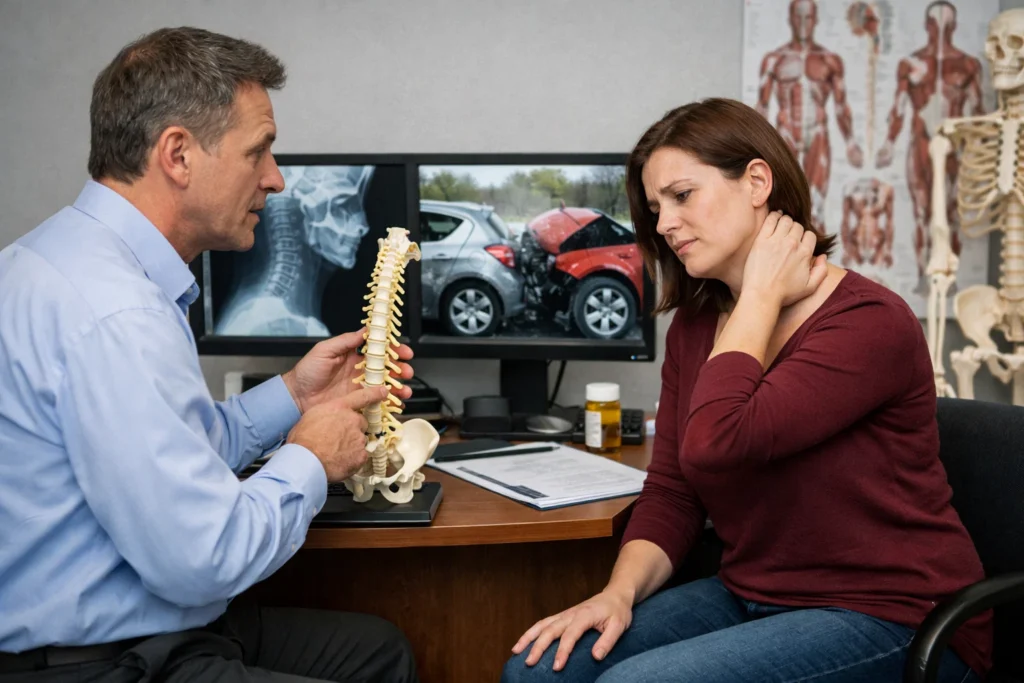
Whiplash frequently causes:
- Segmental misalignment
- Facet joint restriction
- Abnormal cervical motion
- Protective muscle guarding
Gentle, controlled spinal adjustments help:
- Restore proper joint mechanics
- Reduce nerve root irritation
- Improve circulation
- Decrease muscular tension
For Grade 2 and Grade 3 injuries, techniques are modified and progressive to ensure safety. The goal is gradual restoration of alignment without aggravating inflamed tissues.
Correcting spinal misalignment reduces mechanical stress on ligaments and discs, allowing natural healing to occur more efficiently.
Soft Tissue Therapy for Ligament and Muscle Damage
Moderate to severe whiplash often involves significant soft tissue trauma. Muscles and ligaments may develop inflammation and scar tissue during healing.
Chiropractic rehabilitation may include:
- Myofascial release
- Trigger point therapy
- Instrument-assisted soft tissue mobilization
- Gentle therapeutic stretching
These therapies help:
- Break down adhesions
- Improve blood flow
- Reduce stiffness
- Restore flexibility
- Minimize long-term restriction
Scar tissue is a normal part of healing, but excessive adhesions can permanently limit range of motion if not properly addressed.
Restoring Range of Motion After Whiplash
Restricted movement is a hallmark of Grade 2 and Grade 3 injuries.
Patients often struggle with:
- Turning the head
- Looking up or down
- Sustained sitting posture
- Shoulder mobility
A structured rehabilitation program includes:
- Controlled cervical mobility exercises
- Stabilization strengthening
- Postural retraining
- Gradual return-to-activity protocols
Movement is essential. Prolonged immobilization can worsen stiffness and delay recovery. Chiropractic-guided rehabilitation ensures motion is restored safely and progressively.
Neurological Management in Grade 3 Whiplash
Grade 3 injuries involve neurological symptoms such as:
- Radiating arm pain
- Numbness or tingling
- Weakness
- Altered reflexes
These signs may indicate nerve irritation or compression caused by joint dysfunction or disc involvement.
Chiropractic care focuses on reducing mechanical pressure and restoring proper nerve signaling. Thorough evaluation is critical before initiating treatment, and imaging may be recommended when clinically appropriate.
Reducing joint dysfunction often decreases nerve irritation and improves neurological symptoms over time.
Inflammation Control and Natural Healing Support
Inflammation is necessary for healing, but prolonged inflammation can:
- Increase pain sensitivity
- Delay tissue repair
- Contribute to chronic neck dysfunction
Chiropractic adjustments and soft tissue therapies support inflammation regulation by:
- Improving circulation
- Enhancing lymphatic drainage
- Reducing mechanical stress
- Supporting nervous system balance
Proper spinal mechanics allow the body’s natural healing processes to function more effectively.
The Importance of Early Treatment After an Auto Accident in Hillsboro
Oregon’s Personal Injury Protection (PIP) coverage often includes chiropractic care following auto accidents. Early evaluation is critical, even if symptoms appear mild initially.
Delayed treatment can lead to:
- Chronic cervical instability
- Degenerative disc stress
- Persistent muscle guarding
- Long-term nerve sensitivity
Prompt, structured chiropractic rehabilitation improves outcomes and supports accurate medical documentation for insurance claims.
Long-Term Benefits of Structured Whiplash Rehabilitation
When properly managed, chiropractic care for Grade 2 and Grade 3 whiplash can provide long-term benefits such as:
- Improved spinal stability
- Reduced chronic pain risk
- Better posture
- Enhanced mobility
- Decreased likelihood of future injury
Ongoing monitoring ensures small dysfunctions are corrected before becoming permanent structural problems.
Advanced Whiplash Treatment in Hillsboro, Oregon
If you have experienced a car accident and are suffering from moderate or severe whiplash symptoms, early chiropractic evaluation is essential.
At ProCare Chiropractic – Hillsboro, we provide comprehensive treatment for:
- Grade 2 whiplash
- Grade 3 whiplash
- Neck trauma
- Auto accident injuries
- Nerve-related neck pain
- PIP insurance cases
Our approach focuses on restoring function, protecting long-term spinal health, and preventing chronic pain development.
Schedule Your Whiplash Evaluation Today
Address: 329 SE 3rd Avenue, Hillsboro, OR 97123Book: Online BookingPhone: (503) 899-0707
Call today to schedule a comprehensive whiplash evaluation in Hillsboro, Oregon. Early treatment can restore cervical mobility, reduce nerve irritation, and support a full recovery after your auto accident.