
From Crash to Care: How Long Should Chiropractic Treatment Last After a Car Accident in Portland, Oregon?
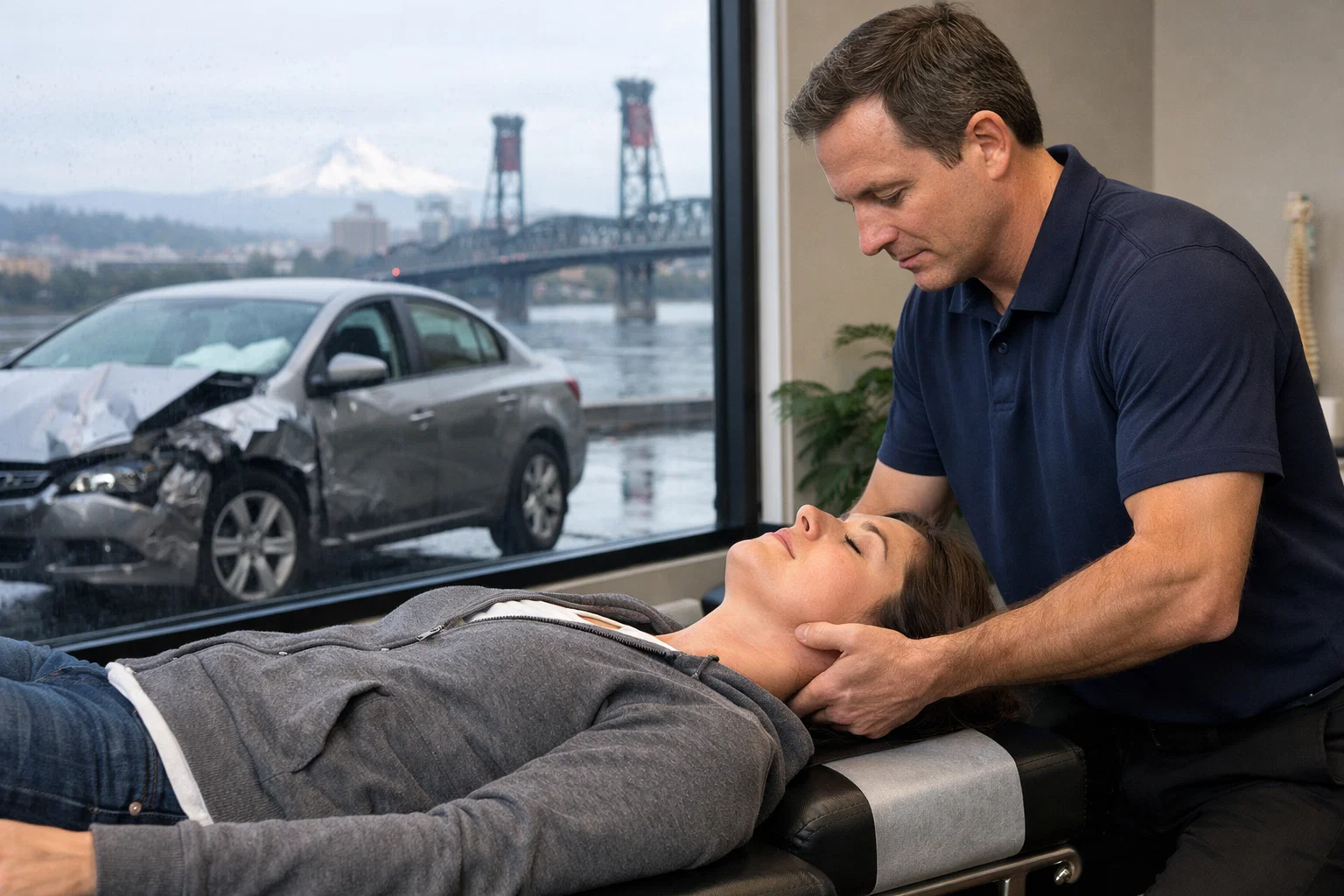
“How long should I go to a chiropractor after an accident?” is one of the most important questions Portland drivers ask after a collision—especially when pain is delayed, insurance paperwork is stressful, and you want a clear recovery plan. The honest answer is that treatment length depends on your injuries, your health history, and how quickly you start care. But most auto accident chiropractic cases follow a predictable clinical pattern.
In general, most patients need about 6–8 weeks of chiropractic treatment after a car accident for common injuries like mild to moderate whiplash, sprains/strains, and post-crash neck and back pain. Some resolve sooner. Others—especially with disc involvement, nerve irritation, or prolonged inflammation—require several months of care.
This Portland-focused guide explains typical timelines, how visit frequency changes over time, the key factors that determine duration, and how to know when you can safely stop treatment—without risking long-term pain or claim problems.
Quick Answer: Typical Chiropractic Treatment After a Car Accident
While every case is different, these ranges are common in Portland auto accident chiropractic care:
- Minor injuries (mild whiplash, muscle strain, stiffness):3–6 weeks
- Most patients (typical whiplash and soft-tissue injuries):6–8 weeks
- Moderate injuries (persistent pain, reduced ROM, recurring headaches):8–12+ weeks
- Severe injuries (disc herniation, sciatica, radicular symptoms, complicated cases):3–6+ months
Typical visit frequency pattern:
- Early phase: 3–5 visits/week(short-term)
- Mid phase: 2–3 visits/week
- Later phase: 1–2 visits/week, then discharge or periodic re-checks as needed
The goal is not to “keep you coming forever.” The goal is to reach functional recovery and stability—then stop active care at the right time.
Why You Should Not “Wait and See” After a Portland Car Accident
It’s common to feel “fine” after a crash. Adrenaline and stress hormones can temporarily mask pain and stiffness. But auto accidents frequently cause micro-tears in muscles and ligaments, joint inflammation, and spinal movement restrictions that become obvious days later.
Waiting can create two major problems:
- Health risk: untreated soft-tissue injuries can heal with restriction and scar tissue, contributing to chronic neck pain, headaches, shoulder tension, or low back pain.
- Insurance risk: delayed care can make it harder to connect symptoms to the collision, especially when documentation is reviewed later.
If you were in a collision anywhere in the Portland metro area—whether downtown, I-205, I-84, SE Stark, or Gresham/Troutdale corridors—getting evaluated early is one of the most practical decisions you can make for both recovery and claim clarity.
Common Car Accident Injuries That Affect Treatment Length

The specific injury pattern influences how long you’ll need chiropractic care:
Whiplash and Cervical Sprain/Strain
Whiplash is the classic rear-end injury. Symptoms can include neck pain, stiffness, headaches, shoulder tightness, dizziness, and reduced range of motion. Mild whiplash often responds well within 6–8 weeks with consistent care.
Mid-Back and Rib Joint Dysfunction
Thoracic stiffness is common after bracing during impact. This can cause breathing discomfort, mid-back tightness, and posture changes. Treatment length varies based on mobility restoration and muscle recovery.
Low Back Pain, Disc Irritation, and Sciatica
If a disc is irritated or bulging, you may notice pain with sitting, bending, or lifting, and sometimes numbness or tingling down the leg. These cases may need 8–12+ weeks or longer depending on neurological findings and functional improvement.
Headaches After a Crash
Post-accident headaches often relate to neck joint irritation, muscular trigger points, or concussion factors. If headaches are frequent, treatment may last longer due to the need for stability and neurological symptom monitoring.
6 Factors That Determine How Long You Should See a Chiropractor After an Accident
1) Severity and Type of Injury
A mild strain is not the same as a disc injury, radicular symptoms, or multi-region trauma (neck + back + shoulder). More complex injuries typically require longer care.
2) How Soon You Start Treatment
Early evaluation and early motion restoration often shorten recovery time. Delayed care can allow inflammation and compensation patterns to build.
3) Your Age and Overall Health
Healing capacity varies. Previous injuries, fitness level, stress, sleep quality, and inflammation load can all affect recovery duration.
4) Your Response to Care and Compliance
Two people with similar injuries can heal at different speeds. Home care matters: posture changes, activity modification, stretches, rehab exercises, hydration, and avoiding reinjury.
5) Work and Activity Demands
A desk job with “tech neck” loads the cervical spine differently than warehouse work, construction, nursing, delivery driving, or childcare. Your job demands influence how quickly tissues can calm down and stabilize.
6) Insurance and Documentation Requirements
Auto claims are documentation-driven. Gaps in care, inconsistent follow-through, or stopping too early can cause setbacks in both recovery and claim clarity. Consistent progress notes and objective findings support medical necessity.
The Typical Chiropractic Recovery Timeline After a Car Accident
Phase 1: Acute Care (Weeks 1–2)
Focus: reduce pain, calm inflammation, restore safe motion
Common frequency: 3–5 visits/week short-term
You may feel sore, stiff, and guarded. Gentle care, soft-tissue work, and stabilization strategies matter most here.
Phase 2: Corrective / Rehabilitation (Weeks 3–6)
Focus: restore range of motion, normalize mechanics, reduce headaches, rebuild stability
Common frequency: 2–3 visits/week, tapering as you improve
This is where many patients feel the biggest functional wins.
Phase 3: Functional Stabilization and Discharge (Weeks 6–8+)
Focus: maintain improvements, prevent flare-ups, ensure function under real-life load
Common frequency: 1–2 visits/week, then discharge
At this stage, care is guided by measurable progress and symptom stability.
Some cases progress faster. Some need more time. The deciding factor is not a calendar date—it’s function.
How Do You Know When to Stop Chiropractic Treatment After a Car Accident
Clinically, the best time to end active treatment is when you reach Maximum Medical Improvement (MMI). This means:
- Pain is resolved or minimal and stable
- Range of motion is restored or near baseline
- Daily activities (work, driving, sleep) are normal again
- Neurological symptoms (if present) are resolved or stable
- Further frequent treatment is unlikely to create meaningful additional improvement
After MMI, some patients choose occasional supportive visits. That’s optional and based on goals—not a requirement.
Is It Possible to Go “Too Much” After an Auto Accident?
Over-treatment is a valid concern, which is why a structured plan should include:
- Clear diagnosis and exam findings
- Defined goals (pain reduction, ROM improvement, functional return)
- Regular re-evaluations
- Tapering frequency as improvement holds
A high-quality Portland car accident chiropractor should be able to explain exactly why you are being seen at a particular frequency and what metrics are being used to decide when to reduce visits.
Frequently Asked Questions
When should I see a chiropractor after a car accident?
As soon as possible—ideally within the first several days—because symptoms are often delayed and early documentation supports both care and claims.
What if I feel fine after the crash?
You can still have joint restriction, inflammation, and soft-tissue injury even without immediate pain. A focused evaluation helps identify issues before they become chronic.
Will I need chiropractic care forever?
No. Auto accident chiropractic care is typically time-limited and goal-based. Most people discontinue active care once they reach functional stability and MMI.
Start With a Clear Plan in Portland, Oregon
If you were recently in a car accident and you’re dealing with neck pain, back pain, whiplash symptoms, headaches, stiffness, or reduced mobility, the most important step is a proper evaluation and a structured plan—so you know what you’re treating and how long it should reasonably take.
Address: 10915 SE Stark St. Suite 200, Portland, OR 97216Book: Online BookingPhone: (503) 899-0707
Call today to schedule an auto accident evaluation and get a clear, documented recovery plan designed to help you heal efficiently and return to normal life in 2026.