
Chiropractic Care for Headache Relief in Keizer, Oregon

Headaches can significantly disrupt daily life. When pain becomes frequent or severe, even routine tasks such as working, concentrating, or sleeping can become difficult. While rest, hydration, or over-the-counter medications may offer temporary relief, recurring headaches often indicate an underlying structural or muscular issue that requires professional evaluation. In many cases, Chiropractic care for headaches may help address spinal alignment and muscle tension that contribute to recurring pain.
For many residents of Keizer, Oregon, headaches are triggered by common lifestyle and physical stressors, including:
- Long hours of desk work
- Forward head posture from computer and smartphone use
- Stress-related muscle tension
- Auto accident injuries
- Whiplash trauma
- Cervical spine misalignment
- Upper back and shoulder stiffness
At ProCare Chiropractic in Keizer, we focus on identifying and correcting the musculoskeletal causes of chronic headaches using safe, non-invasive chiropractic care designed to restore proper spinal function.
Understanding the Different Types of Headaches
Effective headache treatment begins with identifying the specific type of headache and its underlying cause. Chiropractors are trained to evaluate headache patterns, posture, spinal alignment, and muscular tension to determine the most appropriate treatment plan.
Tension Headaches
Tension headaches are the most common type of headache and are often associated with:
- Muscle tightness in the neck and shoulders
- Emotional stress
- Poor posture
- Upper back strain
These headaches typically feel like a dull, constant pressure around the forehead, temples, or the base of the skull.
Cervicogenic Headaches
Cervicogenic headaches originate from dysfunction in the cervical spine (neck). They are frequently linked to:
- Restricted joint motion
- Cervical spinal misalignment
- Nerve irritation
- Muscle imbalance
Pain usually begins in the neck and travels upward toward the temples or behind the eyes.
Migraine Headaches
Migraines are more complex headaches that may involve neurological and vascular components. Symptoms may include:
- Pulsating or throbbing pain
- Nausea
- Sensitivity to light and sound
- Visual disturbances
Although migraines have neurological components, spinal dysfunction and muscular tension may contribute to their frequency and severity.
Post-Traumatic Headaches
Post-traumatic headaches often occur following injuries such as:
- Car accidents
- Whiplash injuries
- Sports impacts
- Falls
Symptoms may appear immediately or develop days or weeks after trauma. These headaches are frequently linked to cervical spine dysfunction, soft tissue inflammation, and nerve irritation.
Headaches After a Car Accident in Keizer
Motor vehicle accidents are a common cause of persistent headaches. Even low-speed collisions can produce significant stress on the cervical spine.
Common accident-related conditions include:
- Whiplash injuries
- Cervical instability
- Soft tissue inflammation
- Nerve compression
- Protective muscle tension
Many individuals feel fine immediately after a collision due to adrenaline. However, headaches may develop later as inflammation and muscular tension increase.
Early chiropractic evaluation after a car accident can help detect subtle cervical misalignment before it develops into chronic headache patterns.
How Chiropractic Care Helps Relieve Headaches
Comprehensive Structural Evaluation
Headaches are often symptoms of underlying structural dysfunction rather than isolated conditions.
A chiropractic evaluation may include:
- Spinal alignment assessment
- Range-of-motion testing
- Postural analysis
- Neurological screening
- Review of injury history
Identifying the mechanical cause of headache pain allows for targeted, effective treatment.
Spinal Adjustments to Restore Alignment
Misalignment in the cervical spine may:
- Irritate surrounding nerves
- Restrict blood flow
- Increase muscle tension
- Disrupt normal nerve communication
Gentle chiropractic adjustments restore proper joint motion and spinal alignment. Improved biomechanics can reduce irritation that triggers tension and cervicogenic headaches.
Soft Tissue Therapy to Reduce Muscle Tension
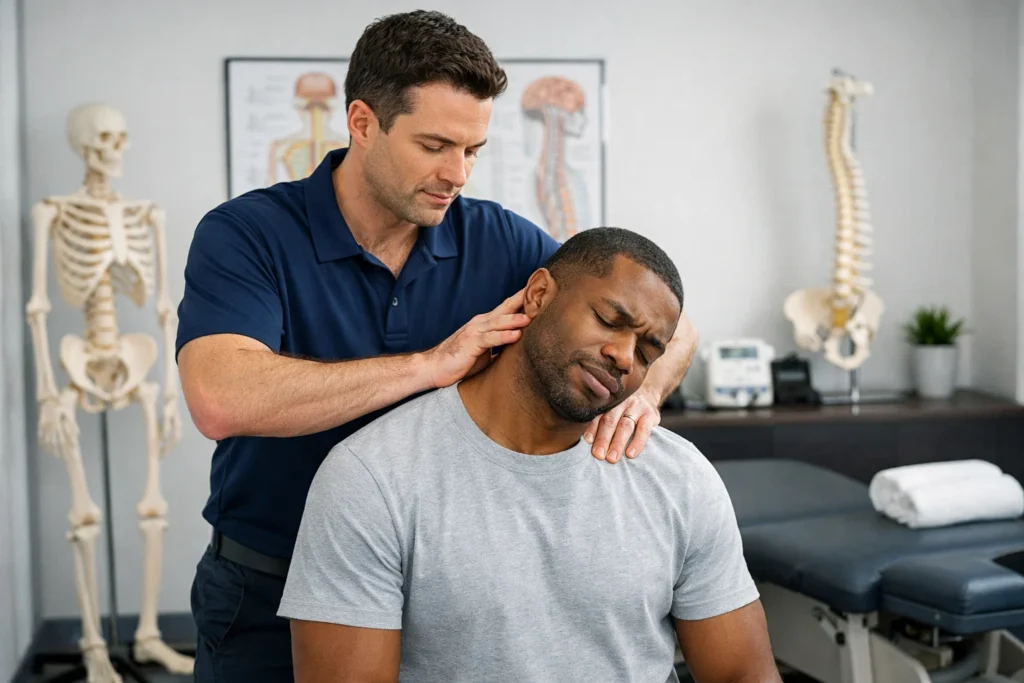
Muscle tightness in the neck, shoulders, and upper back is a common contributor to headache pain.
Chiropractic treatment may include:
- Myofascial release
- Trigger point therapy
- Therapeutic muscle work
- Instrument-assisted soft tissue mobilization
These therapies help:
- Improve circulation
- Reduce inflammation
- Release muscle tension
- Restore flexibility
As muscle tension decreases, many patients experience fewer and less intense headaches.
Posture Correction and Ergonomic Guidance
Forward head posture from prolonged computer and smartphone use is one of the leading causes of chronic headaches.
Poor posture increases strain on:
- Cervical discs
- Neck joints
- Upper trapezius muscles
- Suboccipital muscles
Chiropractic care may include:
- Postural correction exercises
- Core stabilization programs
- Ergonomic workstation recommendations
- Targeted stretching routines
Improving posture helps reduce mechanical stress on the neck and prevents recurring headaches.
Drug-Free Headache Management
Unlike medication, chiropractic care focuses on correcting the structural causes of headache pain rather than masking symptoms.
Benefits of chiropractic headache care include:
- No medication dependency
- No systemic side effects
- Reduced headache recurrence
- Long-term structural improvement
For individuals seeking natural headache relief, chiropractic care remains one of the most effective conservative treatment approaches.
Preventing Headaches Before They Start
Chiropractic care can also play a preventative role in long-term spinal health.
Routine spinal evaluations help:
- Maintain cervical alignment
- Improve nervous system function
- Reduce stress on neck joints
- Minimize inflammation
- Support overall musculoskeletal balance
Many patients who receive regular chiropractic care report fewer headaches and improved overall wellness.
When to See a Chiropractor for Headaches
Consider scheduling a chiropractic evaluation if you experience:
- Headaches more than once per week
- Neck stiffness associated with headaches
- Headaches following a car accident
- Pain that worsens with neck movement
- Persistent tension in the shoulders or upper back
- Migraines associated with neck discomfort
Early evaluation can help identify underlying structural issues before headaches become chronic.
Lasting Relief Starts With the Right Evaluation
Recurring headaches are often a signal that the spine, muscles, or nervous system is not functioning properly.
Chiropractic care provides a structured, non-invasive approach to:
- Reduce tension headaches
- Manage cervicogenic headaches
- Support migraine management
- Correct cervical misalignment
- Restore musculoskeletal balance
With the right diagnosis and treatment plan, many patients experience significant improvement in headache frequency and intensity.
Schedule Your Headache Evaluation Today
If chronic headaches are interfering with your work, sleep, or daily activities, professional evaluation can help identify the underlying cause.
Address: 3785 River Rd N. Keizer, OR 97303Book: Online BookingPhone: (971) 414-3440
Contact ProCare Chiropractic today to schedule a comprehensive spinal evaluation in Keizer and begin a personalized treatment plan designed to reduce headaches, restore spinal alignment, and support long-term health.