
After a Car Accident: Is It Possible to See a Chiropractor Too Often in Portland, Oregon?

After a car accident, many people are told conflicting things about recovery. Some are advised to “wait it out.” Others worry that too much treatment might somehow make their condition worse. One of the most common questions injured patients ask is:
“Can I go to the chiropractor too much after a car accident?”
It’s a fair concern — especially if you’re dealing with neck pain, back pain, whiplash, or spinal injuries and you’ve never been through accident-related chiropractic care before.
The short answer: proper chiropractic care is not harmful when it is clinically justified and carefully planned. In fact, under-treating accident injuries is far more dangerous than receiving consistent, guided care.
Below, we break down how chiropractic treatment frequency works after a car accident, why care plans vary, and how to know whether your treatment schedule is appropriate.
Why Chiropractic Care Is Common After a Car Accident
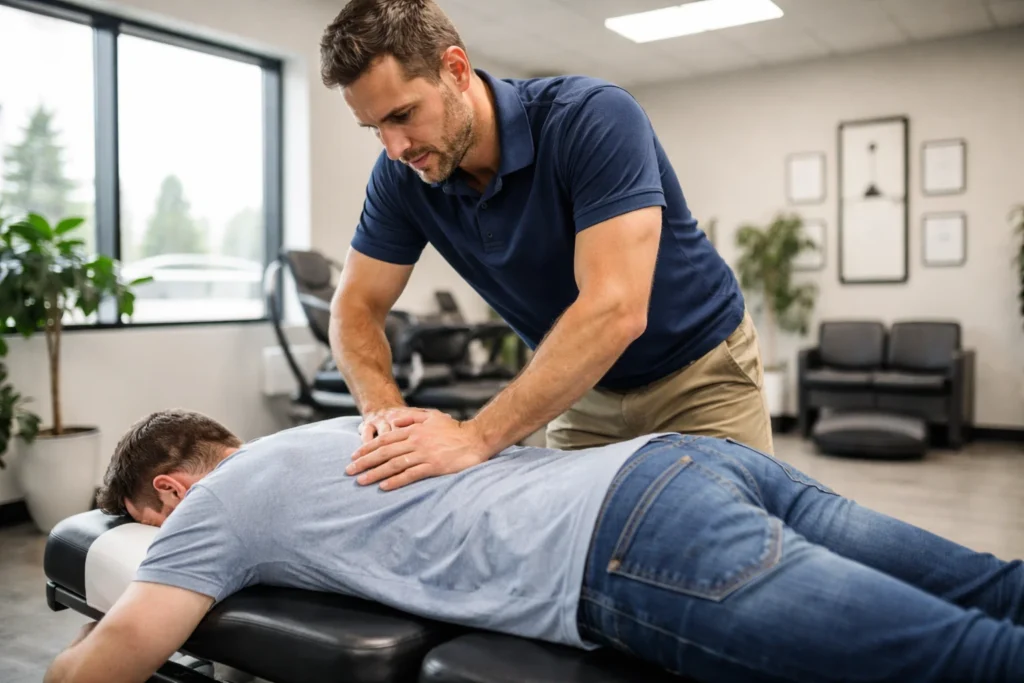
Car accidents place sudden and unnatural forces on the body. Even low-speed collisions can cause injuries that don’t show up on X-rays or CT scans.
Common auto accident injuries chiropractors treat:
- Whiplash
- Cervical spine misalignment
- Lumbar spine injuries
- Herniated or bulging discs
- Soft tissue injuries
- Ligament and tendon damage
- Nerve irritation
- Postural dysfunction
Emergency rooms are designed to rule out life-threatening injuries — not to treat musculoskeletal trauma. That’s where a car accident chiropractor plays a critical role.
How Often Should You See a Chiropractor After a Car Accident?
There is no universal schedule that applies to every accident victim. Chiropractic care is individualized because no two accidents — or bodies — are the same.
Factors That Influence Visit Frequency
A chiropractor determines visit frequency based on:
- Severity of injuries
- Areas of the spine affected
- Presence of neurological symptoms
- Muscle guarding and inflammation
- Patient age and health history
- How your body responds to treatment
Typical Chiropractic Phases After an Auto Accident
Phase 1: Acute Injury Phase (First 2–6 Weeks)
This is when inflammation, muscle spasms, and pain are at their highest.
- Visits may occur 2–4 times per week
- Focus is on pain reduction, inflammation control, and stabilization
- Gentle adjustments and soft tissue therapy are common
This frequency is medically appropriate, not excessive.
Phase 2: Corrective / Recovery Phase
As pain decreases and mobility improves:
- Visits gradually reduce to 1–2 times per week
- Focus shifts to restoring movement, strength, and alignment
- Exercises and rehabilitation become more important
Phase 3: Functional Stabilization
When injuries are healing properly:
- Visits become less frequent
- Emphasis is on preventing reinjury
- Supporting full return to daily activities and work
Can Seeing a Chiropractor Too Often Be Harmful?
The Reality: Properly Planned Care Does Not Damage the Spine
One of the biggest myths is that frequent chiropractic adjustments “wear out” the spine. There is no scientific evidence supporting this claim when care is delivered appropriately.
A licensed chiropractor:
- Reassesses progress regularly
- Adjusts treatment frequency based on healing
- Stops or modifies care when clinically appropriate
If care is no longer needed at a certain frequency, the plan changes.
What Is Harmful?
- Ignoring injuries
- Stopping care too early
- Allowing scar tissue to form unchecked
- Letting misalignment become chronic
Many chronic pain cases start with under-treatment, not over-treatment.
Why Frequent Visits Are Often Necessary Early On
After a collision, your body is dealing with:
- Inflammation
- Micro-tears in muscles and ligaments
- Joint instability
- Nervous system irritation
Consistent care:
- Prevents joints from “locking” into poor positions
- Reduces inflammation before it becomes chronic
- Limits excessive scar tissue formation
- Restores normal movement patterns
Skipping or spacing visits too far apart early in recovery can slow healing significantly.
Chiropractic Care vs. Pain Medications
Many patients are told to rely on pain medication instead of physical care. This can be problematic.
Pain medication:
- Masks symptoms
- Does not correct misalignment
- Does not heal tissue damage
- Can delay proper treatment
Chiropractic care addresses the cause, not just the pain.
Chiropractic Care and Oregon PIP Insurance
In Oregon, Personal Injury Protection (PIP) often covers chiropractic care after a car accident — including frequent visits during the acute phase.
Insurance companies expect:
- Consistent care
- Documented progress
- Medically reasonable frequency
Gaps in treatment can raise red flags and hurt both recovery and claims.
Signs Your Chiropractic Care Is Appropriate
You are likely on the right treatment schedule if:
- Pain is gradually decreasing
- Mobility is improving
- Visits become less frequent over time
- Treatment goals are clearly explained
- Progress is documented
If care never changes despite improvement, that’s when reassessment is appropriate.
Why Choose ProCare Chiropractic Center After a Car Accident?
At ProCare Chiropractic Center, we specialize in auto accident recovery and evidence-based care.
Our approach includes:
- Comprehensive accident evaluations
- Customized treatment schedules
- Ongoing reassessments
- Clear communication
- Insurance-compliant documentation
We do what your injury requires — no more, no less.
When Should You Question Chiropractic Frequency?
You should ask questions if:
- Your condition worsens consistently
- No reassessment occurs over time
- No functional improvement is tracked
A reputable clinic welcomes transparency and discussion.
Schedule a Car Accident Chiropractic Evaluation in Portland
If you’ve been injured in a car accident, the right amount of care at the right time can make the difference between full recovery and chronic pain.
Address:10915 SE Stark St. Suite 200, Portland, OR 97216
Book: Online Booking
Phone: (503) 899-0707
Schedule your auto accident chiropractic evaluation today and get a treatment plan designed specifically for your recovery — not guesswork.