Airbag & Seatbelt Injuries After a Car Accident in Keizer, Oregon

Airbag and Seatbelt Injuries are designed to protect drivers and passengers during a collision. These safety systems significantly reduce the risk of severe or fatal injuries by preventing ejection from the vehicle and absorbing much of the crash force.
However, while airbags and seatbelts save lives, they can still cause musculoskeletal and soft tissue injuries during a crash.
In a car accident in Keizer, Oregon, the force required to restrain the body and deploy an airbag occurs in milliseconds. That rapid deceleration and impact can lead to spinal misalignment, ligament strain, nerve irritation, and blunt-force trauma.
Understanding the most common airbag and seatbelt injuries can help you recognize symptoms early and seek appropriate medical evaluation.
At ProCare Chiropractic in Keizer, we frequently evaluate patients recovering from injuries related to seatbelt restraint, airbag deployment, and whiplash trauma following auto accidents.
Abrasions, Contusions, and Airbag Burns
Surface-level injuries are among the most common results of seatbelt restraint and airbag deployment.
Abrasions (Skin Scrapes)
Seatbelts may cause friction burns or skin abrasions across the:
- Chest
- Shoulder
- Neck
- Abdomen
During impact, the seatbelt tightens rapidly against the body to restrain movement, sometimes causing superficial skin injury.
Contusions (Bruising)
Bruises occur when small blood vessels rupture beneath the skin due to sudden pressure or impact. These bruises are commonly seen across the:
- Chest wall
- Collarbone
- Upper arms
- Abdomen
Although mild bruising often heals within days or weeks, deeper contusions can indicate underlying musculoskeletal trauma.
Airbag Burns
Airbags deploy through a rapid chemical reaction that inflates the airbag almost instantly. During deployment:
- Heat is generated
- Gas expands rapidly
- Pressure vents outward
Hands and forearms are especially vulnerable if they are positioned on the steering wheel at the moment of impact. Persistent redness, blistering, or pain should be evaluated by a medical professional.
Whiplash and Cervical Soft Tissue Injuries
Even when properly restrained by a seatbelt, whiplash remains one of the most common auto accident injuries.
During a collision:
- The seatbelt restrains the torso
- The head continues moving forward
- The neck rapidly snaps backward and forward
This acceleration-deceleration motion can strain muscles, ligaments, spinal discs, and facet joints in the cervical spine.
Common symptoms include:
- Neck stiffness
- Headaches
- Reduced range of motion
- Shoulder pain
- Upper back tension
Chiropractic care focuses on restoring cervical spine alignment, reducing inflammation, and preventing long-term instability or chronic neck pain.
Concussions and Head Injuries
Airbags cushion the impact between the head and steering wheel or dashboard, but they cannot eliminate the risk of concussion.
A concussion may occur when:
- The head strikes the airbag
- The head moves violently during rapid deceleration
- The brain shifts inside the skull due to sudden movement
Symptoms of concussion may include:
- Persistent headaches
- Dizziness
- Nausea
- Balance problems
- Light sensitivity
- Ringing in the ears
- Difficulty concentrating
Any suspected head injury should be evaluated by a qualified healthcare professional.
Rib and Chest Wall Injuries
Seatbelts restrain the chest during a crash but may also cause blunt-force trauma.
Possible injuries include:
- Rib bruising
- Rib fractures
- Sternum irritation
- Chest wall inflammation
Pain that worsens when breathing deeply, coughing, or twisting may indicate rib involvement. Medical evaluation is important to rule out complications involving the lungs or internal organs.
Internal Injuries and the “Seatbelt Sign”
Some of the most serious injuries following a car accident are not immediately visible.
Blunt force from the seatbelt may affect internal organs such as:
- Liver
- Spleen
- Kidneys
- Intestines
- Pelvis
The “seatbelt sign” refers to visible bruising across the chest or abdomen caused by seatbelt impact. This sign may indicate deeper internal trauma.
Warning symptoms may include:
- Abdominal pain
- Swelling
- Dizziness
- Fainting
- Unexplained weakness
Internal bleeding is a medical emergency and requires immediate evaluation.
Shoulder and Clavicle Injuries
The shoulder strap of a seatbelt places substantial force across the clavicle and shoulder joint during a collision.
Common injuries include:
- Clavicle fractures
- Rotator cuff strain
- Shoulder sprains
- Soft tissue tears
Pain when raising the arm, weakness, or clicking in the shoulder should not be ignored.
A chiropractic evaluation can help determine whether shoulder pain is caused by direct trauma, cervical nerve irritation, or upper thoracic spinal dysfunction.
Pelvic and Hip Injuries
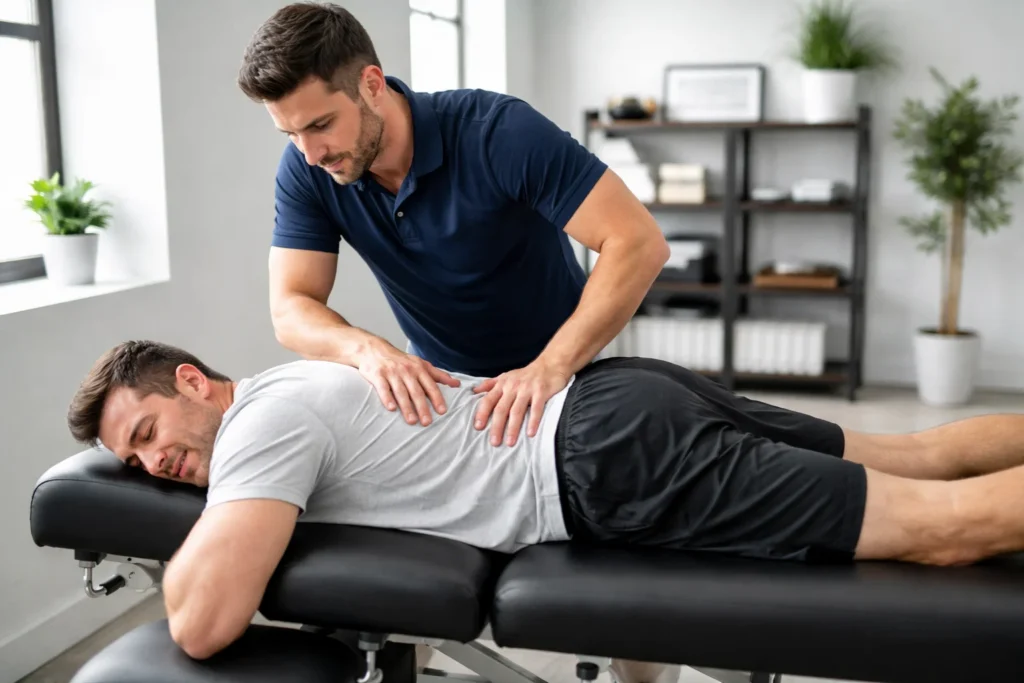
The lap belt restrains the lower body during a crash. In high-impact accidents, this pressure across the pelvis can lead to:
- Pelvic bruising
- Hip joint strain
- Lower abdominal trauma
Improper seatbelt positioning may increase the risk of pelvic injury.
Hip pain or lower back discomfort after a collision may also indicate sacroiliac joint dysfunction or lumbar spinal misalignment.
Why Symptoms Are Often Delayed
After a car accident, adrenaline and stress hormones can temporarily mask pain signals.
Symptoms may appear:
- Several hours after the crash
- The next day
- Days or even weeks later
Delayed symptoms may include:
- Neck stiffness
- Headaches
- Shoulder pain
- Numbness or tingling
- Lower back pain
- Abdominal discomfort
Early post-accident evaluation helps identify injuries before they develop into chronic pain conditions.
When to Seek Immediate Medical Attention
Emergency medical care is necessary if you experience:
- Severe headache
- Loss of consciousness
- Chest pain
- Abdominal pain
- Persistent dizziness
- Difficulty breathing
- Significant swelling
- Numbness or weakness
Even when injuries appear mild, a professional evaluation after a motor vehicle accident is strongly recommended.
The Role of Chiropractic Care After Airbag and Seatbelt Injuries
While airbags and seatbelts reduce life-threatening trauma, the forces involved can still cause:
- Spinal misalignment
- Soft tissue injury
- Joint dysfunction
- Nerve irritation
- Disc injury
Comprehensive post-accident chiropractic care may include:
- Spinal alignment evaluation
- Range-of-motion testing
- Neurological screening
- Soft tissue therapy
- Corrective rehabilitation exercises
- Inflammation management
At ProCare Chiropractic in Keizer, we identify hidden injuries that may not appear on standard imaging but still affect spinal function and long-term mobility.
Early chiropractic treatment can help reduce inflammation, restore alignment, and prevent chronic neck pain, back pain, and post-traumatic headaches.
Protect Your Recovery After a Car Accident in Keizer
Airbags and seatbelts save lives, but the forces required to protect you during a collision can still cause injuries.
If you were involved in a car accident in Keizer, Oregon, do not assume you are uninjured simply because symptoms seem mild.
Early evaluation ensures hidden spinal and soft tissue injuries are identified and treated before they develop into chronic problems.
Schedule Your Auto Accident Evaluation Today
Address: 3785 River Rd N. Keizer, OR 97303Book: Online BookingPhone: (971) 414-3440
If you are experiencing neck pain, back pain, shoulder discomfort, headaches, or other symptoms after a car accident, contact ProCare Chiropractic today to schedule a comprehensive evaluation. Early care helps protect your spine, reduce inflammation, and support a full recovery.